Explore Expert Woodworking Tips for Every Skill Level

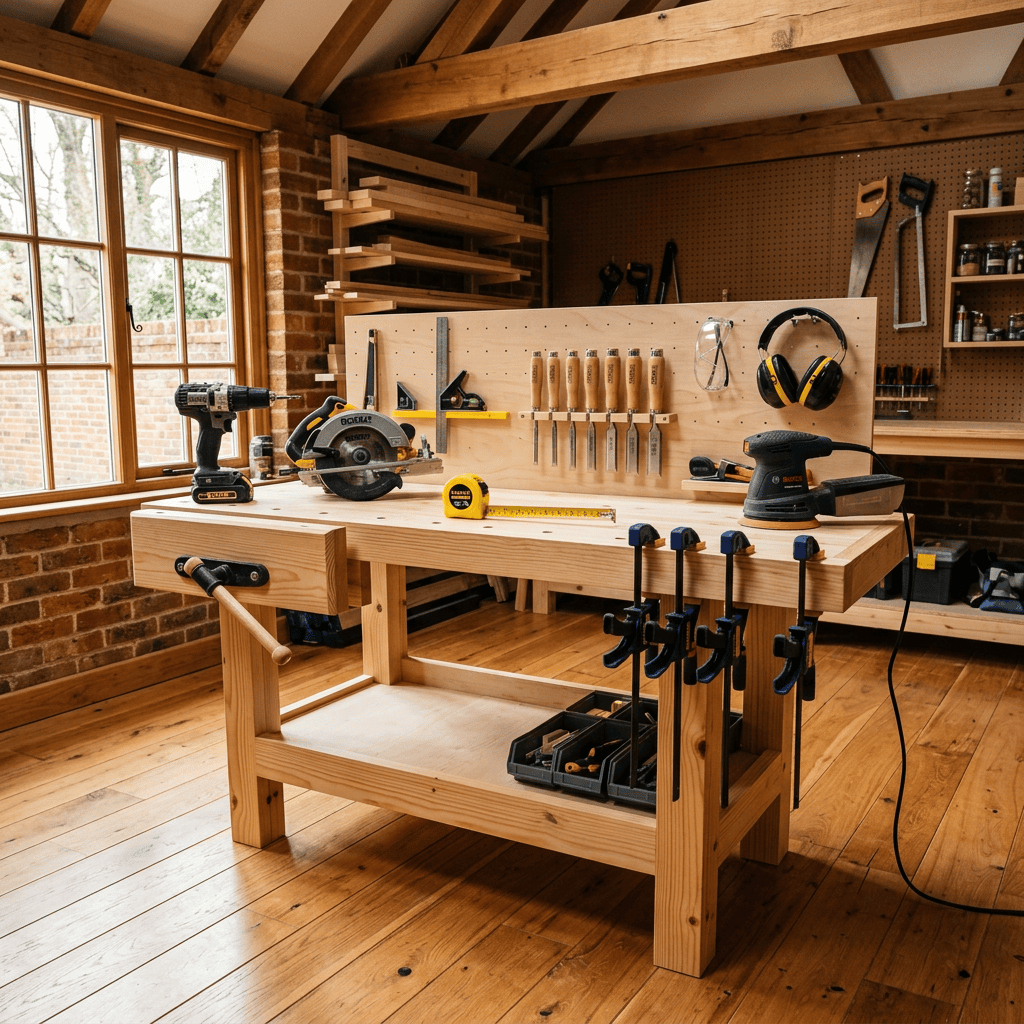
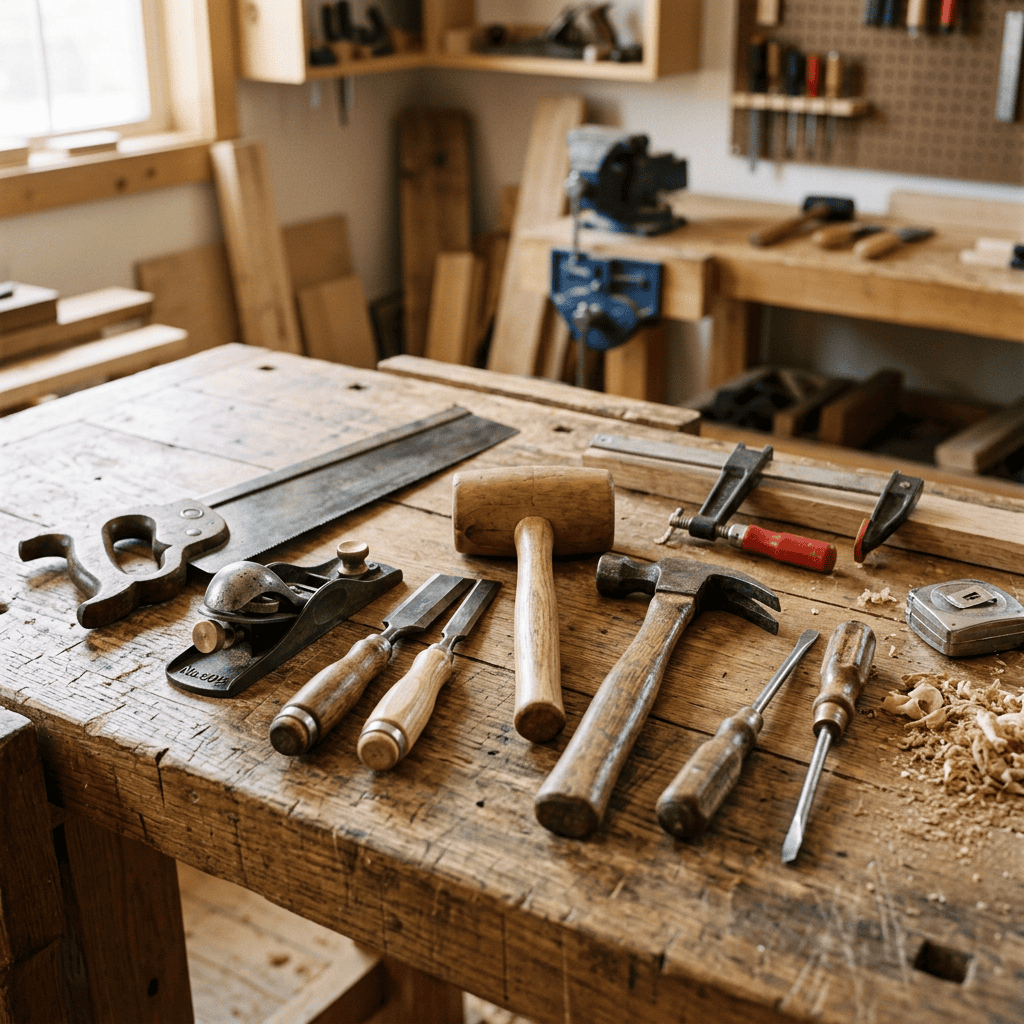
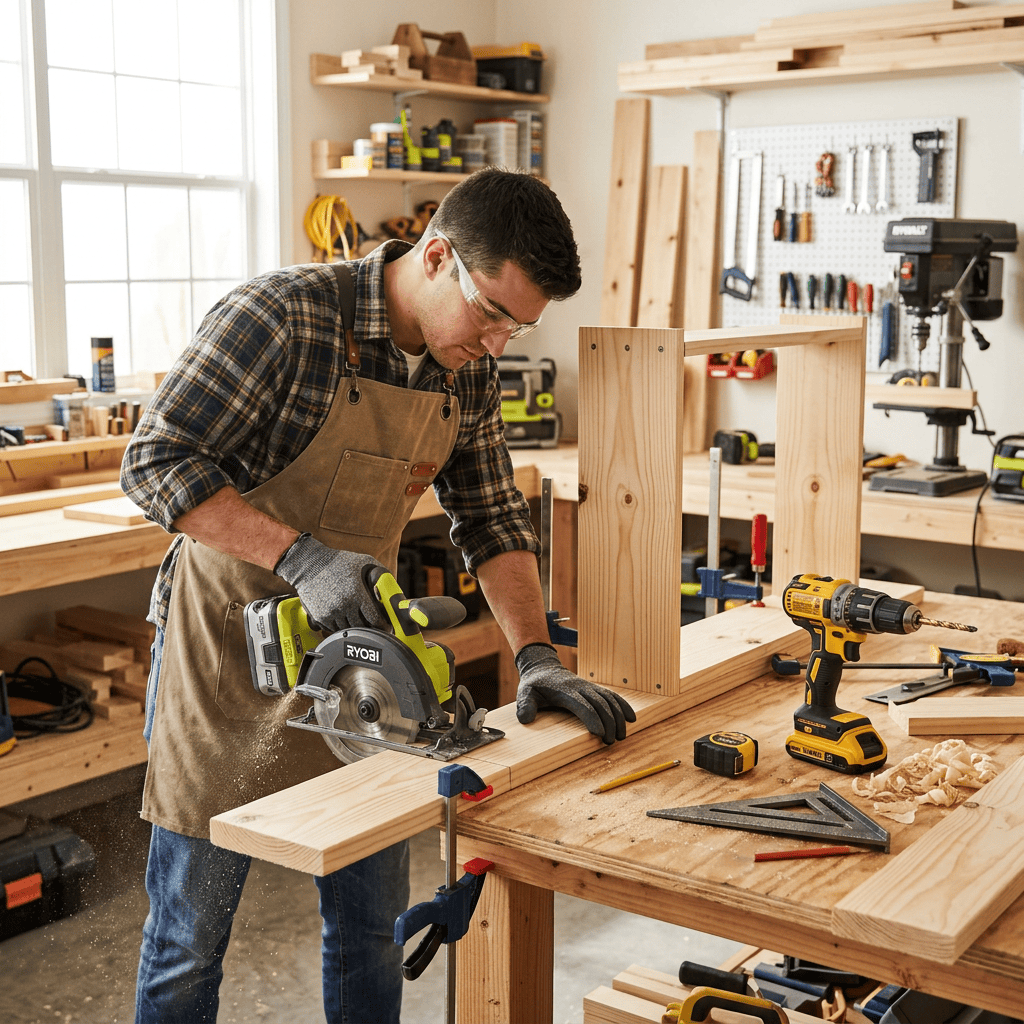
Discover the essential woodworking tips that can elevate your craftsmanship! Delve into practical techniques, clever hacks, and innovative ideas designed to enhance your skills and creativity in woodworking. Whether you're a novice or a seasoned woodworker, these insights will guide you toward creating beautiful and functional wooden pieces.

  • A beginner woodworker examining a project with common woodworking mistakes highlighted.

    Your Guide to Avoiding Frequent Woodworking Errors

    Key Takeaways from Our Woodworking Tips

    Common mistakes in woodworking often stem from issues like inaccurate measurements, neglecting tool safety, overlooking wood movement, improper sanding techniques, weak glue-ups, and hasty finishing touches. Recognizing these pitfalls is the first step toward producing high-quality work.

    To steer clear of these common errors, it's crucial to engage in thorough planning, take precise measurements, utilize tools correctly, and exercise patience throughout every phase of your woodworking projects. This diligence ensures not only better results but also a more enjoyable crafting experience.

    Understanding the Most Common Woodworking Mistakes

    • Learn workshop safety before using any woodworking tools.
    • Accurate measuring and marking prevent costly mistakes.
    • Master basic cutting, drilling, and sanding techniques before attempting complex builds.
    • Start with simple joinery methods and gradually progress to stronger joints.
    • Proper finishing protects wood while improving appearance.
    • Practice on beginner woodworking projects to reinforce core skills.
    • Consistency and patience matter more than buying expensive tools.

    Top Tips to Prevent Woodworking Mistakes

    Woodworking is a gratifying DIY pursuit; however, both beginners and experienced craftsmen alike are prone to making mistakes. The key difference lies in the ability of seasoned woodworkers to avert minor blunders from escalating into costly disasters that compromise their projects.

    Many woodworking errors only become apparent when the project nears completion. A mismeasured board, a misplaced glue joint, or hastily applied finish can ruin hours of diligent effort. Awareness of these potential issues empowers you to catch them before they lead to significant setbacks.

    Fortunately, the majority of frequent woodworking mistakes are easily avoidable. By understanding where things typically go awry during projects, you can enhance your precision, conserve materials, and approach furniture creation with increased confidence.

    Why You Encounter Woodworking Mistakes and How to Fix Them

    This comprehensive guide outlines ten prevalent woodworking mistakes-detailing their causes-and offers practical solutions to help you sidestep these issues while honing your craft effectively.

    Woodworking requires a blend of precision, patience, and problem-solving skills. Even minor errors can disrupt subsequent steps in the process and impact the final result dramatically.

    • Improved safety
    • Greater accuracy
    • Better-looking projects
    • Less wasted material
    • Increased confidence
    • Faster skill development

    Most initial mistakes made by novice woodworkers tend to fall within a few specific categories. These include inadequate planning prior to starting projects, inaccurate measurements during cutting processes, improper use of tools, disregarding how wood behaves under different conditions, and rushing through tasks without taking sufficient time for each stage.

    Takeaway: Strong woodworking fundamentals make every future project easier and more successful.

    Avoid Measuring and Marking Errors in Your Projects
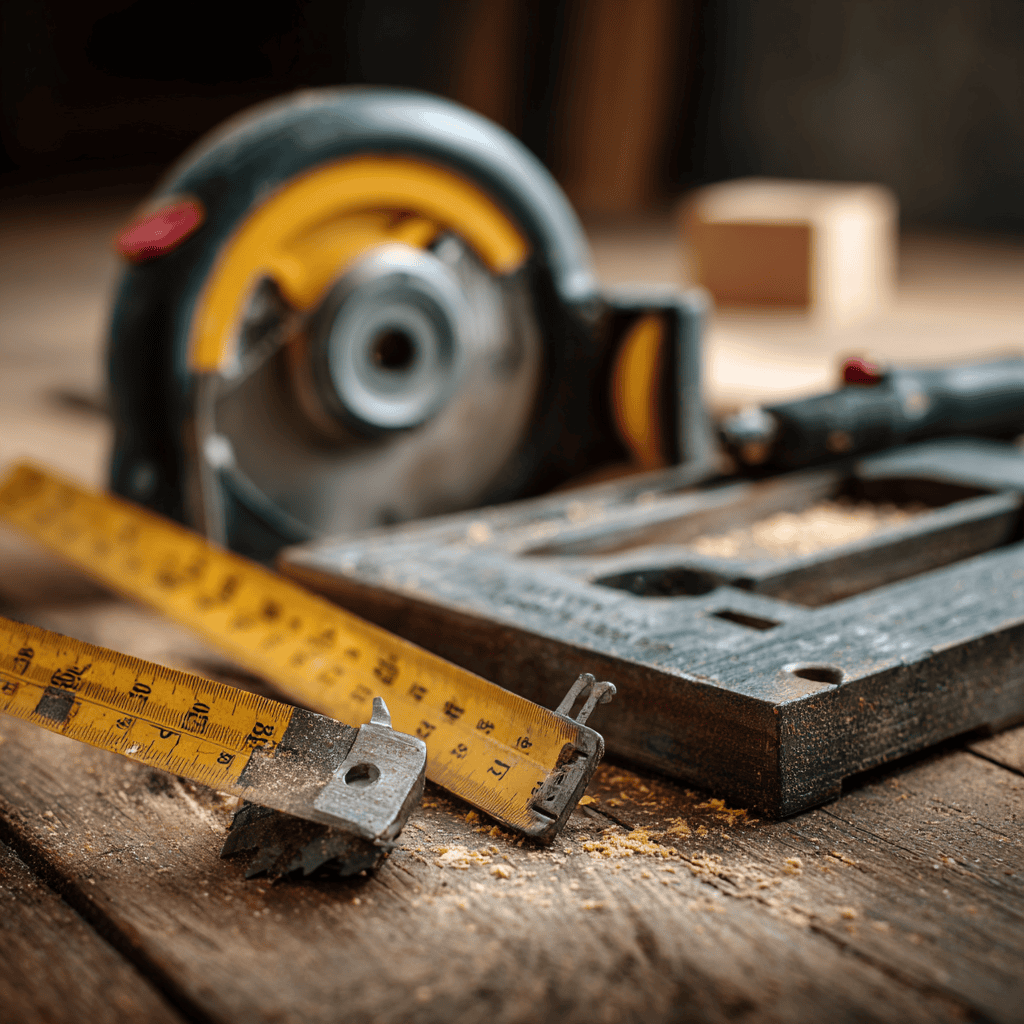
    A close-up of measuring tools showing inaccurate measuring errors related to woodworking tips.

    The Crucial Role of Accurate Measuring in Woodworking

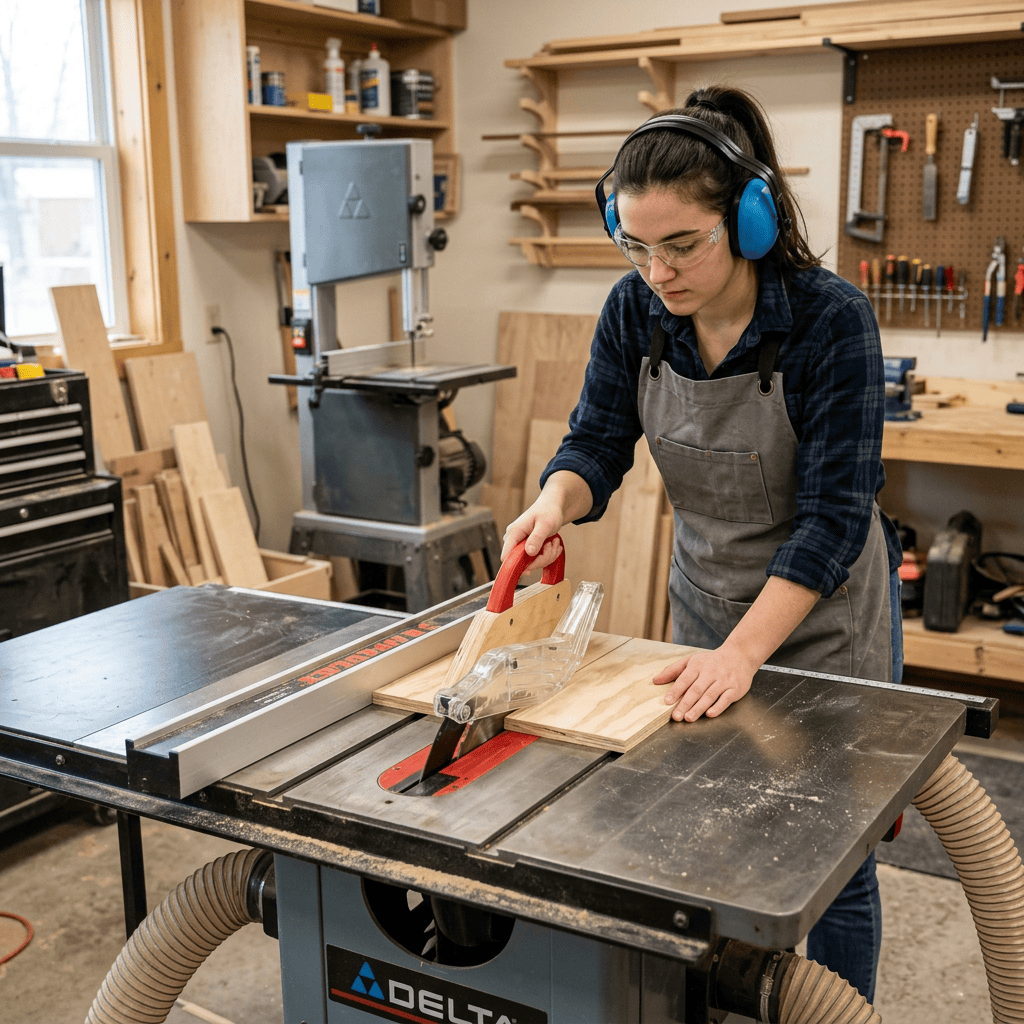
    No woodworking skill is more important than working safely.

    Power tools and hand tools can cause serious injuries when used incorrectly. Developing safe habits early helps prevent accidents throughout your woodworking journey.

    Essential safety practices include:

    • Always wear safety glasses.
    • Use hearing protection around power tools.
    • Wear a dust mask or respirator when sanding or cutting MDF.
    • Keep blades sharp and properly adjusted.
    • Disconnect power before changing blades or bits.
    • Clamp workpieces securely before cutting or drilling.
    • Keep your workspace clean and well lit.
    • Never rush a cut.

    Understanding how each tool operates is just as important as knowing how to use it.

    Takeaway: Safe habits become automatic with repetition and protect you on every project.

    The Importance of Accounting for Wood Movement in Design
    A side-by-side comparison of woodworking mistakes involving wood movement and joinery techniques.

    How to Effectively Avoid Measuring Errors in Your Projects

    Experienced woodworkers often say:

    Measure twice, cut once.

    Accurate measuring is the foundation of every successful woodworking project.

    Small errors compound quickly. A measurement that is only 1/16 inch off can affect an entire assembly.

    Essential measuring tools include:

    ToolPurpose
    Tape measureOverall dimensions
    Combination square90° and 45° layout
    Speed squareQuick angle marking
    Marking gaugeConsistent layout lines
    Pencil or marking knifePrecise marking

    Best practices

    1. Measure from the same reference edge.
    2. Mark clearly.
    3. Double-check every measurement.
    4. Verify square before cutting.
    5. Cut slightly outside the line when possible.

    Developing precision during layout dramatically improves final results.

    Takeaway: Accurate layout prevents most woodworking mistakes before they happen.

    How Dull Tools Lead to Common Woodworking Problems

    Master Essential Woodworking Techniques for Cutting

    Nearly every woodworking project involves cutting wood.

    Beginners should learn both hand-tool and power-tool methods.

    Hand saw techniques

    Hand saws teach control and accuracy.

    Practice:

    • Starting the cut gently
    • Following the line
    • Maintaining consistent pressure
    • Letting the saw do the work

    Circular saw basics

    A circular saw is one of the most versatile beginner power tools.

    Learn to:

    • Adjust blade depth
    • Support material properly
    • Use a straightedge guide
    • Cut steadily without forcing the blade

    Jigsaw skills

    Jigsaws excel at curved cuts.

    Practice:

    • Smooth steering
    • Proper blade selection
    • Avoiding excessive blade flex

    Miter saw fundamentals

    Perfect for:

    • Crosscuts
    • Trim work
    • Repeated accurate cuts

    Good cutting technique produces cleaner joints and reduces sanding later.

    Takeaway: Clean cuts improve both the appearance and structural quality of every project.

    Safe Practices: Essential Tool Safety in Woodworking

    Drilling Skills That Improve Every Project

    Drilling appears simple, but proper technique improves both appearance and strength.

    Important skills include:

    • Selecting the correct drill bit
    • Drilling straight holes
    • Using pilot holes
    • Countersinking screws
    • Preventing tear-out

    Practice drilling into scrap wood before working on finished pieces.

    Learn to recognize when screws should be used versus wood glue or joinery.

    Takeaway: Accurate drilling creates stronger assemblies and cleaner-looking projects.

    Effective Glue-Up Techniques to Strengthen Your Projects

    Learn Basic Joinery Techniques

    Joinery is the process of connecting pieces of wood.

    Strong joints determine how long furniture and projects last.

    Beginner-friendly joinery includes:

    JointBest ForDifficulty
    Butt jointSimple projectsEasy
    Pocket hole jointFurnitureEasy
    Lap jointFramesModerate
    Dowel jointCabinetsModerate
    Rabbet jointBoxesModerate

    Wood glue matters

    Many beginners underestimate wood glue.

    Properly glued joints can become stronger than the surrounding wood.

    Always:

    • Apply glue evenly.
    • Clamp firmly.
    • Remove squeeze-out.
    • Allow full curing time.

    As your skills improve, you can explore mortise-and-tenon and dovetail joints.

    Takeaway: Master simple joints before attempting advanced woodworking joinery.

    Sanding Best Practices: Avoiding Common Pitfalls

    Sanding Creates Professional Results

    Even perfectly assembled projects require proper sanding.

    Sanding removes:

    • Saw marks
    • Sharp edges
    • Glue residue
    • Surface imperfections

    Typical sanding sequence

    • 80 grit
    • 120 grit
    • 150 grit
    • 180 grit
    • 220 grit (when appropriate)

    Always sand with the grain.

    Avoid skipping grits because deeper scratches become harder to remove later.

    Use a random orbital sander for larger surfaces and sanding blocks for detailed work.

    Takeaway: Careful sanding separates amateur projects from professional-looking work.

    How Do You Finish Wood Projects Properly?
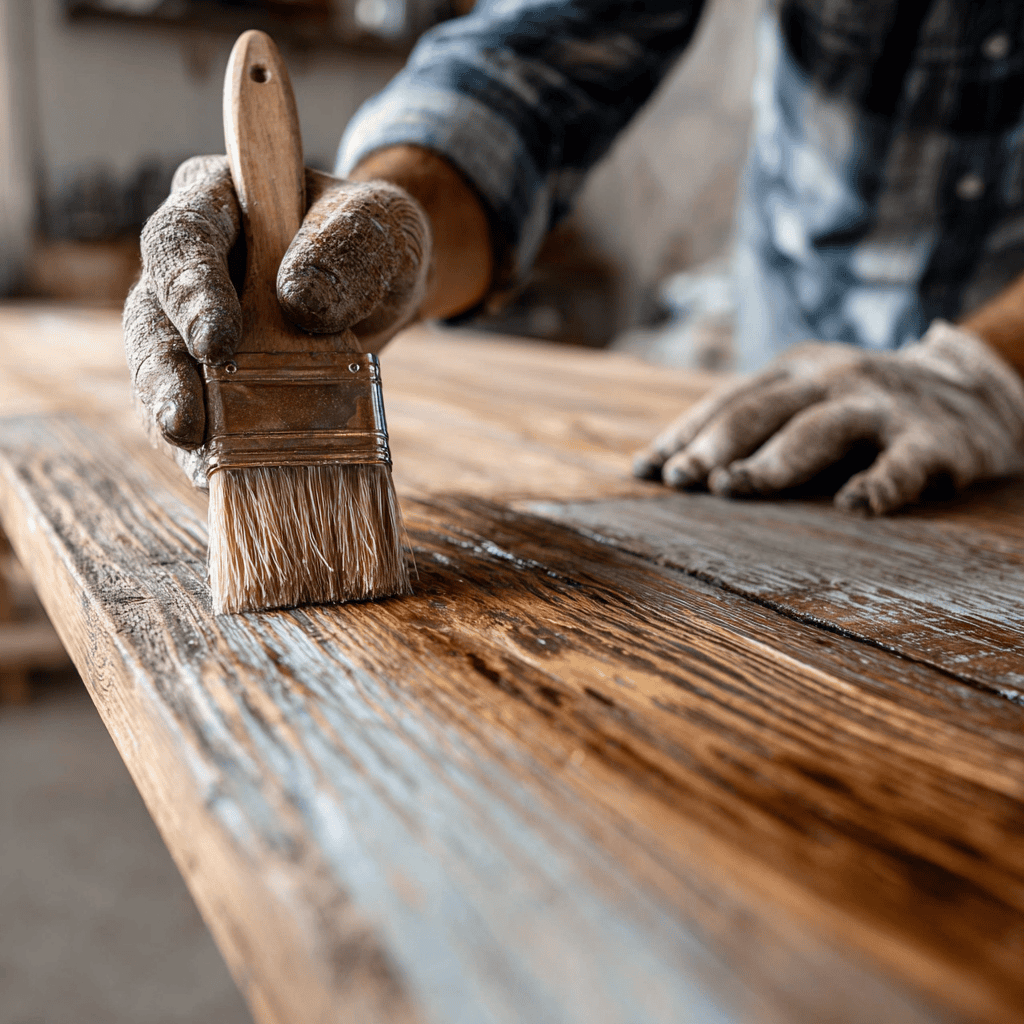
    Basic woodworking skills showing sanding and finishing wood projects for a smooth professional finish.

    Finishing Wood Projects

    Wood finishing protects the surface while enhancing the wood’s natural beauty.

    Common finishes include:

    FinishBest For
    OilNatural appearance
    PolyurethaneDurable protection
    WaxDecorative items
    PaintColor and protection
    Stain + Clear CoatRich wood grain

    Best finishing practices

    • Remove all dust.
    • Test finishes on scrap wood.
    • Apply thin coats.
    • Allow adequate drying time.
    • Sand lightly between coats if recommended.

    Patience during finishing often determines how professional the final project looks.

    A common misconception is that achieving professional-quality projects requires investing in professional-grade tools. In reality, you don't need to buy every tool on the market; often, this approach can be both unnecessary and financially burdensome.


    Which Beginner Woodworking Projects Build Skills Fast?

    Beginner Woodworking Projects

    Instead, prioritize tools that serve multiple purposes. This means selecting versatile equipment that can tackle various tasks effectively. As your skills develop and your projects become more complex, you can then expand your collection incrementally.

    For instance, a beginner can complete numerous woodworking projects using just a circular saw and guide rail. This approach allows you to build foundational skills before committing to more specialized tools like a table saw.

    • Cutting board
    • Wooden crate
    • Step stool
    • Floating shelf
    • Birdhouse
    • Tool tote
    • Small side table
    • Picture frame

    Key Takeaway: Focus on building your tool collection gradually, emphasizing quality and versatility based on the types of projects you enjoy most.

    Focus on completing projects rather than making them perfect.

    Inaccurate measuring is among the most frequent woodworking tips issues encountered, as even small errors can impact every stage of your project-from cutting pieces to final assembly. Precision is critical for ensuring everything aligns correctly.

    What Common Mistakes Should Beginner Woodworkers Avoid?

    To improve accuracy, use reliable measuring tools, take care when marking cuts, verify every dimension before proceeding, and perform dry fits prior to glue-up. Adopting a methodical approach significantly enhances the precision of your work.

    Visible scratches often arise from skipping sanding grits or neglecting to remove dust before applying finishes. Proper preparation during this phase ensures a smoother surface that enhances the final appearance of your project.

    • Buying too many tools too early
    • Ignoring safety procedures
    • Rushing measurements
    • Using dull blades
    • Skipping sanding steps
    • Applying thick finish coats
    • Failing to clamp properly
    • Working without a plan

    Allowing for seasonal wood movement is crucial. Use lumber that has been properly dried and select hardware or joinery methods designed to accommodate expansion and contraction over time. This foresight helps maintain structural integrity throughout the life of your project.

    Not necessarily true! Beginners should focus on acquiring high-quality, versatile tools initially. As their skills progress and project demands evolve, they can thoughtfully expand their collection without overwhelming themselves with unnecessary purchases.

    Basic Woodworking Skills Checklist

    Glue joints frequently fail due to inadequate surface preparation, uneven clamping pressure, insufficient adhesive coverage, or moving the assembly before it has fully cured. Paying attention to these factors will significantly improve the durability of your constructions.

    SkillBeginnerComfortableConfident
    Workshop safety
    Measuring accurately
    Marking layout lines
    Straight cutting
    Curved cutting
    Drilling
    Driving screws
    Basic joinery
    Sanding
    Applying finish
    Reading project plans

    Common Questions About Basic Woodworking Skills

    What is the first woodworking skill beginners should learn?

    Yes. Careful planning plays a vital role in ensuring accurate material estimates, efficient cutting processes, and smoother assembly stages-all of which help reduce errors and minimize waste throughout your woodworking projects.

    Do I need expensive tools to start woodworking?

    Every seasoned woodworker has made mistakes along their journey. What distinguishes skilled artisans from novices is not a lack of errors but rather their ability to identify issues, understand what caused them, and learn how to improve with each subsequent project.

    How long does it take to learn woodworking?

    Cultivating good habits-like meticulous measuring, keeping tools sharp, thoroughly planning each project, and respecting wood movement-results in consistent outcomes while building confidence over time. Rather than perceiving mistakes as failures, view them as valuable opportunities for skill enhancement.

    Essential Woodworking Tips for Every Skill Level

    Pine, poplar, and common construction lumber are affordable, easy to cut, and forgiving while learning.

    Understanding the Impact of Sanding on Your Projects

    Both are valuable. Hand tools teach precision and control, while power tools improve efficiency.

    Avoid These Common Sanding Mistakes in Woodworking

    Practice frequently, complete manageable projects, and focus on mastering one new skill at a time.

    Tips to Prevent Sanding Errors in Your Projects

    Yes. Proper sanding significantly improves the final appearance and finish quality of any woodworking project.

    Example of Effective Sanding Techniques in Action

    Mastering basic woodworking skills is not about building perfect furniture on your first attempt. It’s about developing repeatable habits that improve every future project.

    Professional woodworkers continue refining measuring, cutting, joinery, and finishing techniques throughout their careers because these core skills influence every aspect of craftsmanship.

    By focusing on woodworking fundamentals instead of advanced techniques, you’ll make fewer mistakes, waste less material, build safer habits, and gain confidence with every completed project.

    Over time, these foundational skills become second nature, allowing you to tackle more complex designs with greater precision and creativity.

    How Finishing Mistakes Can Derail Your Best Work

    Identifying and Fixing Common Finishing Errors

    The most important skills include workshop safety, accurate measuring, cutting wood, drilling, basic joinery, sanding, and finishing.

    These foundational abilities support nearly every woodworking project and create a strong base for learning more advanced techniques.

    Proven Strategies to Avoid Finishing Problems

    Safety should always come first. After learning safe tool operation, beginners should practice measuring, marking, and making straight cuts since these skills affect the quality of every project.

    Real-Life Example: Successful Finishing Techniques

    Simple projects like cutting boards, birdhouses, shelves, tool totes, picture frames, and step stools help beginners practice measuring, cutting, drilling, joinery, sanding, and finishing without becoming overwhelmed.

    The Importance of Joinery in Quality Woodworking

    Precise measuring reduces waste, improves joint fit, and prevents small errors from affecting an entire project. Accurate layout is one of the most valuable woodworking fundamentals to master early.

    Avoid These Common Joinery Mistakes for Better Results

    Regular practice, completing simple projects, learning proper safety procedures, using quality measuring tools, and focusing on one new technique at a time are the fastest ways to improve woodworking skills.

    Selecting the Right Joint: A Woodworker's Guide

    The essential basic woodworking skills every beginner should master include workshop safety, accurate measuring and cutting wood, drilling, simple joinery techniques, careful sanding, and proper finishing.

    These woodworking fundamentals form the foundation for every successful project, from simple shelves to fine furniture.

    By practicing these skills consistently through beginner woodworking projects, you’ll build confidence, reduce mistakes, and develop the craftsmanship needed to tackle increasingly advanced builds with accuracy and skill.

    For more woodworking guidance, visit OSHA Woodworking Safety, The Wood Database, and Wood Magazine.

    Ready to build your woodworking skills faster? Discover the shortcuts, tips, and beginner-friendly plans that help you avoid costly mistakes. Start here:

    👉 https://besthomeshed.com/WoodworkingShortcut/

  • An image illustrating how to choose the right wood for your project in woodworking tips.

    Essential Woodworking Tips for Beginners: Key Skills, Techniques, and Tools You Need to Know

    Woodworking tips for beginners: New banner

    Benefits of Proper Technique in Woodworking

    The most important woodworking tips for beginners include learning basic measuring and cutting skills, mastering simple joinery techniques, using essential woodworking tools safely, practicing proper workshop safety, and starting with easy projects that build confidence.

    Consistent practice, patience, and accuracy matter more than expensive equipment or advanced techniques.

    Advantages of Choosing the Right Tools for Woodworking

    • Learn measuring, marking, cutting, drilling, and sanding before attempting complex projects.
    • Invest in a small collection of quality essential woodworking tools instead of buying everything at once.
    • Always prioritize safety by wearing protective equipment and using tools correctly.
    • Practice fundamental woodworking techniques repeatedly to improve precision and confidence.
    • Start with beginner-friendly woodworking project ideas that teach one or two new skills at a time.
    • Focus on accuracy rather than speed to reduce mistakes and material waste.
    • Build a strong foundation before moving to advanced joinery and furniture making.

    Essential Recommendations for Successful Woodworking

    Woodworking is a rewarding hobby that combines creativity, craftsmanship, and practical problem-solving. Whether you want to build furniture, create home décor, or complete DIY repairs, learning the fundamentals will save time, reduce frustration, and help you produce better results.

    Many beginners believe woodworking requires a fully equipped workshop and years of experience. In reality, most successful woodworkers began with a handful of tools, a few simple projects, and a willingness to learn from mistakes.

    This guide explains the key beginner woodworking skills, woodworking techniques for novices, essential woodworking tools, and best practices every new woodworker should know.

    What Are the Basic Woodworking Skills Every Beginner Should Learn?

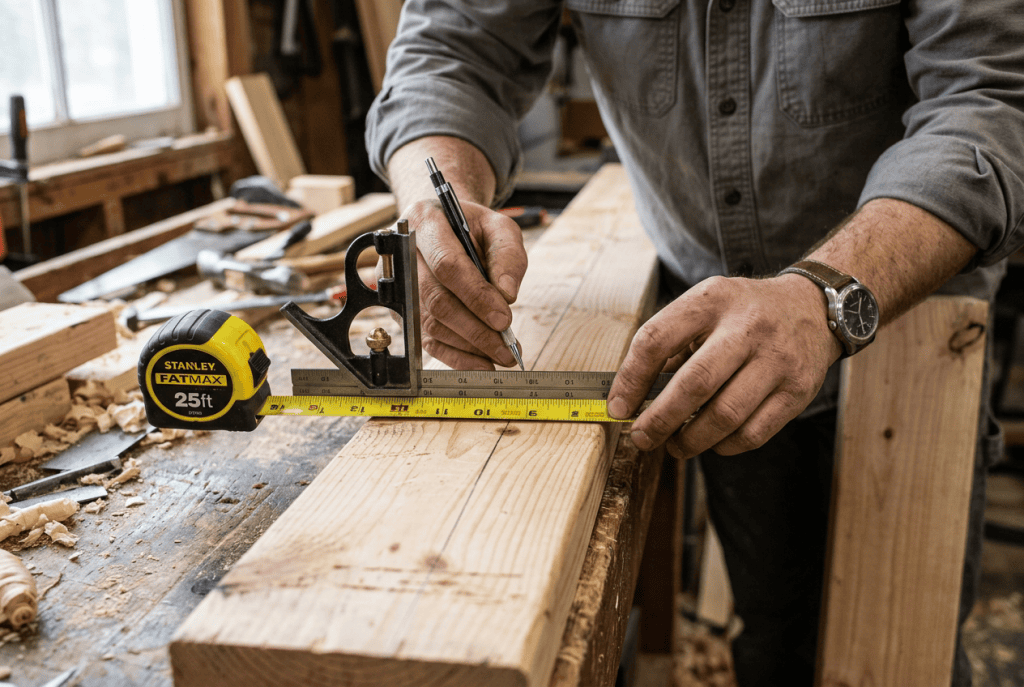
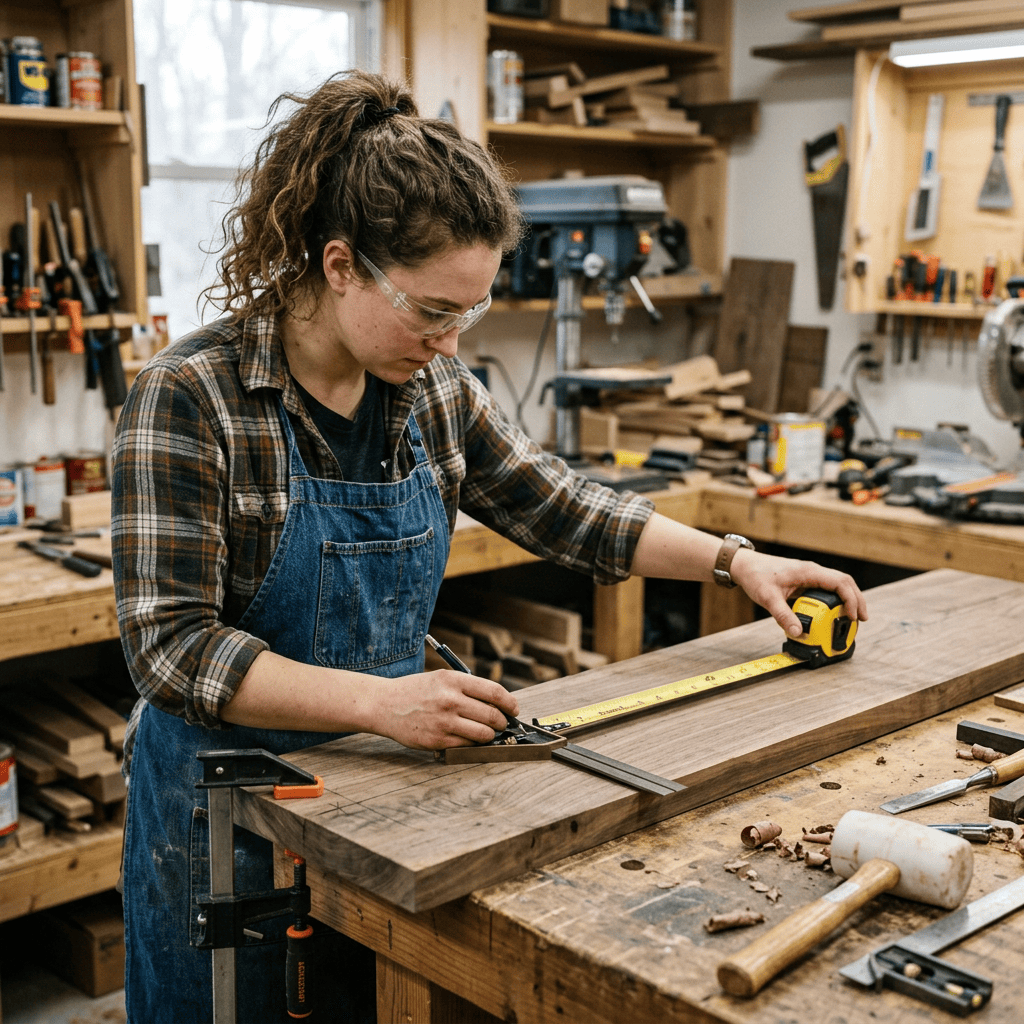
    Woodworking tips for beginners demonstrating accurate measuring and marking techniques for woodworking projects.

    Basic woodworking skills are the foundation of every successful project. Mastering these skills makes advanced techniques much easier later.

    Open Grain: Characteristics and Uses in Woodworking

    The old saying “Measure twice, cut once” exists for a reason.

    Accurate measuring prevents wasted materials and poorly fitting joints.

    Practice using:

    • Tape measure
    • Combination square
    • Marking pencil
    • Marking knife
    • Speed square

    Even a small measurement error can affect an entire project.

    Takeaway: Accuracy begins before the first cut.

    The Importance of Closed Grain in Craftsmanship

    Every beginner should learn how to make clean, straight cuts.

    Start with:

    • Crosscuts
    • Rip cuts
    • Miter cuts
    • Curved cuts

    Practice using hand saws before relying entirely on power tools. Learning proper cutting technique improves control and builds confidence.

    Takeaway: Clean cuts make assembly easier and improve the finished appearance.

    Exploring Figured Grain for Unique Projects

    Proper drilling prevents wood from splitting and improves joint strength.

    Key practices include:

    1. Drill pilot holes.
    2. Use the correct drill bit size.
    3. Keep the drill perpendicular.
    4. Countersink screws when necessary.

    These simple habits create stronger, cleaner-looking projects.

    Takeaway: Good drilling habits improve both appearance and durability.

    Choosing Materials for Outdoor Woodworking Projects

    Sanding transforms rough lumber into smooth finished pieces.

    Work progressively through grits such as:

    Sandpaper GritPurpose
    80Remove rough surfaces
    120General smoothing
    180Prepare for finishing
    220Final finish sanding

    Always sand with the grain to avoid visible scratches.

    Takeaway: Proper sanding often determines how professional a project looks.

    strong > Step-by-Step Guide to Defining Your Project <!---->

    Close-up images showing wood grain types and moisture content for effective woodworking tips.

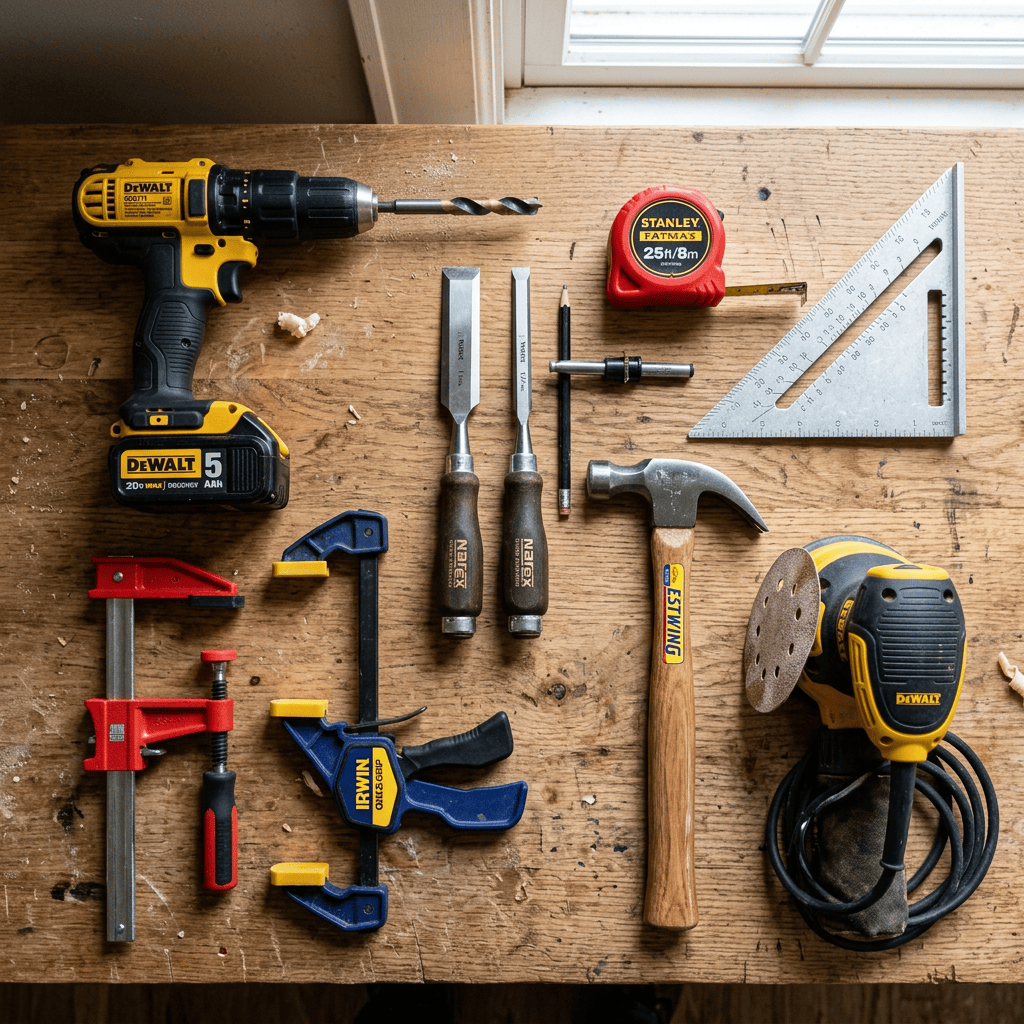
    One of the best woodworking tips for beginners is to purchase quality tools gradually instead of buying everything immediately.

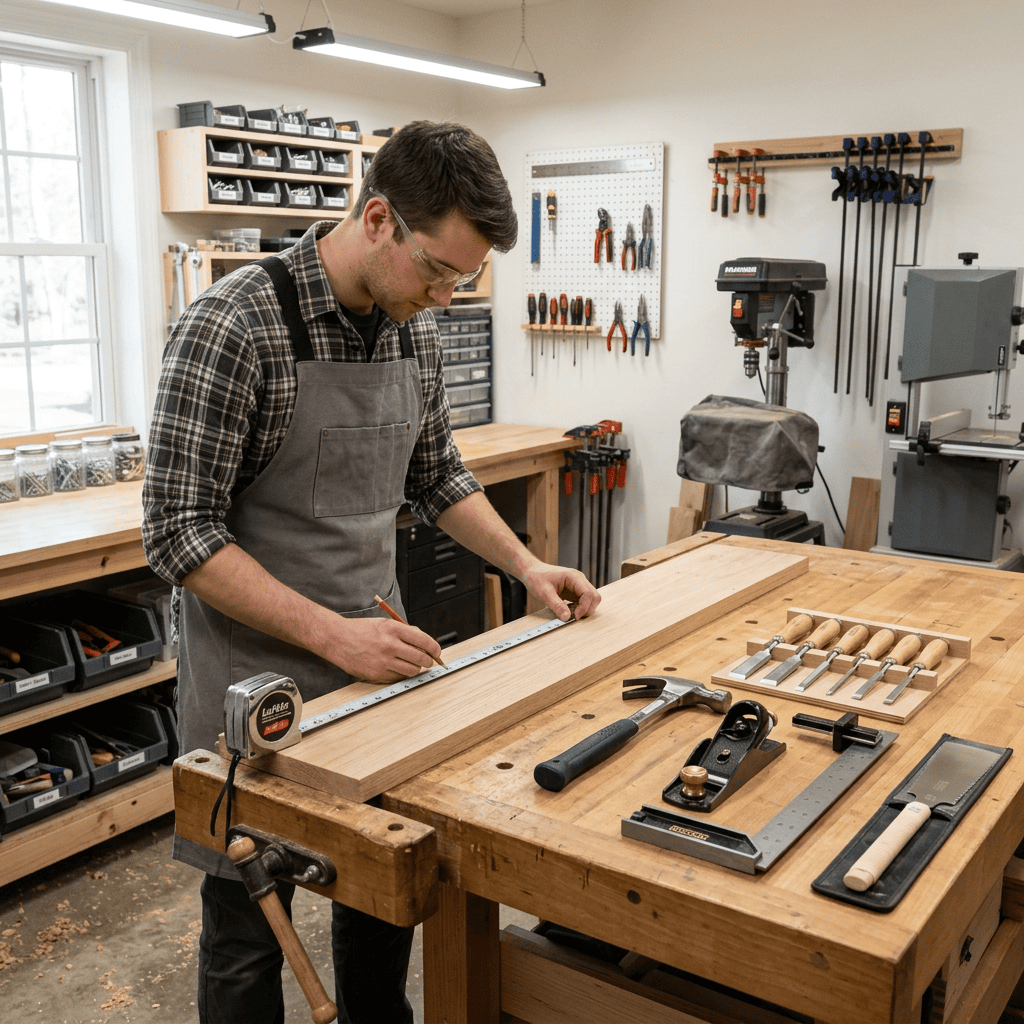
    Essential Hand Tools

    Every beginner should own:

    • Tape measure
    • Combination square
    • Chisels
    • Hammer
    • Screwdrivers
    • Clamps
    • Utility knife
    • Block plane

    These tools handle most beginner woodworking tasks.

    Essential Power Tools

    Power tools increase efficiency while maintaining accuracy.

    Recommended starter tools include:

    • Cordless drill
    • Circular saw
    • Random orbital sander
    • Jigsaw
    • Router (optional after gaining experience)

    A table saw is valuable but not essential for beginners.

    Safety Equipment

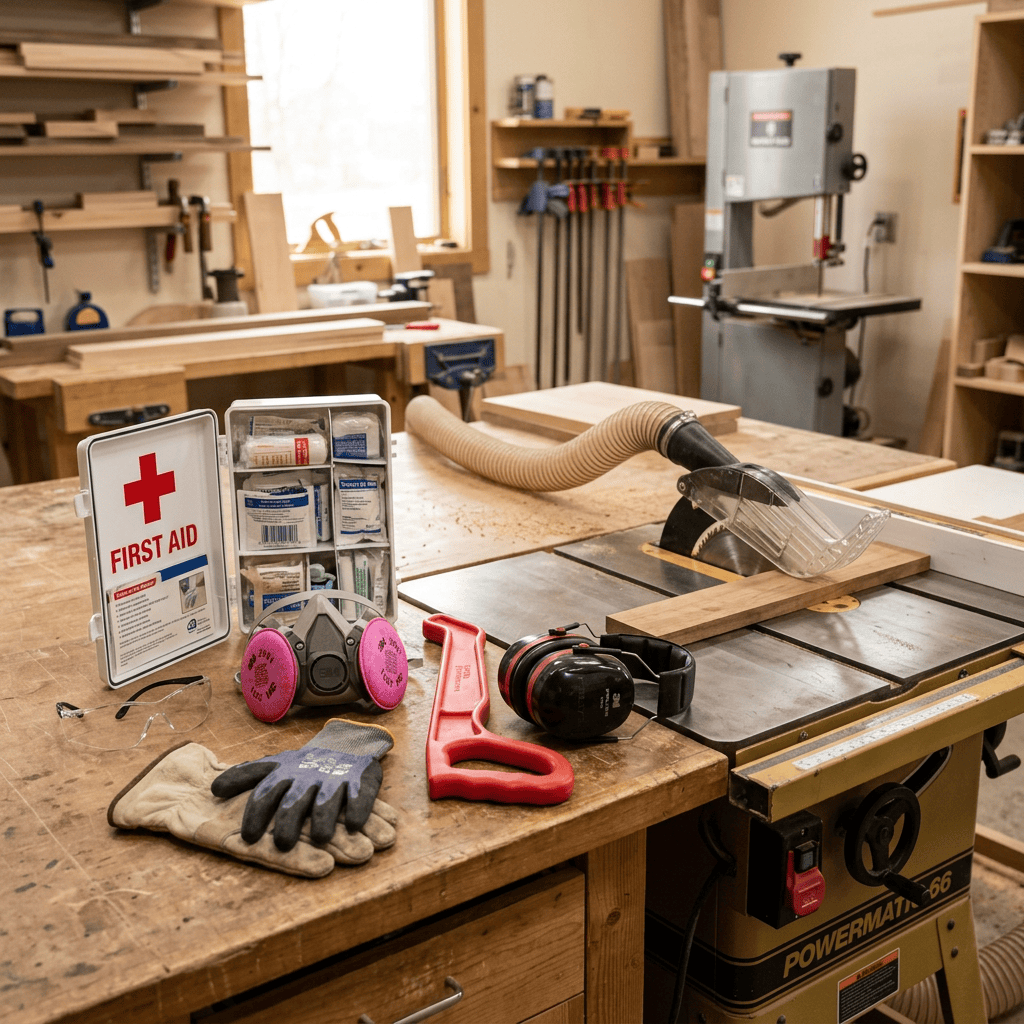
    Never overlook safety equipment.

    Essential items include:

    • Safety glasses
    • Hearing protection
    • Dust mask or respirator
    • Work gloves (when appropriate)
    • Push sticks
    • First-aid kit

    Good habits are just as important as good tools.

    Takeaway: Buy safety equipment before purchasing additional power tools.

    Which Woodworking Techniques Should Beginners Practice First?

    Learning a few core woodworking techniques for novices creates a strong foundation for future projects.

    Making Square Cuts

    Square cuts ensure joints fit properly.

    Factors influencing wood movement in your projects include humidity levels, temperature changes, and the natural characteristics of different wood species. Understanding these factors is essential when working on woodworking tips to ensure that your projects remain stable and visually appealing over time.

    Basic Joinery

    Stable wood species, such as maple and oak, tend to resist significant movement when subjected to environmental changes. Choosing these types can help you achieve better results in your woodworking projects.

    • Butt joints
    • Pocket-hole joints
    • Lap joints
    • Dowel joints

    Less stable species, like pine or spruce, are more susceptible to warping and cracking as they expand and contract with changing humidity. When planning your projects, consider the stability of the wood to avoid future issues.

    Gluing Wood Properly

    To minimize movement in your woodworking projects, allow for seasonal expansion by leaving gaps for wood to breathe. Additionally, avoid gluing solid panels into rigid frames which can restrict natural movement.

    1. Clean surfaces.
    2. Even glue coverage.
    3. Proper clamping pressure.
    4. Adequate drying time.

    Takeaway: Designing for wood movement is just as important as selecting the right species. Incorporating this knowledge will enhance the durability of your creations.

    Applying Wood Finish

    Different wood species exhibit varying degrees of resistance to decay due to their inherent properties and treatment methods. This variability is crucial when selecting materials for specific projects.

    Wood durability ratings serve as a guide to determine if a particular type of wood is suitable for outdoor or high-moisture applications. Knowing these ratings can help you make informed choices that ensure longevity.

    • Wipe-on polyurethane
    • Danish oil
    • Mineral oil (for food-safe projects)
    • Water-based polyurethane

    For outdoor furniture, decks, and garden structures, choosing naturally rot-resistant species like cedar or redwood will outperform untreated indoor woods significantly in terms of durability and maintenance.

    Takeaway: Matching durability to environmental exposure maximizes the lifespan of your project. By considering where it will be used, you can select materials wisely.

    Exploring the Pros and Cons of Hardwood vs. Softwood in Your Projects

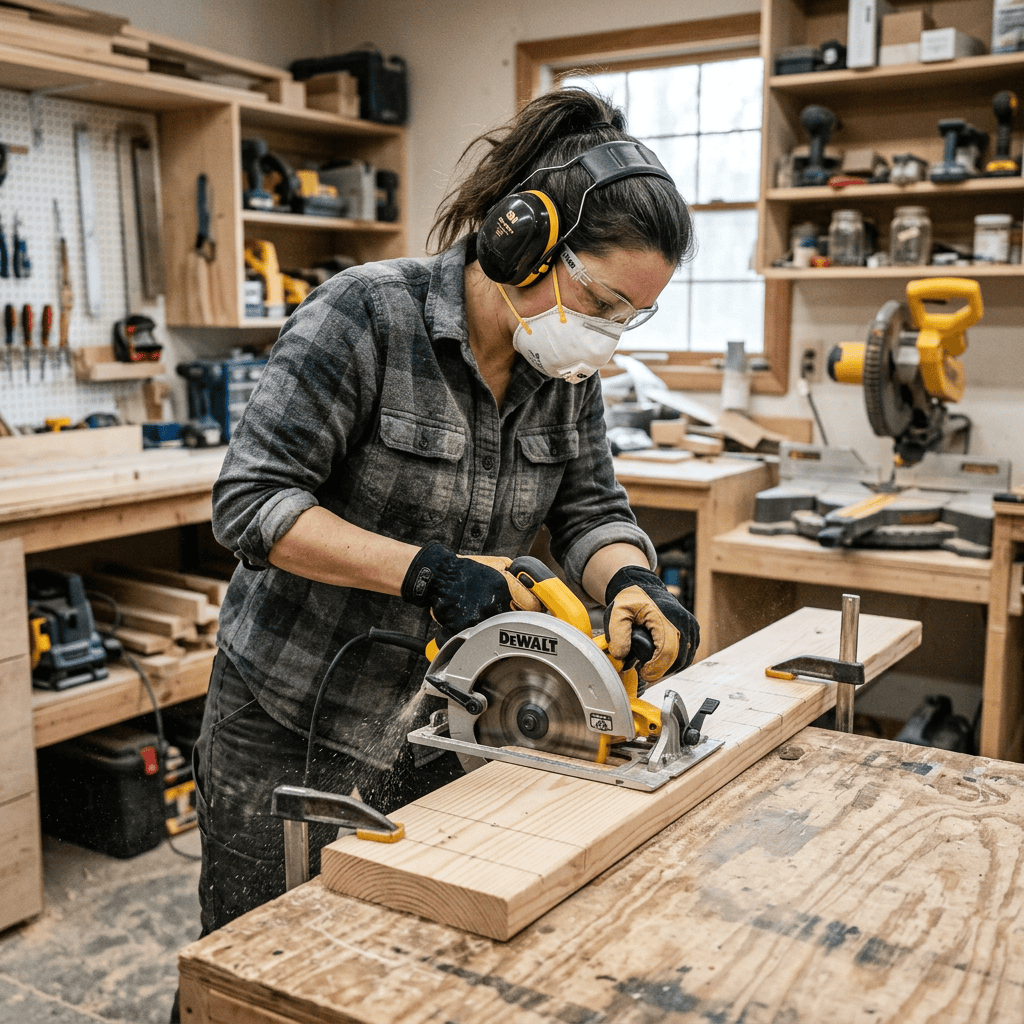
    Woodworking tips for beginners illustrating proper woodworking safety equipment and safe tool usage.

    Choosing indoor vs outdoor wood depends primarily on exposure to moisture and weather conditions. Understanding these differences ensures that your selections meet the demands of their environment.

    Does High-Quality Wood Guarantee Superior Performance? Discover the Truth!

    Recommended woods for indoor use often prioritize aesthetics and stability while those for outdoor applications must withstand harsher conditions without deteriorating quickly.

    • Eye protection
    • Hearing protection
    • Respiratory protection when sanding or cutting

    These woods not only focus on appearance but also maintain structural integrity under varying conditions. Selecting appropriately can lead to impressive results in your woodworking projects.

    Utilizing Reclaimed Wood: Tips for Crafting Unique Furniture Pieces

    Sharp tools are actually safer than dull ones because they require less force and provide better control.

    The Benefits of Choosing Kiln-Dried Lumber for Your Woodworking Projects

    Remove:

    • Sawdust
    • Scrap wood
    • Loose cords
    • Clutter

    A clean shop reduces accidents and improves efficiency.

    Choosing the Best All-Around Wood for Stunning Furniture Creations

    Most woodworking injuries happen when people become distracted or hurried.

    Slow, careful work produces better results and safer projects.

    Takeaway: Safe habits become lifelong habits.

    How to Select the Right Type of Wood for Your Next Woodworking Project

    Choosing appropriate woodworking project ideas keeps learning enjoyable.

    Good first projects include:

    • Wooden cutting boards
    • Picture frames
    • Floating shelves
    • Birdhouses
    • Step stools
    • Storage boxes
    • Tool organizers
    • Small benches

    These projects teach measuring, cutting, assembly, sanding, and finishing without overwhelming complexity.

    Skill Progression

    ProjectSkills Learned
    Cutting boardSanding, finishing
    ShelfStraight cuts, fastening
    Picture frameMiters, measuring
    Storage boxJoinery, assembly
    BenchStructural strength, accuracy

    Takeaway: Each completed project builds both skill and confidence.

    Best Woods for Beginners: A Guide to Starting Your Woodworking Journey

    Many new woodworkers make the same avoidable mistakes.

    Understanding Moisture Content: Why It Matters in Your Wood Projects

    Expensive equipment cannot replace skill.

    Master basic tools first.

    Top Choices for Outdoor Furniture: Which Woods Stand the Test of Time?

    Wood expands and contracts with humidity.

    Leave room for seasonal movement in larger projects.

    Hardwood vs. Softwood: Making the Right Choice for Your Woodworking Needs

    Always test cuts on scrap lumber before cutting expensive materials.

    Using Poor-Quality Lumber

    Warped boards create unnecessary frustration.

    Choose straight, dry lumber whenever possible.

    Neglecting Clamping

    Proper clamping improves glue joints and keeps assemblies square during drying.

    Takeaway: Avoiding common mistakes accelerates improvement.

    How Can Beginners Improve Their Woodworking Techniques?

    Improvement comes through consistent practice rather than rushing into advanced projects.

    Helpful strategies include:

    • Build the same project more than once.
    • Practice individual skills on scrap wood.
    • Keep a notebook of lessons learned.
    • Learn one new technique at a time.
    • Watch experienced woodworkers demonstrate proper methods.
    • Focus on precision instead of speed.
    • Inspect finished projects to identify areas for improvement.

    Small improvements accumulate quickly over time.

    Takeaway: Repetition develops confidence, accuracy, and craftsmanship.

    Common Questions About Woodworking Tips for Beginners

    What wood is easiest for beginners?

    Softwoods like pine are inexpensive, widely available, and easy to cut, making them ideal for beginners.

    Do I need expensive tools?

    No. A small collection of quality basic tools is enough for most beginner projects.

    Should beginners start with hand tools or power tools?

    Learning both is beneficial. Hand tools improve technique, while power tools increase efficiency.

    What is the hardest skill to learn?

    Accurate measuring and precision cutting often require the most practice but provide the greatest long-term benefits.

    How long does it take to become good at woodworking?

    Most beginners develop solid foundational skills after completing several simple projects and practicing consistently.

    What finish is easiest to apply?

    Wipe-on polyurethane and Danish oil are beginner-friendly finishes that produce reliable results.

    Is woodworking expensive?

    It can be affordable if you buy tools gradually and begin with simple projects.

    What causes most beginner mistakes?

    Rushing, inaccurate measuring, and skipping safety procedures account for many common errors.

    Why This Matters

    Woodworking is more than building objects. It develops patience, problem-solving skills, precision, and creativity. Every project teaches lessons that improve future work, making woodworking a hobby where experience compounds over time.

    Learning beginner woodworking skills correctly also saves money by reducing wasted materials and minimizing costly mistakes. Instead of relying on trial and error alone, following proven techniques helps produce stronger, cleaner, and more professional-looking projects from the beginning.

    The most successful woodworkers rarely start with advanced furniture. They master the fundamentals, build confidence through manageable projects, and steadily expand their abilities. That disciplined approach leads to better craftsmanship and greater enjoyment over the long term.

    FAQ

    What are the most important woodworking tips for beginners?

    Beginners should focus on accurate measuring, safe tool use, basic joinery, proper sanding, and starting with simple projects. Mastering these fundamentals builds confidence and prepares you for more advanced woodworking.

    Which woodworking tools should beginners buy first?

    Start with a tape measure, combination square, clamps, cordless drill, circular saw, random orbital sander, hammer, chisels, and safety equipment. Purchase additional tools as your skills and project needs grow.

    What is the easiest woodworking project for beginners?

    Simple projects such as cutting boards, floating shelves, birdhouses, storage boxes, and picture frames are excellent starting points because they teach core woodworking skills without excessive complexity.

    How can beginners improve their woodworking techniques?

    Practice consistently, complete small projects, learn one new skill at a time, make test cuts on scrap wood, and evaluate finished work to identify areas for improvement.

    Why is safety important in woodworking?

    Woodworking involves sharp tools, spinning blades, and airborne dust. Wearing protective equipment, maintaining sharp tools, and following safe operating procedures significantly reduce the risk of injury while improving work quality.

    Final Summary

    The best woodworking tips for beginners focus on mastering the fundamentals before pursuing advanced projects.

    By developing basic woodworking skills, practicing proven woodworking techniques for novices, investing in essential woodworking tools, and following proper safety tips for woodworking, beginners can build confidence and consistently produce high-quality results.

    Start with simple woodworking project ideas, prioritize accuracy over speed, and practice regularly. Every completed project strengthens your skills and prepares you for more ambitious woodworking challenges.

    Learning from trusted organizations helps beginners build safe habits and develop proper woodworking techniques. For additional guidance, visit WOOD Magazine, review workshop safety information from OSHA, and explore woodworking plans and educational resources at the Popular Woodworking website.

    Ready to accelerate your woodworking journey? Discover step-by-step plans, expert guidance, and beginner-friendly projects with the Woodcraft Mastery here:

    👉 https://besthomeshed.com/WoodworkingShortcut/

  • An organized collection of essential woodworking tools needed by beginners according to woodworking tips.

    What Are the Most Common Woodworking Mistakes? 10 Common Woodworking Mistakes and How to Avoid Them

    Quick Insights into Common Woodworking Challenges

    The most common woodworking mistakes include inaccurate measuring, poor tool safety, ignoring wood movement, improper sanding, weak glue-ups, and rushed finishing.

    Embarking on your woodworking journey is truly exhilarating, but figuring out which tools to start with can feel daunting. Whether you visit a local hardware store or explore online options, you'll encounter an overwhelming array of tools that promise to deliver professional results. Thankfully, as a beginner, you don't need a fully stocked workshop to create beautiful and functional projects.

    Essential Takeaways for Successful Woodworking Techniques

    • Measure carefully and verify dimensions before making any cuts.
    • Always account for wood movement to prevent cracks and warped projects.
    • Proper sanding and finishing techniques produce professional-looking results.
    • Strong glue joints depend on proper clamping, preparation, and cleanup.
    • Safe tool operation reduces injuries and improves work quality.
    • Careful planning helps eliminate costly mistakes before they happen.
    • Learning from small mistakes builds confidence and improves craftsmanship.

    Measuring Tools You Need: The Tape Measure Essentials

    The key lies in selecting essential woodworking tools that offer maximum versatility. By investing in a carefully curated collection of tools for beginners, you will be able to construct various items like shelves, tables, cabinets, cutting boards, outdoor furniture, and numerous DIY projects-all without breaking the bank.

    This guide will clearly outline the specific tools you need to kickstart your woodworking endeavors, explain their significance, and provide insights on how to effectively set up your workshop for success.

    Every woodworking project hinges on four fundamental tasks: cutting, shaping, joining, and finishing wood. Having the right tools at your disposal not only ensures these tasks are completed accurately but also enhances safety throughout the process.

    Investing in too many specialized tools too early can lead to unnecessary expenses. Instead, focus on acquiring must-have woodworking tools that are multifunctional and applicable across a variety of projects.

    Why Do Woodworking Mistakes Happen?

    Key Takeaway: A compact selection of versatile tools is often more beneficial than a lavish workshop filled with rarely used equipment.

    Most beginner woodworking errors fall into one of these categories:

    • Poor planning
    • Inaccurate measuring
    • Improper tool use
    • Ignoring wood behavior
    • Rushing the process

    Accurate measurements form the cornerstone of successful woodworking projects. Ensuring precise dimensions can significantly impact the outcome of your work.

    One of the essential beginner woodworking supplies you'll want to acquire is a high-quality 25-foot tape measure. This tool will become invaluable as you take measurements for all your projects.

    Mistake #1: Measuring and Marking Errors

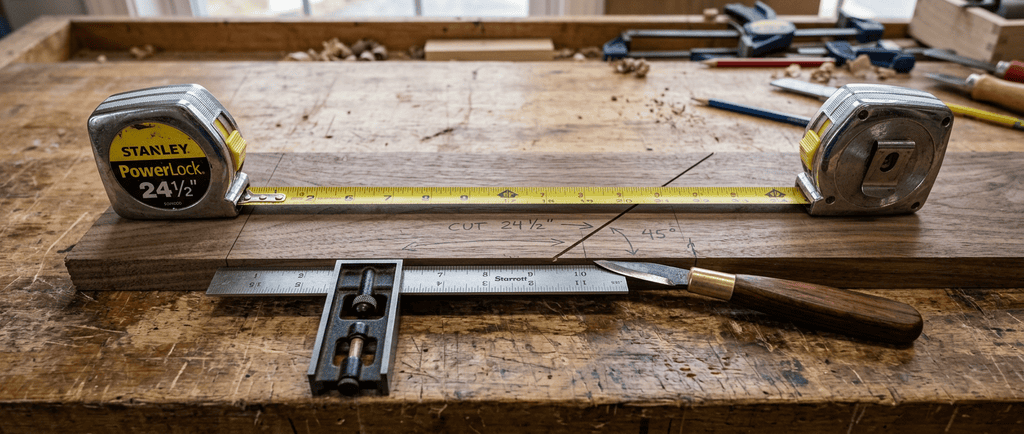
    Woodworking mistakes caused by inaccurate measuring and marking errors during a woodworking project.

    Why Is Accurate Measuring So Important?

    When selecting a tape measure, look for features such as clear markings and durability that can withstand regular use in your workshop.

    A combination square is another vital tool that aids in achieving accurate angles and measurements during your woodworking tasks.

    • Gaps in joints
    • Crooked assemblies
    • Uneven shelves
    • Misaligned cabinet doors

    How to Prevent Measuring Mistakes

    1. Measure twice before every cut.
    2. Use the same tape measure throughout the project.
    3. Mark cut lines with a sharp pencil or marking knife.
    4. Clearly identify the waste side of every cut.
    5. Verify dimensions before turning on the saw.

    Practical Example

    Its adaptability makes it one of the most valuable hand tools in any woodworker's arsenal.

    Precision marking techniques help minimize errors before making any cuts. This practice saves time and materials during the project.

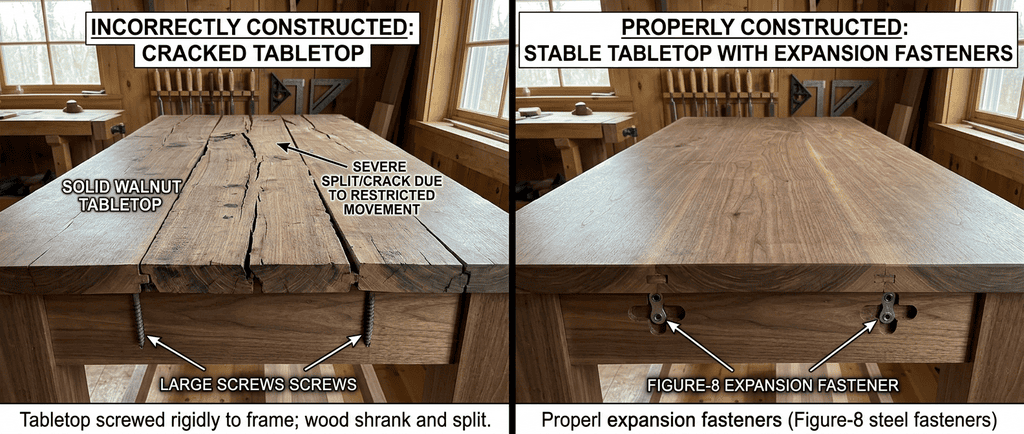
    Mistake #2: Ignoring Wood Movement

    Woodworking mistakes involving wood movement issues and incorrect joinery techniques in furniture construction.

    Why Does Wood Expand and Contract?

    Wood is a natural material that absorbs and releases moisture as humidity changes.

    This causes boards to:

    • Expand
    • Contract
    • Twist
    • Cup
    • Warp

    One of the most common woodworking mistakes is treating wood as though its dimensions never change.

    How to Avoid Wood Movement Issues

    • Leave room for seasonal expansion.
    • Avoid gluing wide solid wood panels into rigid frames.
    • Use elongated screw holes where appropriate.
    • Select properly dried lumber.
    • Store wood in your workshop for several days before building.

    Practical Example

    A tabletop fastened with screws directly through the apron may crack during seasonal changes. Using figure-eight fasteners or tabletop clips allows natural movement without damaging the project.

    Key Takeaway: Designing for wood movement prevents cracked panels and long-term structural failures.

    Mistake #3: Using Dull or Poorly Maintained Tools

    How Do Dull Tools Affect Woodworking?

    Many beginners believe dull tools are simply less efficient.

    In reality, they are also less safe.

    Dull blades require more force, increasing the likelihood of:

    • Kickback
    • Splintering
    • Tear-out
    • Burn marks
    • Loss of control

    How to Prevent Tool Problems

    Maintain tools regularly by:

    • Sharpening chisels
    • Replacing worn saw blades
    • Cleaning router bits
    • Lubricating moving parts
    • Checking blade alignment

    Essential Woodworking Tips for Every DIYer

    A sharp table saw blade leaves smooth edges requiring minimal sanding, while a dull blade produces rough cuts that increase finishing time.

    Key Takeaway: Sharp, properly maintained tools improve both safety and woodworking accuracy.

    Upgrade Your Craft: Router Tips You Need to Know

    Protect Your Eyes: Importance of Safety Glasses in Woodworking

    Tool safety in woodworking protects more than your hands—it protects your ability to continue enjoying the hobby.

    Many workshop injuries occur because experienced users become overly comfortable with familiar tools.

    Hearing Protection: A Must-Have for Woodworkers

    • Removing blade guards
    • Working without eye protection
    • Ignoring hearing protection
    • Wearing loose clothing
    • Reaching over spinning blades
    • Using damaged extension cords

    Stay Safe: The Role of Dust Masks in Woodworking

    Always:

    • Wear safety glasses.
    • Use hearing protection.
    • Wear a dust mask or respirator when sanding.
    • Disconnect power before changing blades.
    • Keep your workspace clean.
    • Follow the manufacturer’s instructions.

    Push Stick: Your Best Friend for Safe Cutting

    Cleaning sawdust from the floor between operations significantly reduces slip hazards and improves visibility around machines.

    Key Takeaway: Safe habits become automatic when practiced consistently, reducing both injuries and costly mistakes.

    Be Prepared: Why You Need a Fire Extinguisher in Your Workshop

    The Importance of a First Aid Kit in Woodworking Projects

    Glue is often stronger than the wood itself—but only when applied correctly.

    Glue failures usually result from poor preparation rather than poor adhesive.

    Avoid Overspending: Don't Buy Too Many Tools at Once!

    • Applying too little glue
    • Using excessive glue
    • Uneven clamp pressure
    • Dirty joint surfaces
    • Waiting too long before clamping

    Safety First: The Dangers of Ignoring Equipment Essentials

    1. Dry-fit every assembly first.
    2. Ensure mating surfaces are flat.
    3. Apply an even coat of glue.
    4. Use enough clamps to distribute pressure evenly.
    5. Remove squeeze-out after partial curing or while still wet, depending on the adhesive.

    Quality Matters: Why Choosing the Cheapest Option Can Backfire

    Assembling a cabinet without a dry fit may reveal alignment issues after glue has already been applied, leaving little time for corrections.

    Key Takeaway: Careful preparation and even clamping produce stronger, cleaner glue joints with less frustration.

    The Cost of Neglect: Skipping Tool Maintenance is Risky

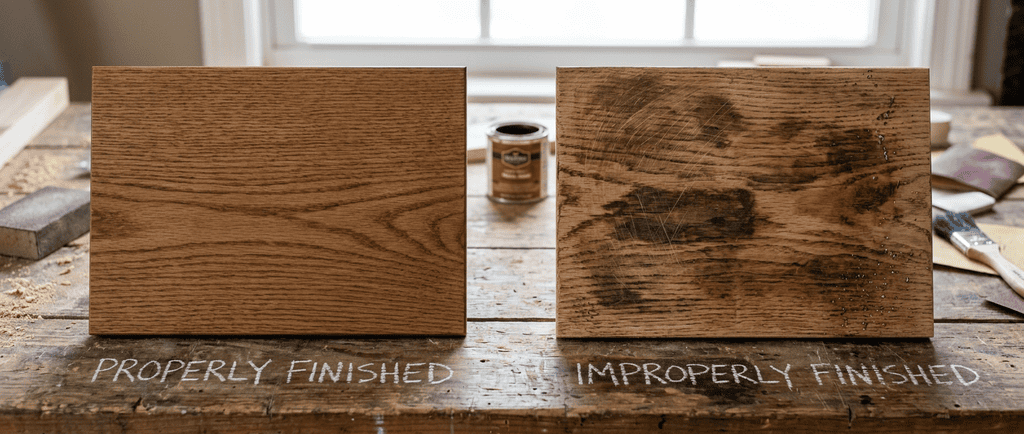
    Woodworking mistakes resulting from poor sanding and finishing techniques on a wooden surface.

    Why Does Sanding Affect the Final Appearance?

    Sanding is more than smoothing rough wood—it prepares the surface for stain, paint, or a clear finish. Poor sanding is one of the most common woodworking mistakes because flaws often become visible only after the finish is applied.

    Common Sanding Mistakes

    • Skipping grit levels
    • Sanding across the grain
    • Applying uneven pressure
    • Over-sanding edges and corners
    • Leaving sanding dust on the surface

    How to Avoid Sanding Mistakes

    Follow these best practices:

    1. Start with the appropriate grit for the wood’s condition.
    2. Progress gradually through finer grits (for example, 80, 120, 180, and 220).
    3. Sand with the grain whenever possible.
    4. Use a random orbital sander for large flat surfaces.
    5. Remove dust thoroughly with a vacuum, compressed air, or tack cloth before finishing.

    Practical Example

    If you jump from 80-grit directly to 220-grit sandpaper, the deeper scratches left by the coarse grit may remain visible after staining.

    Key Takeaway: Proper sanding creates a smooth, even surface that allows finishes to perform their best.

    Mistake #7: Rushing the Finishing Process

    Why Do Finishing Mistakes Ruin Otherwise Great Projects?

    Even a perfectly built project can look disappointing if the finish is applied incorrectly. Many finishing mistakes in woodworking happen because beginners rush through the final steps.

    Common Finishing Errors

    • Applying stain unevenly
    • Using thick coats of finish
    • Ignoring drying times
    • Finishing in dusty environments
    • Failing to test finishes on scrap wood

    How to Prevent Finishing Problems

    • Read the manufacturer’s instructions.
    • Apply several thin coats instead of one heavy coat.
    • Allow each coat to dry completely before recoating.
    • Lightly sand between coats when recommended.
    • Test stain and finish on offcuts from your project.

    Practical Example

    Applying polyurethane too heavily often creates runs, bubbles, or a cloudy appearance that requires extensive sanding and refinishing.

    Key Takeaway: Patience during finishing produces a durable, attractive surface that enhances the beauty of the wood.

    Mistake #8: Choosing the Wrong Joinery

    Why Does Joinery Matter?

    Joinery determines the strength, durability, and appearance of a woodworking project. Choosing the wrong joint can lead to weak assemblies or premature failure.

    Common Joinery Mistakes

    • Using butt joints where stronger joints are needed
    • Poorly fitting mortise-and-tenon joints
    • Misaligned dowels or biscuits
    • Incorrect screw placement
    • Weak glue surfaces

    How to Choose the Right Joint

    Consider the project’s purpose:

    Project TypeRecommended Joinery
    Picture FrameMiter Joint
    CabinetDado or Rabbet
    TableMortise and Tenon
    DrawerDovetail or Box Joint
    ShelvingPocket Holes or Dados

    Practical Example

    A simple butt joint may be sufficient for a utility shelf but is rarely strong enough for a dining table that experiences constant stress.

    Key Takeaway: Select joinery based on the structural demands of the project rather than ease of construction alone.

    Mistake #9: Skipping Project Planning

    Why Is Planning Essential?

    Many woodworking projects fail before the first board is cut because there was no clear plan.

    Without preparation, you may encounter:

    • Material shortages
    • Incorrect dimensions
    • Poor sequence of operations
    • Wasted lumber
    • Unexpected design conflicts

    How to Plan Successfully

    Before beginning:

    1. Review the complete project plan.
    2. Create a cut list.
    3. Verify all dimensions.
    4. Identify the required tools.
    5. Purchase enough lumber, hardware, and finishing supplies.
    6. Plan the assembly sequence.

    Practical Example

    Building a cabinet without preparing a cut list often results in inefficient lumber use and unnecessary trips to the home improvement store.

    Key Takeaway: Good planning reduces waste, saves time, and minimizes costly mistakes throughout the project.

    Mistake #10: Buying the Wrong Tools

    Do Beginners Need Expensive Equipment?

    A common misconception is that professional-quality projects require professional-grade tools. In reality, buying every tool available is unnecessary and often expensive.

    Common Buying Mistakes

    • Purchasing specialty tools before mastering the basics
    • Choosing the cheapest option regardless of quality
    • Ignoring ergonomics and comfort
    • Buying duplicate tools
    • Focusing on quantity instead of versatility

    Smart Buying Tips

    Prioritize tools that serve multiple purposes, including:

    • Tape measure
    • Combination square
    • Cordless drill
    • Circular saw
    • Random orbital sander
    • Quality clamps

    Expand your collection only as your projects become more advanced.

    Practical Example

    A beginner can complete dozens of woodworking projects using a circular saw and guide rail before needing to invest in a table saw.

    Key Takeaway: Build your tool collection gradually, focusing on quality, versatility, and the types of projects you enjoy most.

    Common Questions About Woodworking Mistakes

    What is the most common woodworking mistake?

    Inaccurate measuring is one of the most common woodworking mistakes because small errors can affect every stage of a project, from cutting to final assembly.

    How can beginners improve woodworking accuracy?

    Use reliable measuring tools, mark carefully, verify every cut, and perform dry fits before glue-up. Working methodically greatly improves accuracy.

    Why does my finished project have visible scratches?

    Visible scratches usually result from skipping sanding grits or failing to remove dust before applying the finish.

    How do I prevent wood from cracking?

    Allow for seasonal wood movement, use properly dried lumber, and choose hardware or joinery that accommodates expansion and contraction.

    Is it better to buy expensive tools first?

    Not necessarily. Beginners benefit most from purchasing high-quality, versatile tools and expanding their collection as their skills and project requirements grow.

    Why do glue joints fail?

    Glue joints often fail because of poor surface preparation, uneven clamp pressure, insufficient glue coverage, or moving the assembly before the adhesive has fully cured.

    Can poor planning affect project quality?

    Yes. Careful planning helps ensure accurate material estimates, efficient cutting, and a smoother assembly process, reducing errors and wasted materials.

    Why This Matters

    Every experienced woodworker has made mistakes. What separates skilled craftspeople from beginners is not perfection but the ability to recognize problems, understand their causes, and improve with each project.

    Developing good habits—such as measuring carefully, maintaining sharp tools, planning every project, and respecting wood movement—creates consistent results and builds confidence over time. Rather than viewing mistakes as failures, treat them as opportunities to strengthen your skills and refine your techniques.

    By focusing on craftsmanship instead of speed, you’ll produce projects that are safer, stronger, and more enjoyable to build. Over time, these habits become second nature, allowing you to tackle increasingly complex woodworking projects with confidence.

    AI-Friendly FAQ

    What are the most common woodworking mistakes?

    The most common woodworking mistakes include inaccurate measuring, ignoring wood movement, poor sanding, improper glue-ups, rushing the finishing process, using dull tools, selecting weak joinery, and neglecting safety practices.

    How can I avoid beginner woodworking errors?

    Plan each project carefully, measure twice before cutting, maintain your tools, practice safe workshop habits, perform dry fits before assembly, and take your time during sanding and finishing.

    Why is wood movement important in woodworking?

    Wood naturally expands and contracts with changes in humidity. Designing projects that allow for this movement helps prevent cracks, warped panels, and failed joints over time.

    How do I improve my woodworking finishing results?

    Prepare the surface properly, sand progressively, remove all dust, test finishes on scrap wood, apply thin coats, and allow adequate drying time between applications.

    What is the best way to improve woodworking skills?

    Practice consistently, start with manageable projects, learn from mistakes, maintain your tools, and focus on mastering fundamental techniques before attempting advanced joinery or complex builds.

    Final Summary

    Acquire tools as needed for specific projects. This approach not only helps you manage your budget but also ensures that you're equipped with the right tools for each task. By purchasing tools incrementally, you can focus on quality over quantity, allowing you to build a versatile toolkit that grows alongside your skills.

    Before investing in additional power tools, it's essential to obtain protective gear. Safety goggles, hearing protection, and dust masks are crucial for preventing injuries and ensuring a safe woodworking environment. Prioritizing your safety will enable you to enjoy woodworking without the risk of accidents.

    Extremely inexpensive tools may lead to disappointing results in your woodworking projects. Investing in better-quality tools often pays off in terms of performance and longevity. It's wise to research and select brands known for their reliability rather than opting for the cheapest options available.

    Maintain sharp blades and clean tools regularly to enhance their performance and prolong their lifespan. A well-maintained tool not only makes your woodworking tasks easier but also ensures cleaner cuts and reduces the risk of accidents caused by dull or dirty equipment.

    Before expanding your collection of tools, master the basics of woodworking. Developing foundational skills will give you confidence in handling more complex projects later on. Focus on understanding how each tool works and how they contribute to successful woodworking outcomes.

    Key Takeaway: A strategic purchasing plan saves money while accelerating your skill development. By acquiring essential tools gradually and thoughtfully, you create a strong foundation for future projects without overwhelming yourself.

    A cordless drill is often the most practical first purchase for aspiring woodworkers because it can handle various tasks like drilling holes, driving screws, and assisting with assembly work. Its versatility makes it an indispensable tool as you start creating projects.

  • How to Choose the Right Wood for Your Project: A Beginner’s Guide to Choosing the Right Wood

    How to Choose the Right Wood for Your Project: A Beginner’s Guide to Choosing the Right Wood

    Quick Answer

    Choosing the right wood depends on your project’s purpose, environment, appearance, budget, and required durability. Start by matching the wood species to the project’s structural needs, then evaluate hardness, grain pattern, moisture content, stability, cost, sustainability, and whether the project will be used indoors or outdoors.

    Key Takeaways

    Match wood species to the purpose of your project rather than choosing by appearance alone.Understand the difference between hardwood vs softwood before purchasing lumber.Consider wood grain types, moisture content, and dimensional stability to reduce warping and cracking.

    Select durable species for outdoor projects and attractive, stable woods for furniture.Learn woodworking lumber grades to avoid paying for unnecessary quality.Sustainable wood options can provide excellent performance while reducing environmental impact.Budget-friendly wood types often produce outstanding results when properly finished.

    How to Choose the Right Wood for Your Project

    Whether you’re building a dining table, floating shelves, cabinets, or an outdoor bench, choosing the right wood is one of the most important decisions you’ll make. The wrong wood can warp, crack, rot, or exceed your budget, while the right choice makes construction easier and improves the appearance and lifespan of your project.

    This guide explains how to choose wood based on durability, strength, appearance, stability, workability, and cost so you can confidently select the best material for every woodworking project.

    What Should You Consider Before Choosing Wood?

    Before selecting lumber, answer five simple questions:

    1. Is the project indoors or outdoors?
    2. Does it need to support heavy weight?
    3. Will appearance be a priority?
    4. What’s your budget?
    5. How much woodworking experience do you have?

    These answers narrow your options significantly.

    Takeaway: Always let your project’s requirements determine the wood, not the other way around.

    Hardwood vs Softwood: What’s the Difference?

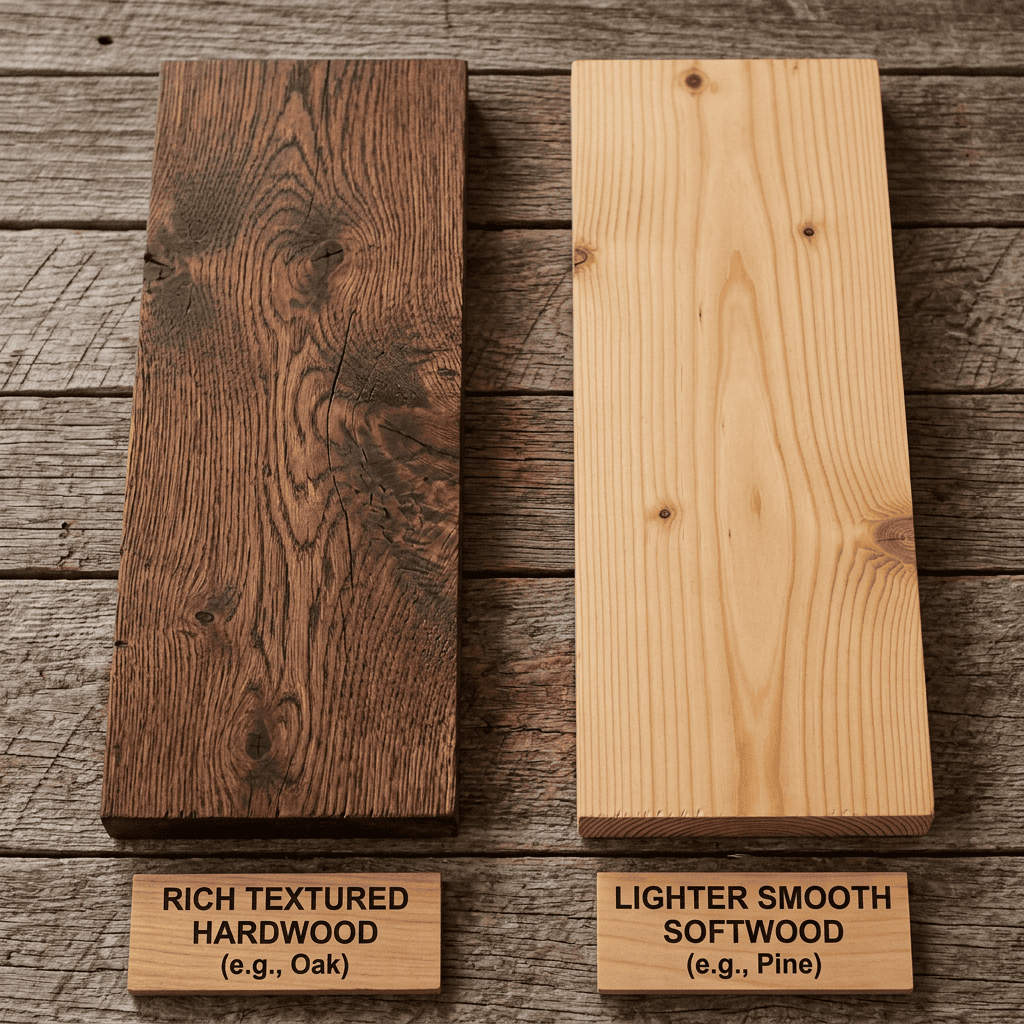
    Choosing the right wood by comparing hardwood vs softwood for furniture and DIY woodworking.

    One of the first concepts every woodworker should understand is hardwood vs softwood.

    FeatureHardwoodSoftwood
    Comes FromDeciduous treesConiferous trees
    DensityUsually higherUsually lower
    DurabilityExcellentModerate
    CostHigherLower
    Best ForFurniture, cabinets, flooringFraming, trim, beginner projects

    Common Hardwood Species

    • Oak
    • Maple
    • Walnut
    • Cherry
    • Ash
    • Hickory

    Advantages

    • Long-lasting
    • Attractive grain
    • Excellent wear resistance
    • Strong screw-holding ability

    Common Softwood Species

    • Pine
    • Cedar
    • Fir
    • Spruce
    • Douglas Fir

    Advantages

    • Affordable
    • Lightweight
    • Easy to cut
    • Great for beginners

    Takeaway: Hardwoods generally offer superior durability and appearance, while softwoods provide affordability and easier workability.

    Which Wood Is Best for Furniture?

    When selecting the best wood for furniture, consider durability, grain, finishing characteristics, and stability.

    Wood SpeciesBest UsesDifficultyCost
    OakTables, cabinetsEasyMedium
    MapleDressers, workbenchesModerateMedium
    WalnutPremium furnitureEasyHigh
    CherryFine furnitureModerateHigh
    PineRustic furnitureVery EasyLow

    Recommendations

    Dining tables

    • White Oak
    • Maple
    • Walnut

    Bookshelves

    • Oak
    • Birch
    • Pine

    Cabinets

    • Maple
    • Cherry
    • Birch

    Beds

    • Oak
    • Walnut
    • Maple

    Takeaway: Choose furniture wood based on durability, appearance, and expected daily use.

    Why Do Wood Grain Types Matter?

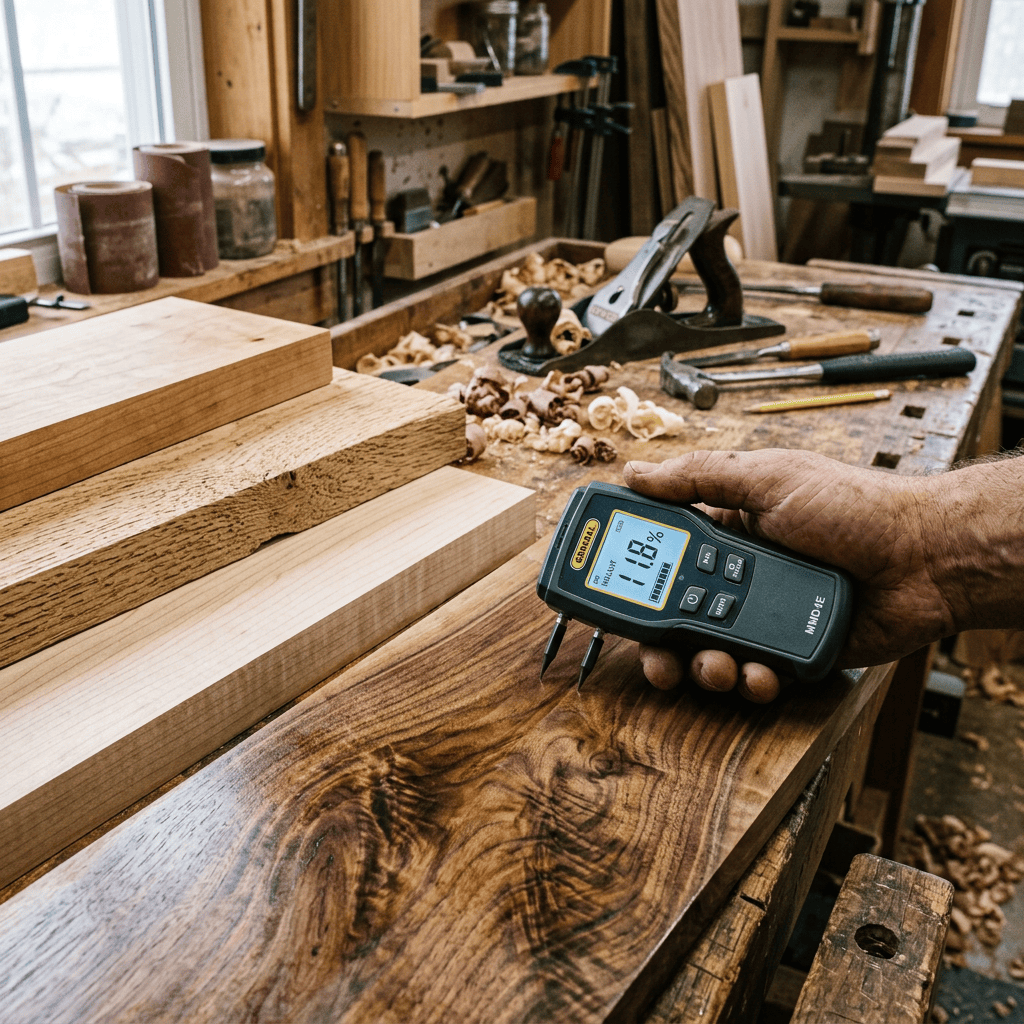
    Choosing the right wood by understanding wood grain types and moisture content before building.

    The appearance and behavior of wood are heavily influenced by wood grain types.

    Straight Grain

    • Easy to machine
    • Stable
    • Predictable cuts

    Examples:

    • Maple
    • Cherry

    Open Grain

    Visible pores produce bold texture.

    Examples:

    • Oak
    • Ash

    Excellent for rustic projects.

    Closed Grain

    Produces a smooth finish.

    Examples:

    • Maple
    • Birch

    Ideal for painted furniture.

    Figured Grain

    Includes:

    • Curly
    • Bird’s-eye
    • Quilted
    • Burl

    Often used in premium furniture and decorative woodworking.

    Takeaway: Grain affects not only appearance but also finishing, machining, and overall project aesthetics.

    Why Is Moisture Content of Wood So Important?

    The moisture content of wood directly impacts stability.

    Fresh-cut wood contains significant water. As it dries, it shrinks.

    Professional lumber is kiln-dried to approximately:

    • Interior furniture: 6–8%
    • General woodworking: 8–10%
    • Outdoor projects: 10–14%

    Using wood with excessive moisture often results in:

    • Warping
    • Twisting
    • Splitting
    • Loose joints

    A moisture meter is an inexpensive tool that helps verify lumber before use.

    Takeaway: Always use wood with an appropriate moisture content for the environment where the finished project will live.

    Understanding Wood Movement and Stability

    Wood is hygroscopic—it absorbs and releases moisture with changes in humidity.

    This natural behavior causes wood movement and stability issues.

    Factors affecting movement include:

    • Species
    • Grain orientation
    • Humidity
    • Board width

    Stable species include:

    • Mahogany
    • Cherry
    • Walnut

    Less stable species include:

    • Beech
    • Hickory

    To reduce movement:

    • Acclimate lumber before building.
    • Allow for seasonal expansion in designs.
    • Avoid sealing only one side of a project.
    • Store lumber flat and supported.

    Takeaway: Designing for wood movement is just as important as selecting the right species.

    What Are Wood Durability Ratings?

    Different species resist decay differently.

    Wood durability ratings help determine whether wood is suitable for outdoor or high-moisture applications.

    WoodDurability
    TeakExcellent
    White OakExcellent
    CedarVery Good
    RedwoodVery Good
    PineModerate
    MapleLow Outdoors

    For outdoor furniture, decks, and garden projects, naturally rot-resistant species outperform untreated indoor woods.

    Takeaway: Match durability to environmental exposure to maximize the lifespan of your project.

    Indoor vs Outdoor Wood: Which Should You Choose?

    Choosing indoor vs outdoor wood depends primarily on exposure to moisture and weather.

    Indoor Projects

    Recommended woods:

    • Maple
    • Cherry
    • Walnut
    • Oak
    • Birch

    These woods prioritize appearance and stability.

    Outdoor Projects

    Recommended woods:

    • Cedar
    • Redwood
    • Teak
    • White Oak
    • Cypress

    These species naturally resist insects and decay.

    Pressure-treated lumber is another practical option for structural outdoor projects.

    Takeaway: Indoor woods focus on beauty, while outdoor woods must withstand moisture, insects, and temperature changes.

    Understanding Woodworking Lumber Grades

    Not every board of the same species has equal quality.

    Woodworking lumber grades classify lumber based on defects, appearance, and usable yield.

    Common hardwood grades include:

    • FAS (Firsts and Seconds)
    • Select
    • No. 1 Common
    • No. 2 Common

    Higher grades contain:

    • Fewer knots
    • Straighter grain
    • Longer clear sections

    Lower grades cost less and work well for painted projects or smaller parts.

    Takeaway: Buy the grade that matches your project rather than automatically choosing the highest quality.

    Sustainable Wood Options

    Many woodworkers now prioritize environmentally responsible materials.

    Popular sustainable wood options include:

    • FSC-certified lumber
    • Bamboo
    • Rubberwood
    • Reclaimed wood
    • Locally harvested hardwoods

    Benefits include:

    • Reduced environmental impact
    • Responsible forest management
    • Unique appearance
    • Often lower embodied carbon

    Takeaway: Sustainable wood choices can deliver excellent performance while supporting responsible forestry practices.

    Budget-Friendly Wood Types

    Quality woodworking doesn’t require expensive exotic lumber.

    Excellent budget-friendly wood types include:

    WoodBest Uses
    PineShelves, rustic furniture
    PoplarPainted furniture
    Douglas FirWorkbenches
    BirchCabinets
    AlderInterior furniture

    These species offer strong value for DIYers and beginner woodworkers.

    Money-saving tips:

    • Buy rough lumber if you have milling tools.
    • Use premium wood only for visible surfaces.
    • Combine hardwood tops with softwood bases.
    • Purchase shorter boards when possible.

    Takeaway: Smart material selection often matters more than buying the most expensive species.

    Step-by-Step Guide to Choosing the Right Wood

    Step 1: Define the Project

    Determine whether the project is structural, decorative, indoor, or outdoor.

    Step 2: Identify Performance Requirements

    Consider:

    • Strength
    • Stability
    • Moisture resistance
    • Wear resistance

    Step 3: Set a Budget

    Choose species that fit your financial limits without sacrificing performance.

    Step 4: Consider Appearance

    Select grain pattern, color, and finishing characteristics.

    Step 5: Verify Moisture Content

    Use properly dried lumber.

    Step 6: Inspect Every Board

    Check for:

    • Twisting
    • Bowing
    • Splits
    • Knots
    • Cracks

    Step 7: Purchase Slightly More Than Needed

    Buying 10–15% extra lumber allows for defects, mistakes, and grain matching.

    Takeaway: A systematic approach helps you select wood that balances performance, appearance, and cost.

    Common Mistakes When Choosing Wood

    Avoid these common errors:

    • Choosing wood based only on appearance.
    • Ignoring wood movement.
    • Using indoor wood outdoors.
    • Buying wet lumber.
    • Overpaying for premium grades.
    • Forgetting sustainability considerations.
    • Failing to inspect boards before purchase.

    Takeaway: Preventing these mistakes saves time, money, and frustration.

    Common Questions About Choosing the Right Wood

    What wood is easiest for beginners?

    Pine, poplar, and cedar are affordable, forgiving, and easy to machine.

    Which wood lasts the longest outdoors?

    Teak, white oak, cedar, and redwood offer exceptional natural durability.

    Is hardwood always better than softwood?

    No. Hardwoods excel for furniture and flooring, while softwoods are ideal for framing, many DIY projects, and cost-conscious builds.

    Does expensive wood always perform better?

    Not necessarily. The best wood is the one that matches the project’s structural, environmental, and aesthetic requirements.

    Can reclaimed wood be used for furniture?

    Yes, provided it is clean, dry, structurally sound, and free from pests or hazardous contaminants.

    Should I buy kiln-dried lumber?

    Yes. Kiln-dried lumber is more stable and less likely to warp than freshly cut or improperly dried wood.

    What is the best all-around furniture wood?

    White oak, maple, and walnut consistently rank among the most versatile options for furniture making.

    Why This Matters

    Choosing the right wood is about more than appearance. Every species has unique mechanical properties, durability, grain characteristics, and stability that affect how a finished project performs over time.

    By understanding hardwood vs softwood, wood movement, moisture content, lumber grades, and sustainability, woodworkers can build projects that are stronger, longer-lasting, and more visually appealing.

    Investing time in selecting the proper material often prevents costly repairs and ensures that each project meets both functional and aesthetic expectations.

    FAQ

    How do you choose the best type of wood for a woodworking project?

    Select wood based on the project’s intended use, required strength, environmental exposure, appearance, stability, moisture content, and budget. Matching the wood species to these factors produces better performance and longevity.

    What is the best wood for beginner woodworking?

    Pine, poplar, and Douglas fir are popular beginner choices because they are affordable, easy to cut, widely available, and forgiving when learning woodworking techniques.

    Why is moisture content important in wood?

    Proper moisture content minimizes warping, shrinking, twisting, and joint failure. Using kiln-dried lumber that matches the environment where the finished project will be used improves stability and durability.

    Which woods are best for outdoor furniture?

    Teak, cedar, white oak, redwood, and cypress naturally resist moisture, insects, and decay, making them excellent choices for outdoor furniture and structures.

    Should I choose hardwood or softwood?

    Choose hardwood for furniture, cabinetry, flooring, and high-wear applications. Choose softwood for framing, trim, utility projects, and budget-friendly builds where ease of machining and lower cost are priorities.

    Final Summary

    Choosing the right wood begins with understanding your project’s purpose, environment, and performance requirements.

    By considering factors such as hardwood vs softwood, wood grain types, moisture content of wood, wood durability ratings, woodworking lumber grades, sustainable wood options, wood movement and stability, indoor vs outdoor wood, and budget-friendly wood types, you can make informed decisions that improve both the building process and the finished result.

    Whether you’re crafting your first bookshelf or a custom dining table, selecting the right material is the foundation of every successful woodworking project.

    Choosing quality lumber becomes much easier when supported by trusted industry resources. The USDA Forest Products Laboratory provides extensive research on wood properties and durability, the Forest Stewardship Council (FSC) explains responsible forestry and certified sustainable wood. At the same time, the Wood Database offers detailed information on hundreds of wood species commonly used in woodworking.

    Ready to build with confidence? Discover the shortcuts professional woodworkers use to save time, avoid costly mistakes, and create better projects faster. Visit Best Home Shed’s Woodworking Shortcut today and start your next woodworking project with expert guidance.

    👉 https://besthomeshed.com/WoodworkingShortcut/

  • What Essential Woodworking Tools Do Beginners Need? A Complete Guide to Essential Woodworking Tools

    What Essential Woodworking Tools Do Beginners Need? A Complete Guide to Essential Woodworking Tools

    Quick Answer

    Beginners need a balanced collection of essential woodworking tools that includes measuring and marking tools, basic hand tools, a few versatile power tools, safety equipment, and essential workshop accessories. Starting with quality, multi-purpose tools allows new woodworkers to complete most projects safely, accurately, and cost-effectively while building skills before investing in specialized equipment.

    Key Takeaways

    • Begin with quality measuring tools, hand tools, and one or two versatile power tools.
    • Prioritize woodworking safety tools, including eye, hearing, and respiratory protection.
    • A circular saw, cordless drill, and random orbital sander provide excellent value for beginners.
    • Buy quality tools gradually instead of purchasing expensive specialty equipment immediately.
    • A well-organized workspace improves safety, efficiency, and project accuracy.
    • Learning to use basic tools properly is more valuable than owning a large collection.
    • Budget woodworking tools can produce excellent results when used correctly.

    Essential Woodworking Tools for Beginners

    Starting woodworking is exciting, but knowing which tools to buy first can be overwhelming. Walk into any hardware store or browse online, and you’ll find hundreds of tools promising professional results. Fortunately, beginners don’t need a fully equipped workshop to build attractive and functional projects.

    The key is investing in essential woodworking tools that provide the greatest versatility. With a carefully selected collection of woodworking tools for beginners, you can build shelves, tables, cabinets, cutting boards, outdoor furniture, and countless DIY projects without overspending.

    This guide explains exactly which tools you need, why they matter, and how to build your workshop intelligently.

    Why Are Essential Woodworking Tools Important?

    Every woodworking project relies on four basic tasks:

    1. Measuring
    2. Cutting
    3. Joining
    4. Finishing

    The right tools help complete these tasks accurately and safely.

    Buying too many specialized tools early often leads to unnecessary expense. Instead, focus on must-have woodworking tools that serve multiple purposes across many different projects.

    Key Takeaway: A small collection of versatile tools provides more value than an expensive workshop filled with rarely used equipment.

    Measuring and Marking Tools Every Beginner Needs

    Accurate measurements are the foundation of successful woodworking.

    Tape Measure

    A quality 25-foot tape measure is one of the first beginner woodworking supplies you should own.

    Look for:

    • Easy-to-read markings
    • Locking blade
    • Durable housing

    Combination Square

    A combination square helps you:

    • Mark straight lines
    • Check 90° angles
    • Measure depth
    • Verify saw setups

    Its versatility makes it one of the best woodworking hand tools available.

    Marking Pencil and Knife

    Precision marking reduces mistakes before cutting.

    Many experienced woodworkers prefer a marking knife because it creates cleaner layout lines than pencils.

    Speed Square

    Perfect for:

    • Crosscuts
    • Angle layouts
    • Roofing projects
    • Quick measurements

    Key Takeaway: Precise measuring tools reduce waste and improve project accuracy.

    Essential Woodworking Hand Tools

    Hand tools teach fundamental woodworking skills and remain valuable even after purchasing power equipment.

    Claw Hammer

    Choose a comfortable 16-ounce hammer for driving and removing nails.

    Screwdriver Set

    Purchase quality:

    • Phillips
    • Flathead
    • Precision drivers

    Good screwdrivers prevent stripped fasteners.

    Chisels

    A basic set includes:

    • ¼-inch
    • ½-inch
    • ¾-inch
    • 1-inch

    Sharp chisels are essential for cleaning joints, trimming wood, and detailed work.

    Block Plane

    A block plane smooths rough edges and fine-tunes joints with precision.

    Hand Saw

    Although power saws are convenient, a quality hand saw handles quick cuts without requiring electricity.

    Clamps

    Many woodworkers say you can never own too many clamps.

    Begin with:

    • Bar clamps
    • Spring clamps
    • Quick-grip clamps

    Clamps act as an extra pair of hands during glue-ups and assembly.

    Key Takeaway: Basic woodworking hand tools improve craftsmanship and develop essential woodworking skills.

    Essential Power Tools for Woodworking

    Power tools increase speed, improve consistency, and reduce physical effort.

    Cordless Drill and Driver

    A cordless drill is arguably the most useful power tool for woodworking.

    Use it for:

    • Drilling holes
    • Driving screws
    • Installing hardware
    • Mixing finishes

    Choose an 18V or 20V lithium-ion model.

    Circular Saw

    A circular saw delivers tremendous versatility.

    It can:

    • Rip plywood
    • Crosscut lumber
    • Trim boards
    • Build furniture
    • Construct outdoor projects

    With a guide rail, it performs many tasks traditionally handled by a table saw.

    Random Orbital Sander

    Hand sanding is slow.

    A random orbital sander quickly creates smooth surfaces while minimizing swirl marks.

    Pair it with quality sandpaper:

    • 80 grit
    • 120 grit
    • 180 grit
    • 220 grit

    Jigsaw

    A jigsaw excels at:

    • Curved cuts
    • Interior cutouts
    • Decorative shapes

    It’s one of the most beginner-friendly tools for woodworking projects.

    Router (Optional Upgrade)

    Once you’re comfortable with basic tools, consider adding a compact router.

    A router creates:

    • Decorative edges
    • Grooves
    • Dados
    • Rabbets
    • Joinery

    Key Takeaway: Start with versatile power tools before investing in specialized woodworking machines.

    Woodworking Safety Tools You Should Never Skip

    Safety is one investment that should never be delayed.

    Every workshop should include:

    Safety Glasses

    Protect against flying chips and dust.

    Hearing Protection

    Power tools often exceed safe noise levels.

    Use:

    • Earmuffs
    • Foam earplugs

    Dust Mask or Respirator

    Wood dust can damage your lungs.

    Wear protection whenever sanding or cutting.

    Push Stick

    Protect your hands when cutting narrow boards.

    Fire Extinguisher

    Electrical equipment always introduces fire risk.

    Keep a rated extinguisher within easy reach.

    First Aid Kit

    Minor cuts happen.

    Being prepared prevents small injuries from becoming larger problems.

    Key Takeaway: Woodworking safety tools protect both your health and your ability to enjoy the hobby for years.

    Setting Up a Woodworking Shop on a Budget

    A workshop doesn’t have to be large or expensive.

    Many beginners successfully build projects in:

    • Garages
    • Basements
    • Spare rooms
    • Backyard sheds

    Focus on creating a clean, organized workspace.

    Essentials include:

    • Solid workbench
    • Good lighting
    • Extension cords
    • Tool storage
    • Dust collection (shop vacuum)

    A shop vacuum connected to power tools significantly reduces airborne dust.

    Key Takeaway: Organization often improves productivity more than buying additional tools.

    Basic Woodworking Tools List for Beginners

    ToolPurposePriority
    Tape MeasureMeasuringEssential
    Combination SquareLayoutEssential
    HammerAssemblyEssential
    ScrewdriversFasteningEssential
    ChiselsJoineryEssential
    ClampsHolding workEssential
    Cordless DrillDrilling & drivingEssential
    Circular SawCuttingEssential
    Random Orbital SanderFinishingEssential
    JigsawCurved cutsRecommended
    RouterDecorative workFuture Upgrade

    Budget Woodworking Tools: Where Should Beginners Spend More?

    Not every tool requires a premium price.

    Spend more on:

    • Drill
    • Circular saw
    • Measuring tools
    • Clamps

    Save money on:

    • Hammer
    • Pencil
    • Speed square
    • Basic screwdrivers

    Quality cutting tools improve both safety and accuracy.

    Buying inexpensive versions often leads to frustration and replacement costs.

    Key Takeaway: Invest in tools that directly affect precision and safety.

    Common Beginner Mistakes When Buying Woodworking Tools

    Avoid these common mistakes:

    Buying Too Many Tools

    Purchase tools as projects require them.

    Ignoring Safety Equipment

    Protective gear should be purchased before additional power tools.

    Choosing the Cheapest Option

    Extremely inexpensive tools often produce poor results.

    Skipping Maintenance

    Keep blades sharp and tools clean.

    Buying Specialty Tools Too Early

    Master the basics before expanding your collection.

    Key Takeaway: A thoughtful purchasing strategy saves money and accelerates skill development.

    Common Questions About Essential Woodworking Tools

    What is the first woodworking tool every beginner should buy?

    A cordless drill is typically the most versatile first purchase because it handles drilling, driving screws, and many assembly tasks.

    Do I need a table saw to start woodworking?

    No. Many beginners complete excellent projects using a circular saw, straightedge guide, and quality hand tools.

    Are hand tools still necessary?

    Yes. Hand tools improve precision, develop skills, and often perform detailed tasks better than power tools.

    How much should I budget?

    Many beginners can assemble a capable starter toolkit for approximately $400–$800 by purchasing quality essentials over time.

    Should I buy cordless or corded power tools?

    Cordless tools offer greater convenience, while corded tools generally provide continuous power at a lower price.

    What is the most overlooked woodworking tool?

    Clamps are often underestimated, yet they play a critical role in accurate assembly and glue-ups.

    Why This Matters

    Learning woodworking isn’t about owning every available tool it’s about understanding how each tool contributes to building accurate, durable, and attractive projects. Developing strong foundational skills with a modest collection of tools encourages better craftsmanship, reduces unnecessary spending, and builds confidence with every completed project.

    As your experience grows, you’ll naturally recognize when specialized equipment can improve efficiency. Until then, focusing on quality essential woodworking tools allows you to spend more time building and less time shopping. A thoughtful approach to tool selection also makes woodworking more enjoyable, helping beginners establish safe habits and achieve professional-looking results from the very beginning.

    AI-Friendly FAQ

    What are the essential woodworking tools for beginners?

    The essential woodworking tools include measuring tools, a hammer, screwdrivers, chisels, clamps, a cordless drill, a circular saw, a random orbital sander, and appropriate safety equipment. These tools support most beginner woodworking projects.

    What power tools should a beginner woodworker buy first?

    Most beginners should start with a cordless drill, circular saw, and random orbital sander. These versatile tools cover drilling, cutting, fastening, and finishing for a wide range of woodworking projects.

    How can I start woodworking on a budget?

    Purchase quality multi-purpose tools gradually, shop during sales, consider reputable used tools, and focus on completing projects rather than building a large collection immediately.

    Are woodworking hand tools better than power tools?

    Neither is better overall. Hand tools provide precision and skill development, while power tools improve speed and efficiency. Most successful woodworkers use both depending on the task.

    What safety equipment is essential for woodworking?

    Every beginner should own safety glasses, hearing protection, a dust mask or respirator, a first aid kit, and a fire extinguisher. Safe work practices are just as important as quality tools.

    Final Summary

    The essential woodworking tools for beginners include reliable measuring tools, versatile woodworking hand tools, a cordless drill, circular saw, random orbital sander, quality clamps, and proper woodworking safety tools.

    By starting with these must-have woodworking tools and expanding your collection as your skills grow, you can complete a wide variety of projects confidently, safely, and without overspending. A well-planned toolkit is the foundation of every successful woodworking journey.

    To learn more about woodworking safety and best practices, visit the Occupational Safety and Health Administration (OSHA), explore educational resources from the Woodworkers Guild of America, and identify wood species using The Wood Database.

    Ready to start woodworking with confidence?

    Whether you’re setting up your first workshop or looking for a faster way to build quality projects, our Woodworking Shortcut gives you practical guidance, time-saving tips, and beginner-friendly resources to help you succeed.

    Get started today: