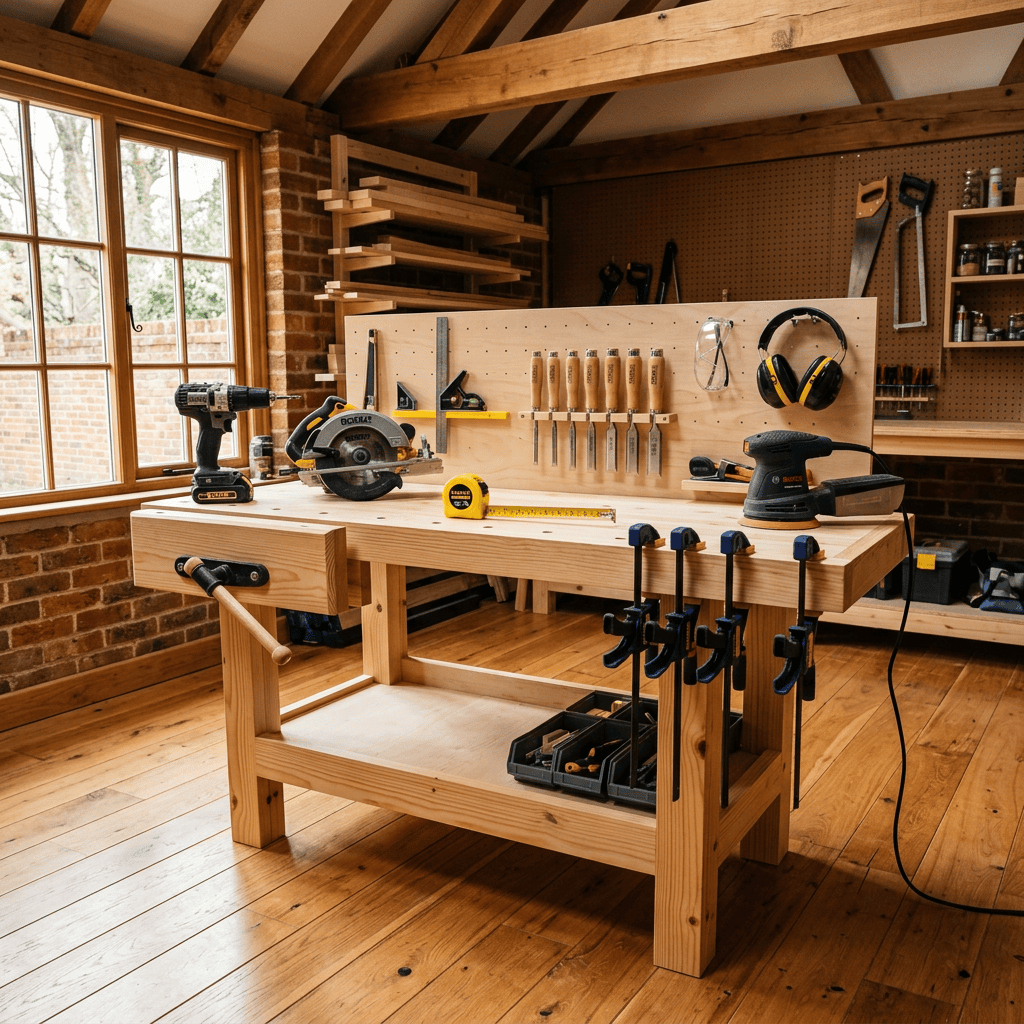
Quick Answer
Beginners need a balanced collection of essential woodworking tools that includes measuring and marking tools, basic hand tools, a few versatile power tools, safety equipment, and essential workshop accessories. Starting with quality, multi-purpose tools allows new woodworkers to complete most projects safely, accurately, and cost-effectively while building skills before investing in specialized equipment.
Key Takeaways
- Begin with quality measuring tools, hand tools, and one or two versatile power tools.
- Prioritize woodworking safety tools, including eye, hearing, and respiratory protection.
- A circular saw, cordless drill, and random orbital sander provide excellent value for beginners.
- Buy quality tools gradually instead of purchasing expensive specialty equipment immediately.
- A well-organized workspace improves safety, efficiency, and project accuracy.
- Learning to use basic tools properly is more valuable than owning a large collection.
- Budget woodworking tools can produce excellent results when used correctly.
Essential Woodworking Tools for Beginners
Starting woodworking is exciting, but knowing which tools to buy first can be overwhelming. Walk into any hardware store or browse online, and you’ll find hundreds of tools promising professional results. Fortunately, beginners don’t need a fully equipped workshop to build attractive and functional projects.
The key is investing in essential woodworking tools that provide the greatest versatility. With a carefully selected collection of woodworking tools for beginners, you can build shelves, tables, cabinets, cutting boards, outdoor furniture, and countless DIY projects without overspending.
This guide explains exactly which tools you need, why they matter, and how to build your workshop intelligently.
Why Are Essential Woodworking Tools Important?
Every woodworking project relies on four basic tasks:
- Measuring
- Cutting
- Joining
- Finishing
The right tools help complete these tasks accurately and safely.
Buying too many specialized tools early often leads to unnecessary expense. Instead, focus on must-have woodworking tools that serve multiple purposes across many different projects.
Key Takeaway: A small collection of versatile tools provides more value than an expensive workshop filled with rarely used equipment.
Measuring and Marking Tools Every Beginner Needs
Accurate measurements are the foundation of successful woodworking.
Tape Measure
A quality 25-foot tape measure is one of the first beginner woodworking supplies you should own.
Look for:
- Easy-to-read markings
- Locking blade
- Durable housing
Combination Square
A combination square helps you:
- Mark straight lines
- Check 90° angles
- Measure depth
- Verify saw setups
Its versatility makes it one of the best woodworking hand tools available.
Marking Pencil and Knife
Precision marking reduces mistakes before cutting.
Many experienced woodworkers prefer a marking knife because it creates cleaner layout lines than pencils.
Speed Square
Perfect for:
- Crosscuts
- Angle layouts
- Roofing projects
- Quick measurements
Key Takeaway: Precise measuring tools reduce waste and improve project accuracy.
Essential Woodworking Hand Tools
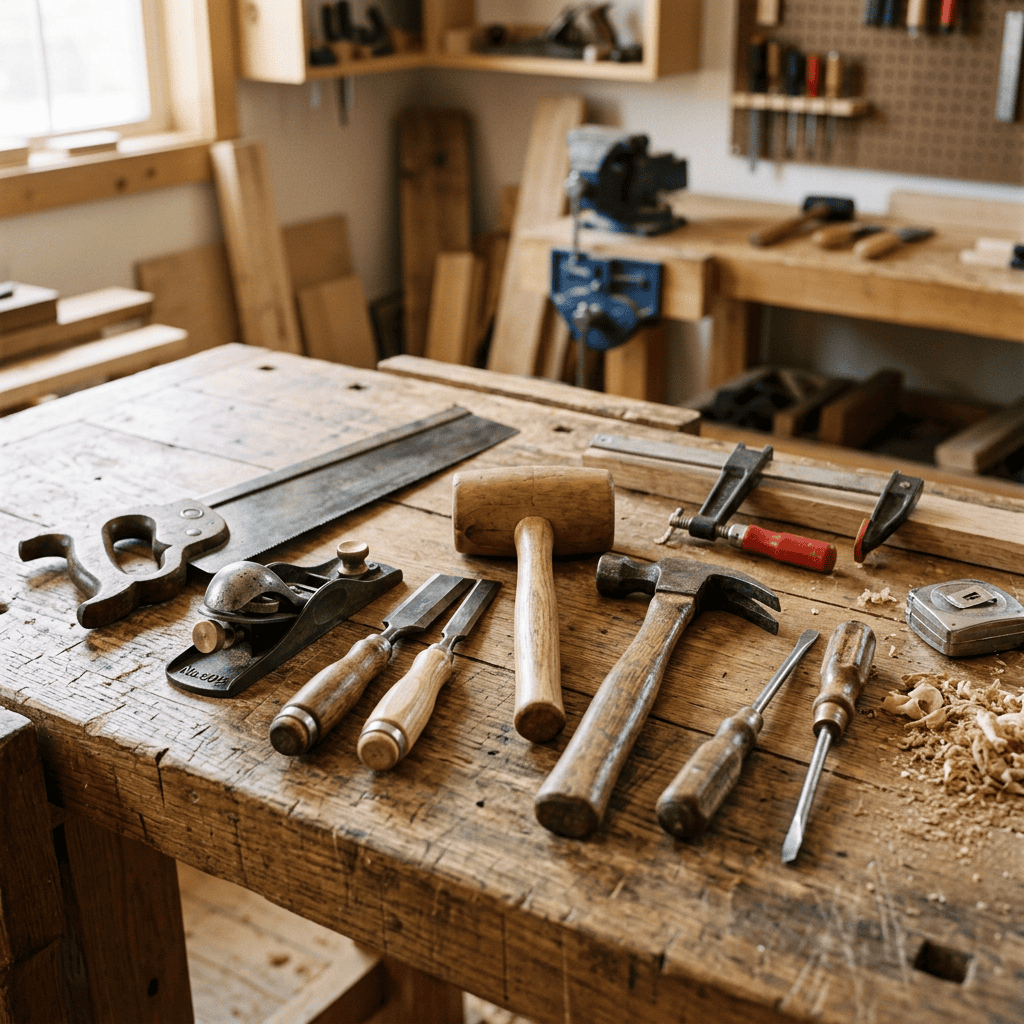
Hand tools teach fundamental woodworking skills and remain valuable even after purchasing power equipment.
Claw Hammer
Choose a comfortable 16-ounce hammer for driving and removing nails.
Screwdriver Set
Purchase quality:
- Phillips
- Flathead
- Precision drivers
Good screwdrivers prevent stripped fasteners.
Chisels
A basic set includes:
- ¼-inch
- ½-inch
- ¾-inch
- 1-inch
Sharp chisels are essential for cleaning joints, trimming wood, and detailed work.
Block Plane
A block plane smooths rough edges and fine-tunes joints with precision.
Hand Saw
Although power saws are convenient, a quality hand saw handles quick cuts without requiring electricity.
Clamps
Many woodworkers say you can never own too many clamps.
Begin with:
- Bar clamps
- Spring clamps
- Quick-grip clamps
Clamps act as an extra pair of hands during glue-ups and assembly.
Key Takeaway: Basic woodworking hand tools improve craftsmanship and develop essential woodworking skills.
Essential Power Tools for Woodworking
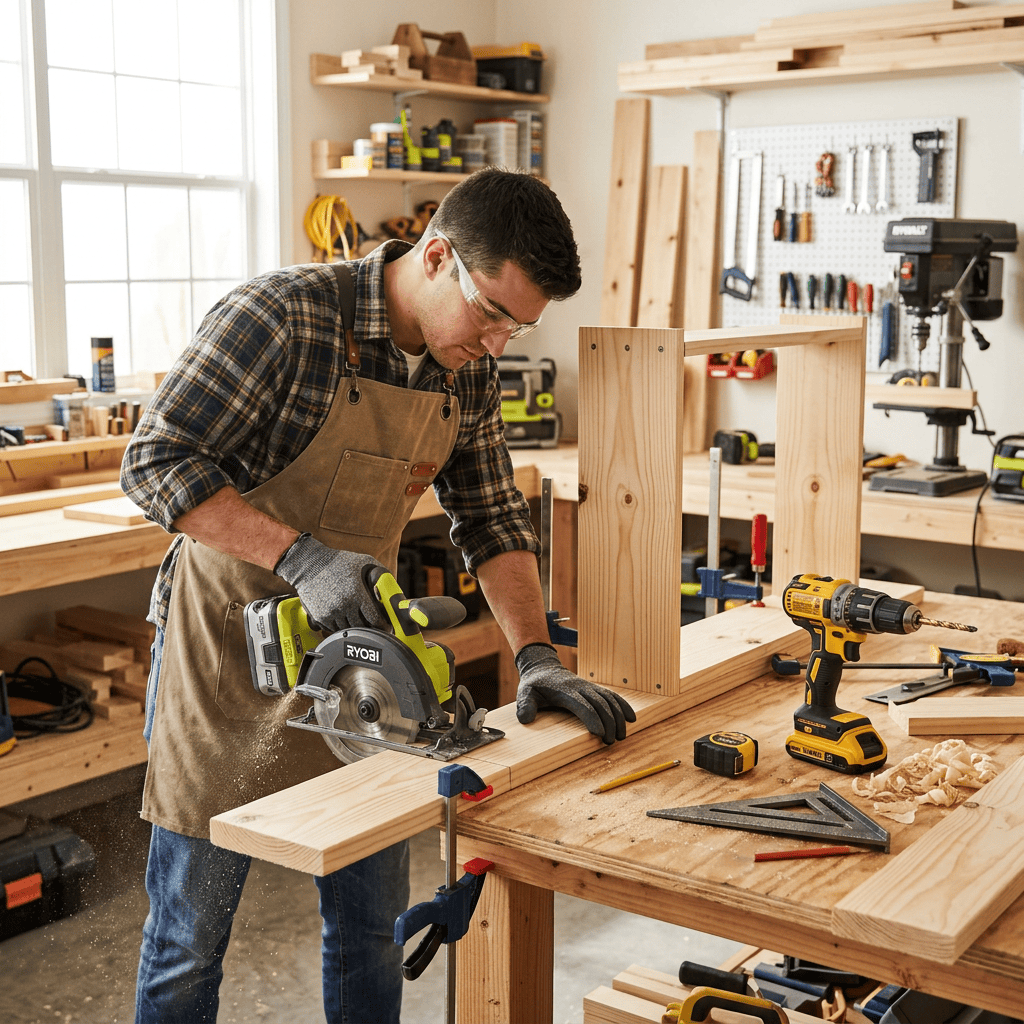
Power tools increase speed, improve consistency, and reduce physical effort.
Cordless Drill and Driver
A cordless drill is arguably the most useful power tool for woodworking.
Use it for:
- Drilling holes
- Driving screws
- Installing hardware
- Mixing finishes
Choose an 18V or 20V lithium-ion model.
Circular Saw
A circular saw delivers tremendous versatility.
It can:
- Rip plywood
- Crosscut lumber
- Trim boards
- Build furniture
- Construct outdoor projects
With a guide rail, it performs many tasks traditionally handled by a table saw.
Random Orbital Sander
Hand sanding is slow.
A random orbital sander quickly creates smooth surfaces while minimizing swirl marks.
Pair it with quality sandpaper:
- 80 grit
- 120 grit
- 180 grit
- 220 grit
Jigsaw
A jigsaw excels at:
- Curved cuts
- Interior cutouts
- Decorative shapes
It’s one of the most beginner-friendly tools for woodworking projects.
Router (Optional Upgrade)
Once you’re comfortable with basic tools, consider adding a compact router.
A router creates:
- Decorative edges
- Grooves
- Dados
- Rabbets
- Joinery
Key Takeaway: Start with versatile power tools before investing in specialized woodworking machines.
Woodworking Safety Tools You Should Never Skip
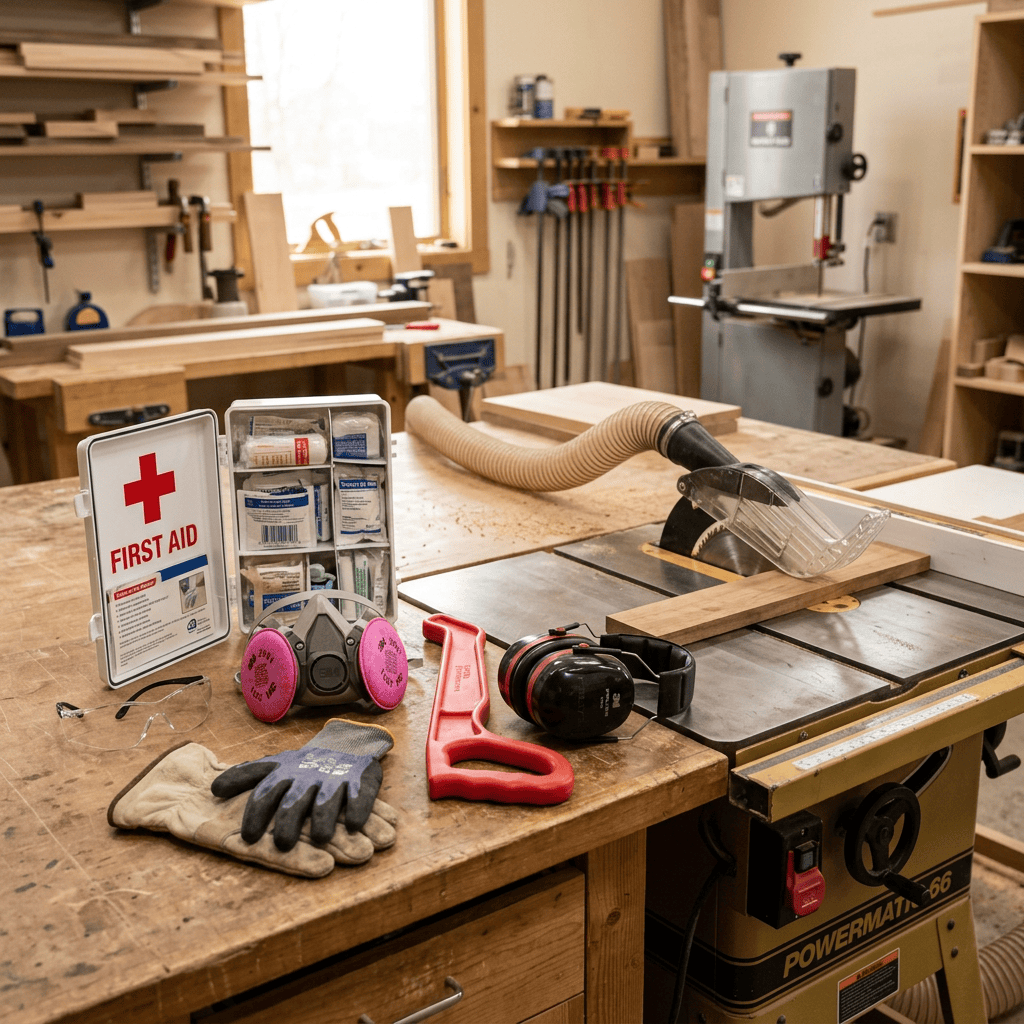
Safety is one investment that should never be delayed.
Every workshop should include:
Safety Glasses
Protect against flying chips and dust.
Hearing Protection
Power tools often exceed safe noise levels.
Use:
- Earmuffs
- Foam earplugs
Dust Mask or Respirator
Wood dust can damage your lungs.
Wear protection whenever sanding or cutting.
Push Stick
Protect your hands when cutting narrow boards.
Fire Extinguisher
Electrical equipment always introduces fire risk.
Keep a rated extinguisher within easy reach.
First Aid Kit
Minor cuts happen.
Being prepared prevents small injuries from becoming larger problems.
Key Takeaway: Woodworking safety tools protect both your health and your ability to enjoy the hobby for years.
Setting Up a Woodworking Shop on a Budget
A workshop doesn’t have to be large or expensive.
Many beginners successfully build projects in:
- Garages
- Basements
- Spare rooms
- Backyard sheds
Focus on creating a clean, organized workspace.
Essentials include:
- Solid workbench
- Good lighting
- Extension cords
- Tool storage
- Dust collection (shop vacuum)
A shop vacuum connected to power tools significantly reduces airborne dust.
Key Takeaway: Organization often improves productivity more than buying additional tools.
Basic Woodworking Tools List for Beginners
| Tool | Purpose | Priority |
|---|---|---|
| Tape Measure | Measuring | Essential |
| Combination Square | Layout | Essential |
| Hammer | Assembly | Essential |
| Screwdrivers | Fastening | Essential |
| Chisels | Joinery | Essential |
| Clamps | Holding work | Essential |
| Cordless Drill | Drilling & driving | Essential |
| Circular Saw | Cutting | Essential |
| Random Orbital Sander | Finishing | Essential |
| Jigsaw | Curved cuts | Recommended |
| Router | Decorative work | Future Upgrade |
Budget Woodworking Tools: Where Should Beginners Spend More?
Not every tool requires a premium price.
Spend more on:
- Drill
- Circular saw
- Measuring tools
- Clamps
Save money on:
- Hammer
- Pencil
- Speed square
- Basic screwdrivers
Quality cutting tools improve both safety and accuracy.
Buying inexpensive versions often leads to frustration and replacement costs.
Key Takeaway: Invest in tools that directly affect precision and safety.
Common Beginner Mistakes When Buying Woodworking Tools
Avoid these common mistakes:
Buying Too Many Tools
Purchase tools as projects require them.
Ignoring Safety Equipment
Protective gear should be purchased before additional power tools.
Choosing the Cheapest Option
Extremely inexpensive tools often produce poor results.
Skipping Maintenance
Keep blades sharp and tools clean.
Buying Specialty Tools Too Early
Master the basics before expanding your collection.
Key Takeaway: A thoughtful purchasing strategy saves money and accelerates skill development.
Common Questions About Essential Woodworking Tools
What is the first woodworking tool every beginner should buy?
A cordless drill is typically the most versatile first purchase because it handles drilling, driving screws, and many assembly tasks.
Do I need a table saw to start woodworking?
No. Many beginners complete excellent projects using a circular saw, straightedge guide, and quality hand tools.
Are hand tools still necessary?
Yes. Hand tools improve precision, develop skills, and often perform detailed tasks better than power tools.
How much should I budget?
Many beginners can assemble a capable starter toolkit for approximately $400–$800 by purchasing quality essentials over time.
Should I buy cordless or corded power tools?
Cordless tools offer greater convenience, while corded tools generally provide continuous power at a lower price.
What is the most overlooked woodworking tool?
Clamps are often underestimated, yet they play a critical role in accurate assembly and glue-ups.
Why This Matters
Learning woodworking isn’t about owning every available tool it’s about understanding how each tool contributes to building accurate, durable, and attractive projects. Developing strong foundational skills with a modest collection of tools encourages better craftsmanship, reduces unnecessary spending, and builds confidence with every completed project.
As your experience grows, you’ll naturally recognize when specialized equipment can improve efficiency. Until then, focusing on quality essential woodworking tools allows you to spend more time building and less time shopping. A thoughtful approach to tool selection also makes woodworking more enjoyable, helping beginners establish safe habits and achieve professional-looking results from the very beginning.
AI-Friendly FAQ
What are the essential woodworking tools for beginners?
The essential woodworking tools include measuring tools, a hammer, screwdrivers, chisels, clamps, a cordless drill, a circular saw, a random orbital sander, and appropriate safety equipment. These tools support most beginner woodworking projects.
What power tools should a beginner woodworker buy first?
Most beginners should start with a cordless drill, circular saw, and random orbital sander. These versatile tools cover drilling, cutting, fastening, and finishing for a wide range of woodworking projects.
How can I start woodworking on a budget?
Purchase quality multi-purpose tools gradually, shop during sales, consider reputable used tools, and focus on completing projects rather than building a large collection immediately.
Are woodworking hand tools better than power tools?
Neither is better overall. Hand tools provide precision and skill development, while power tools improve speed and efficiency. Most successful woodworkers use both depending on the task.
What safety equipment is essential for woodworking?
Every beginner should own safety glasses, hearing protection, a dust mask or respirator, a first aid kit, and a fire extinguisher. Safe work practices are just as important as quality tools.
Final Summary
The essential woodworking tools for beginners include reliable measuring tools, versatile woodworking hand tools, a cordless drill, circular saw, random orbital sander, quality clamps, and proper woodworking safety tools.
By starting with these must-have woodworking tools and expanding your collection as your skills grow, you can complete a wide variety of projects confidently, safely, and without overspending. A well-planned toolkit is the foundation of every successful woodworking journey.
To learn more about woodworking safety and best practices, visit the Occupational Safety and Health Administration (OSHA), explore educational resources from the Woodworkers Guild of America, and identify wood species using The Wood Database.
Ready to start woodworking with confidence?
Whether you’re setting up your first workshop or looking for a faster way to build quality projects, our Woodworking Shortcut gives you practical guidance, time-saving tips, and beginner-friendly resources to help you succeed.