Quick Answer
The most important basic woodworking skills for beginners are learning workshop safety, accurate measuring and marking, proper cutting techniques, drilling, sanding, basic joinery, and finishing.
Mastering these woodworking fundamentals builds confidence, improves project quality, reduces mistakes, and provides the foundation needed to complete increasingly advanced woodworking projects.
Key Takeaways
- Learn workshop safety before using any woodworking tools.
- Accurate measuring and marking prevent costly mistakes.
- Master basic cutting, drilling, and sanding techniques before attempting complex builds.
- Start with simple joinery methods and gradually progress to stronger joints.
- Proper finishing protects wood while improving appearance.
- Practice on beginner woodworking projects to reinforce core skills.
- Consistency and patience matter more than buying expensive tools.
Basic Woodworking Skills Every Beginner Should Master
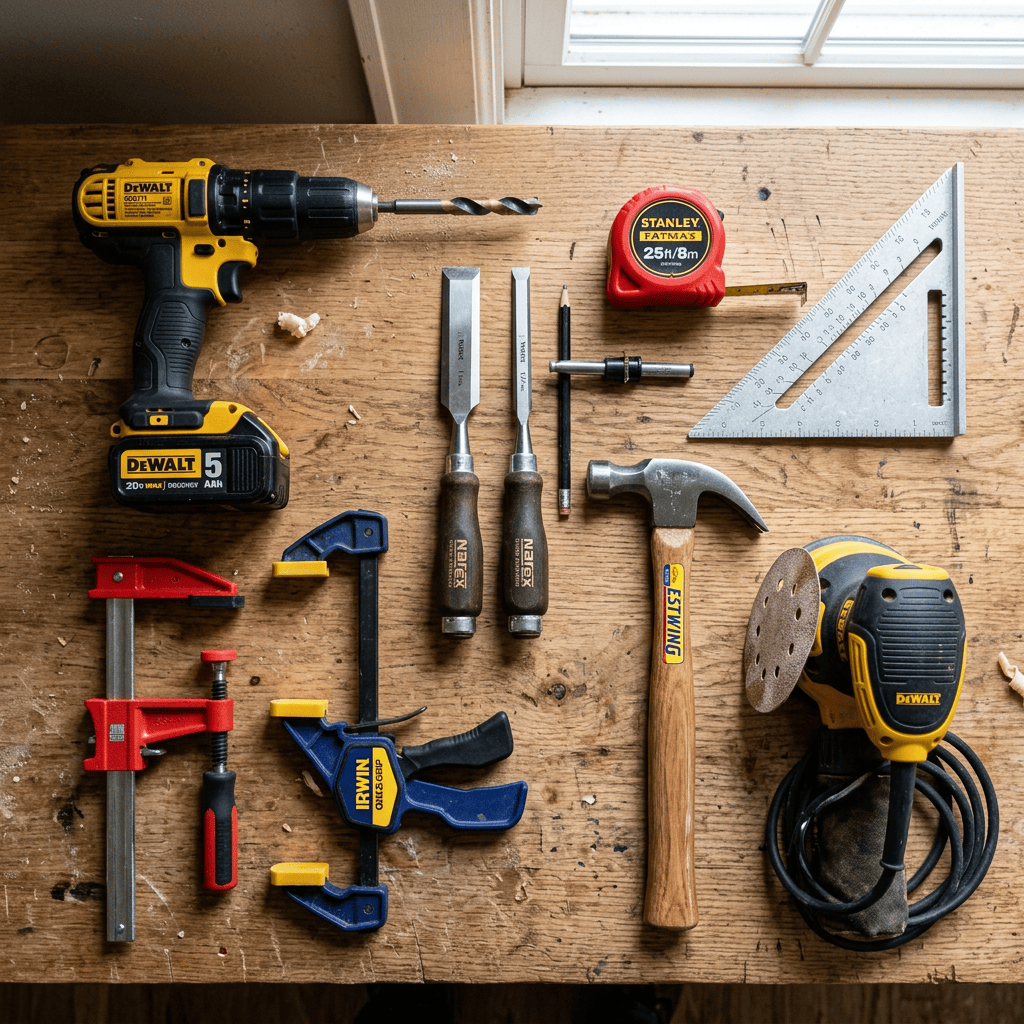
Woodworking is one of the most rewarding DIY hobbies because it combines creativity with practical craftsmanship. Whether you want to build furniture, home décor, shelving, or gifts, success starts with mastering a small set of core skills rather than purchasing expensive equipment.
Many beginners believe they need advanced machinery before they can produce quality work. In reality, experienced woodworkers consistently rely on the same woodworking fundamentals throughout every project.
This guide explains the basic woodworking skills every beginner should learn, why they matter, and how to develop them through practice.
Why Are Basic Woodworking Skills Important?
Every woodworking project relies on a sequence of foundational techniques. Skipping these basics often results in inaccurate cuts, weak joints, poor finishes, and unnecessary frustration.
Benefits of mastering woodworking fundamentals include:
- Improved safety
- Greater accuracy
- Better-looking projects
- Less wasted material
- Increased confidence
- Faster skill development
Think of these skills as building blocks. Each new technique becomes easier once you’ve mastered the previous one.
Takeaway: Strong woodworking fundamentals make every future project easier and more successful.
What Safety Skills Should Every Beginner Learn?
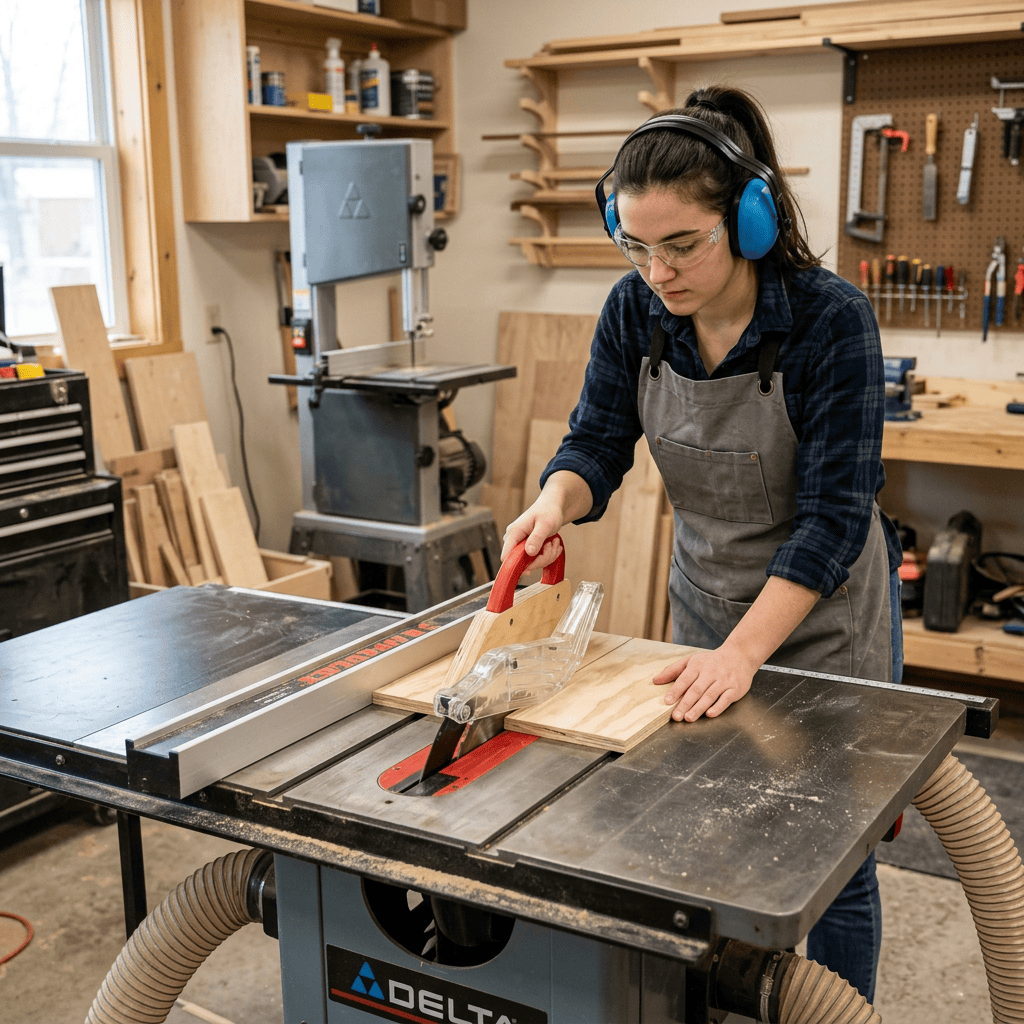
Safety in Woodworking Comes First
No woodworking skill is more important than working safely.
Power tools and hand tools can cause serious injuries when used incorrectly. Developing safe habits early helps prevent accidents throughout your woodworking journey.
Essential safety practices include:
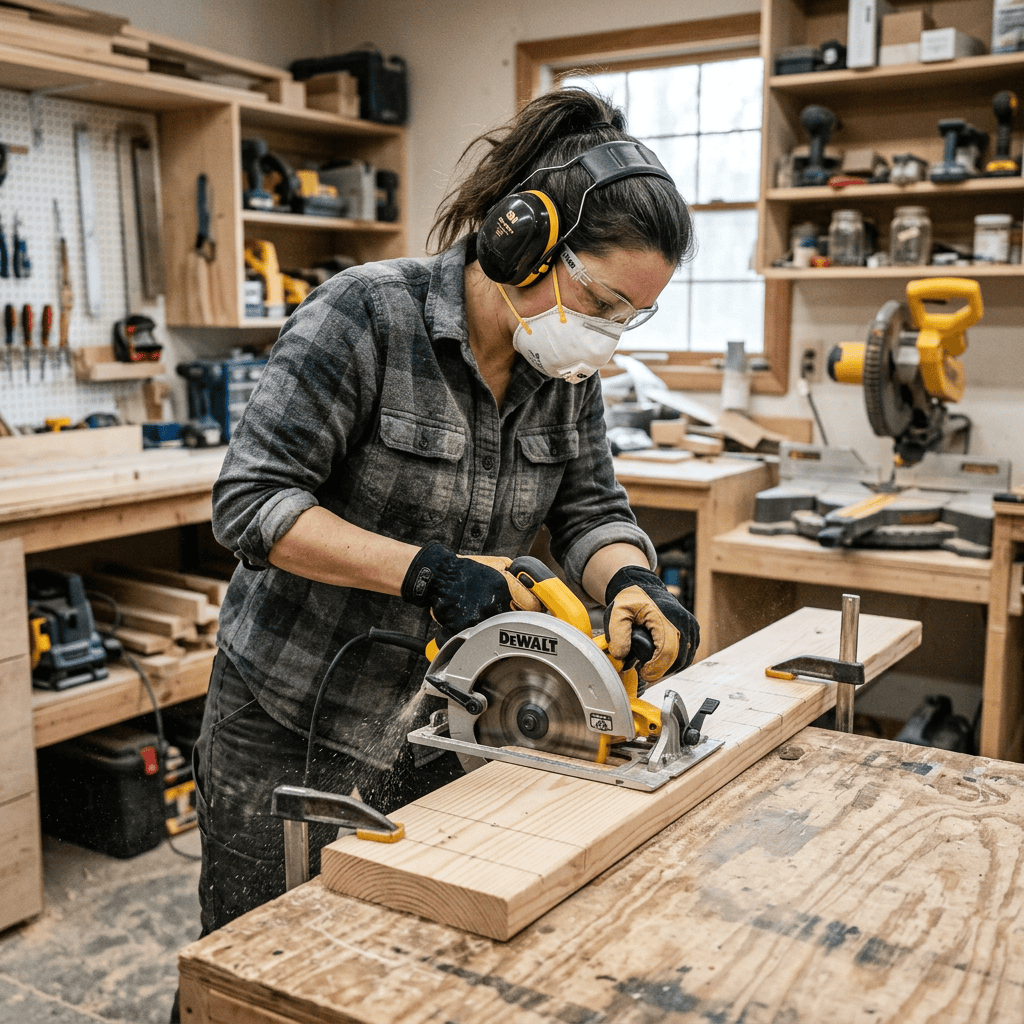
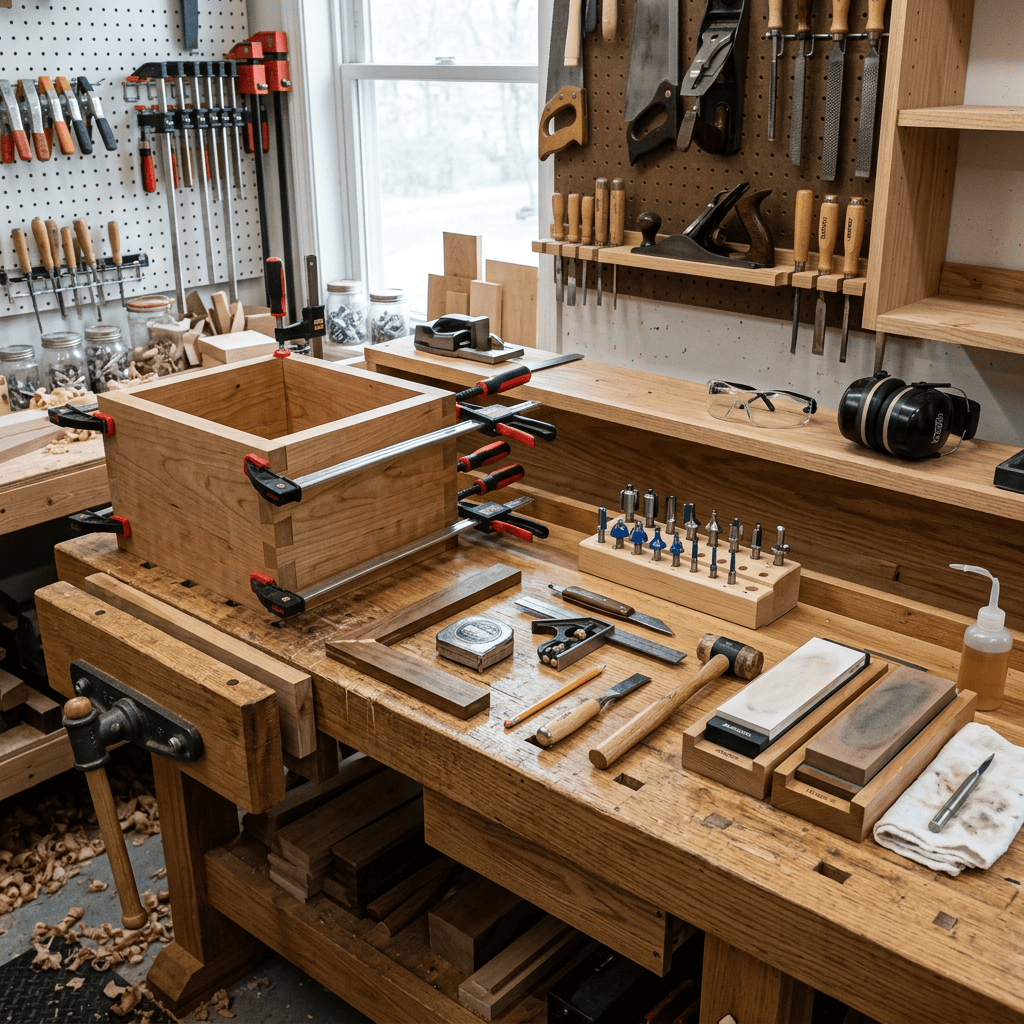
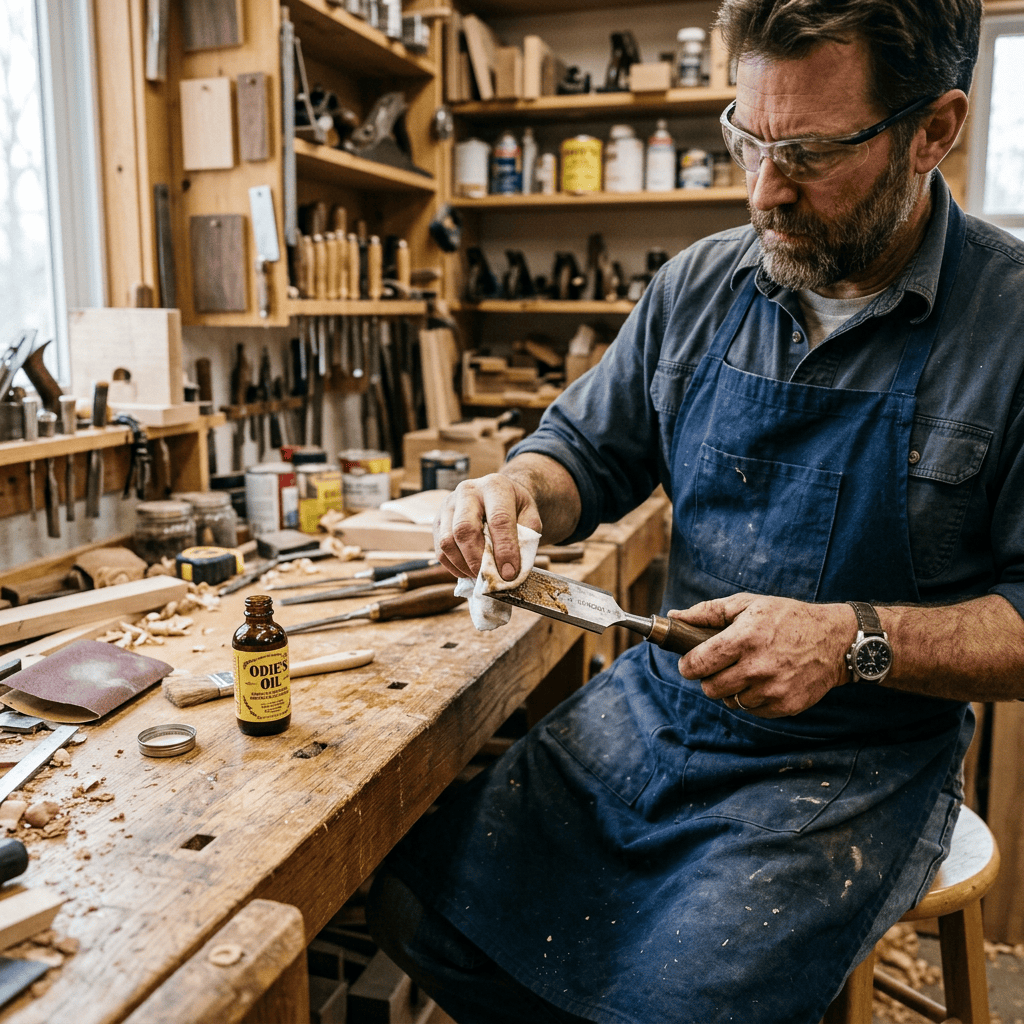
- Always wear safety glasses.
- Use hearing protection around power tools.
- Wear a dust mask or respirator when sanding or cutting MDF.
- Keep blades sharp and properly adjusted.
- Disconnect power before changing blades or bits.
- Clamp workpieces securely before cutting or drilling.
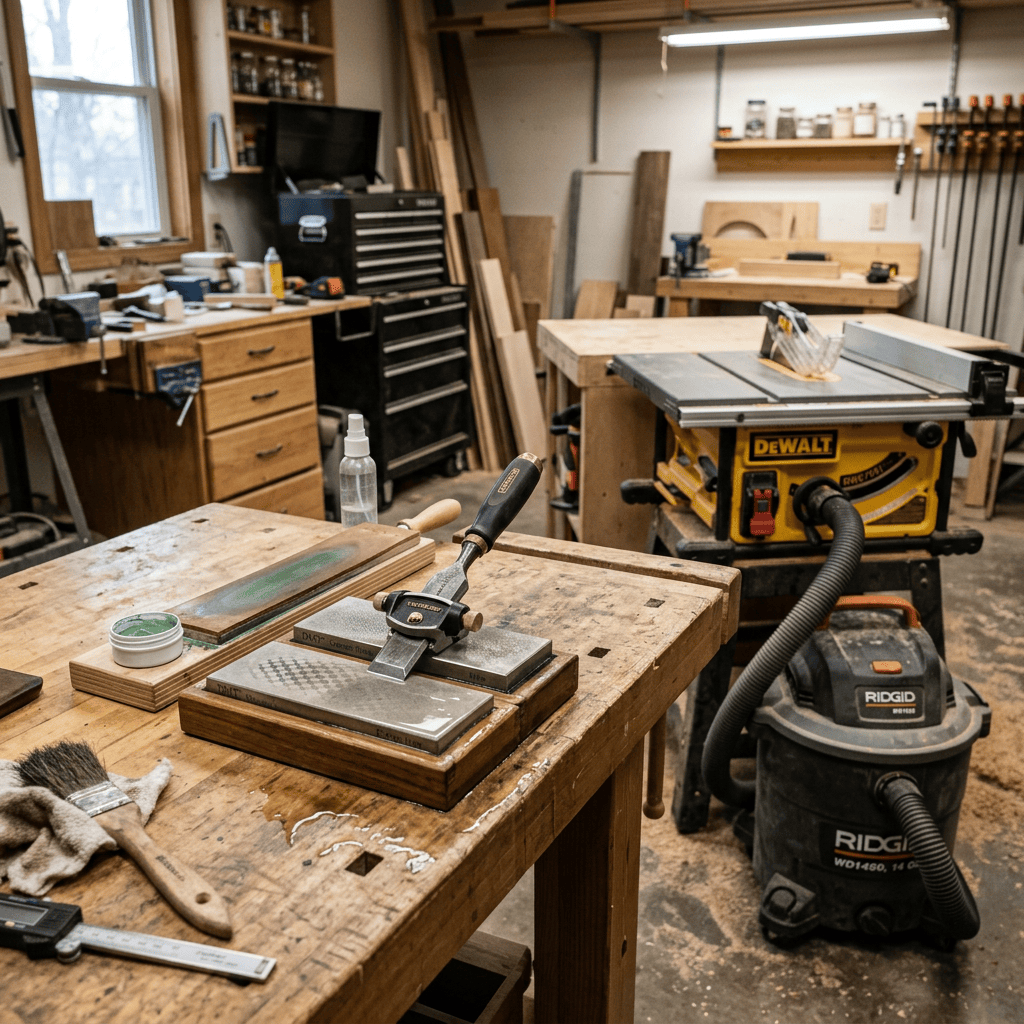
- Keep your workspace clean and well lit.
- Never rush a cut.
Understanding how each tool operates is just as important as knowing how to use it.
Takeaway: Safe habits become automatic with repetition and protect you on every project.
Why Is Measuring and Marking So Important?
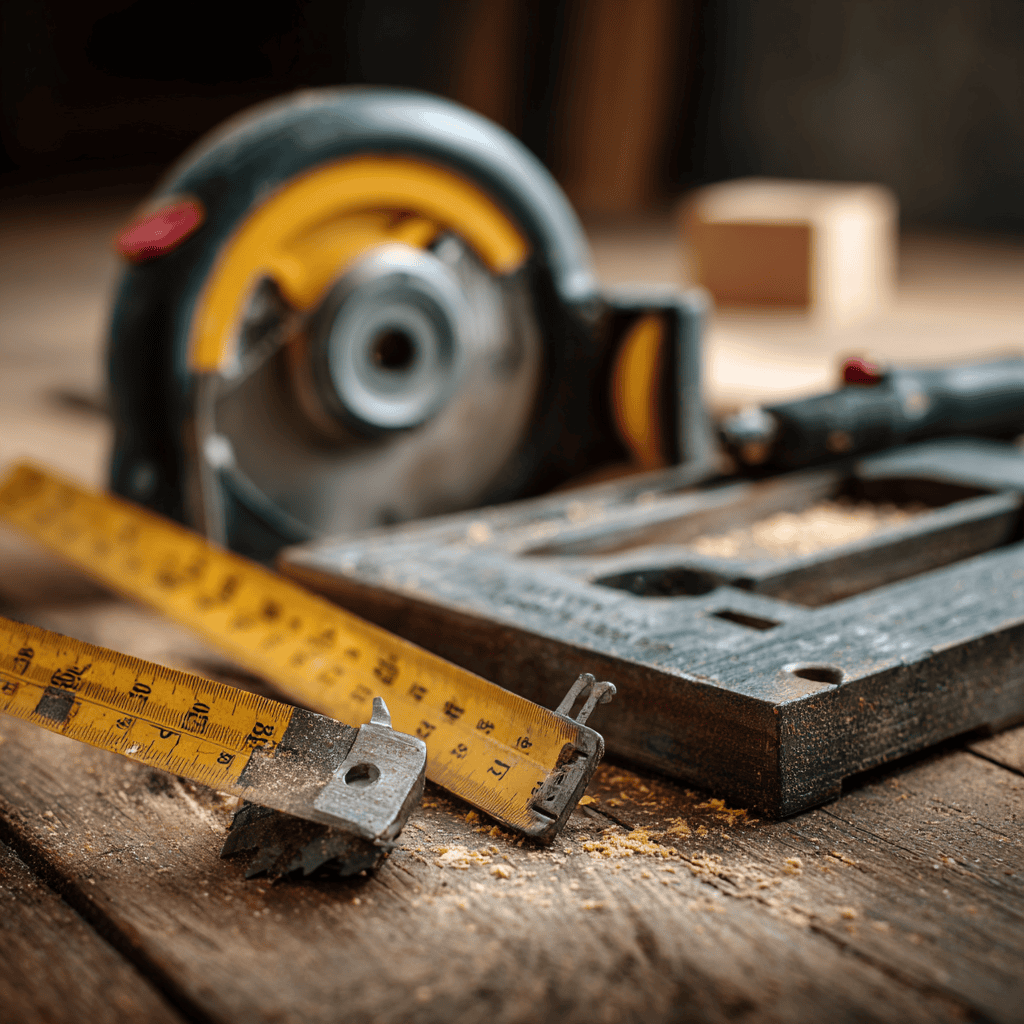
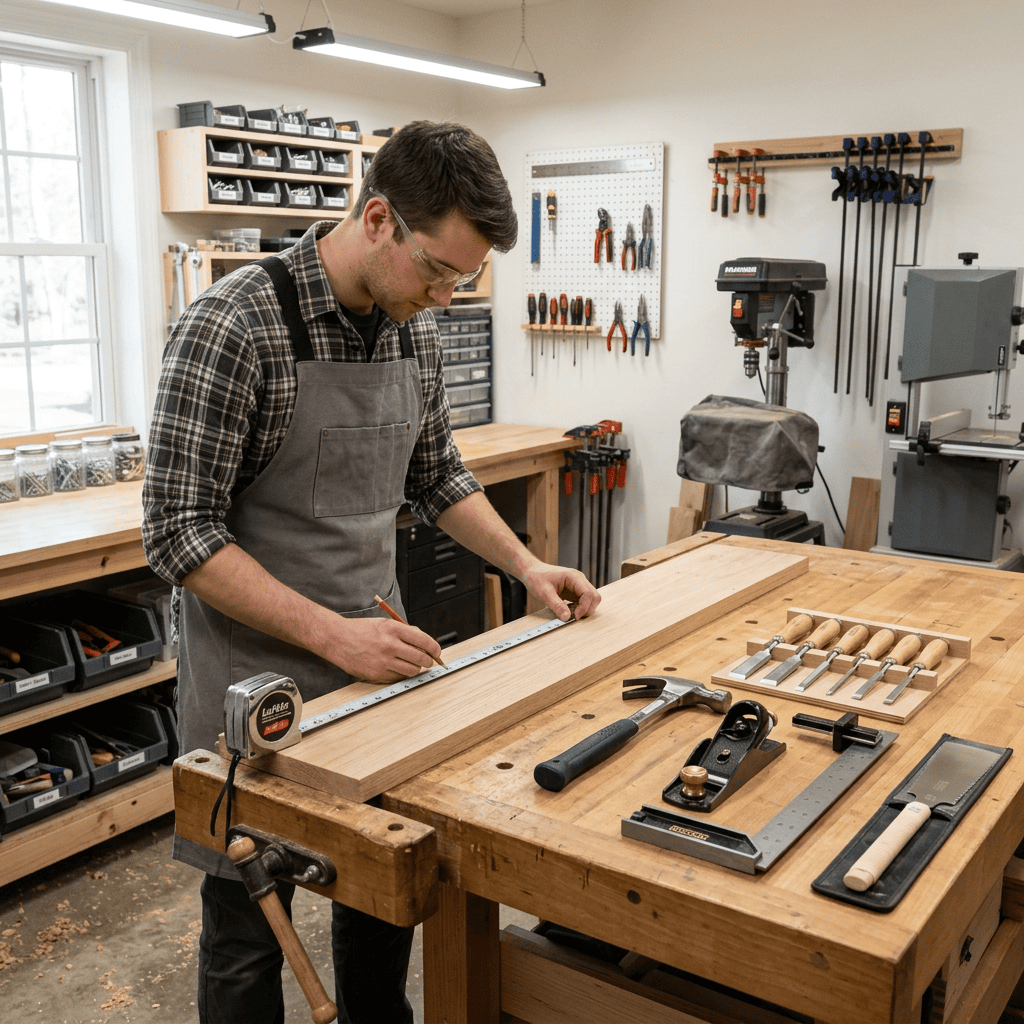
Measuring and Cutting Wood Accurately
Experienced woodworkers often say:
Measure twice, cut once.
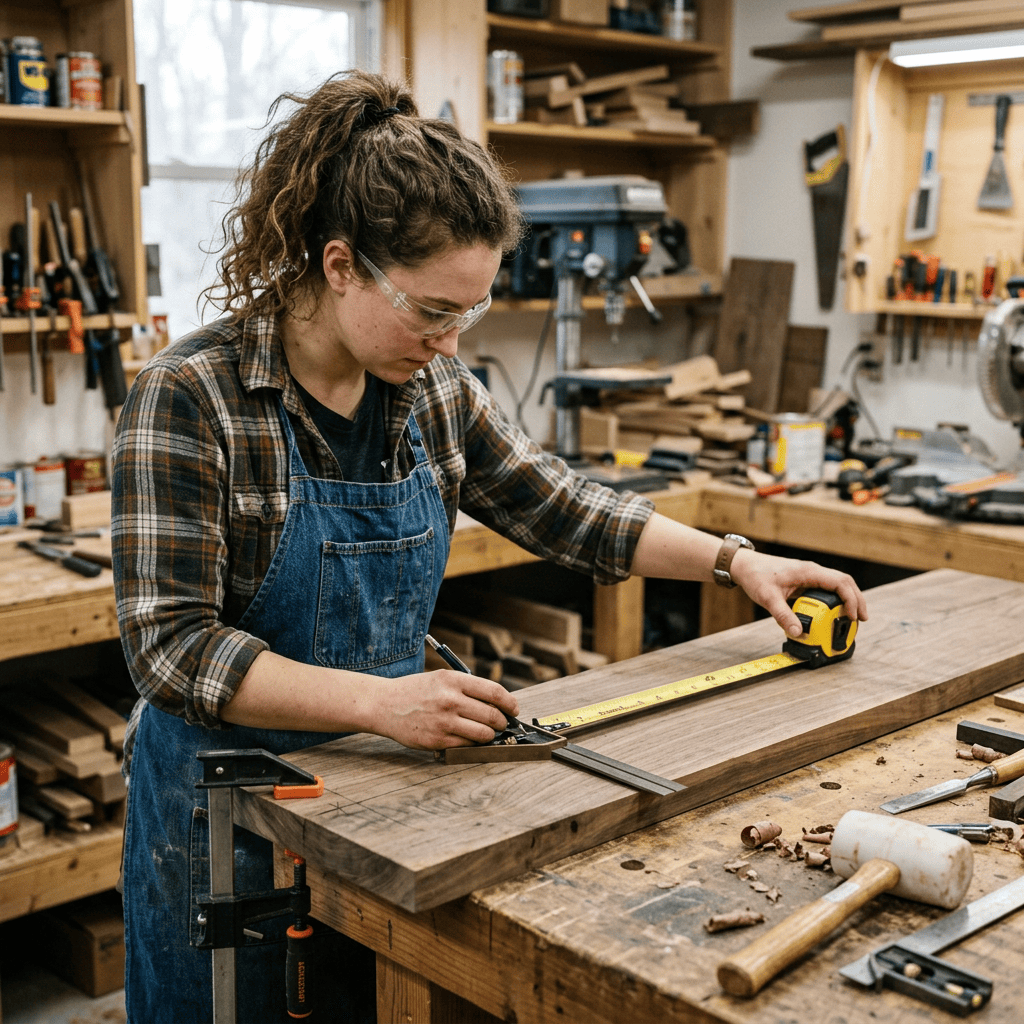
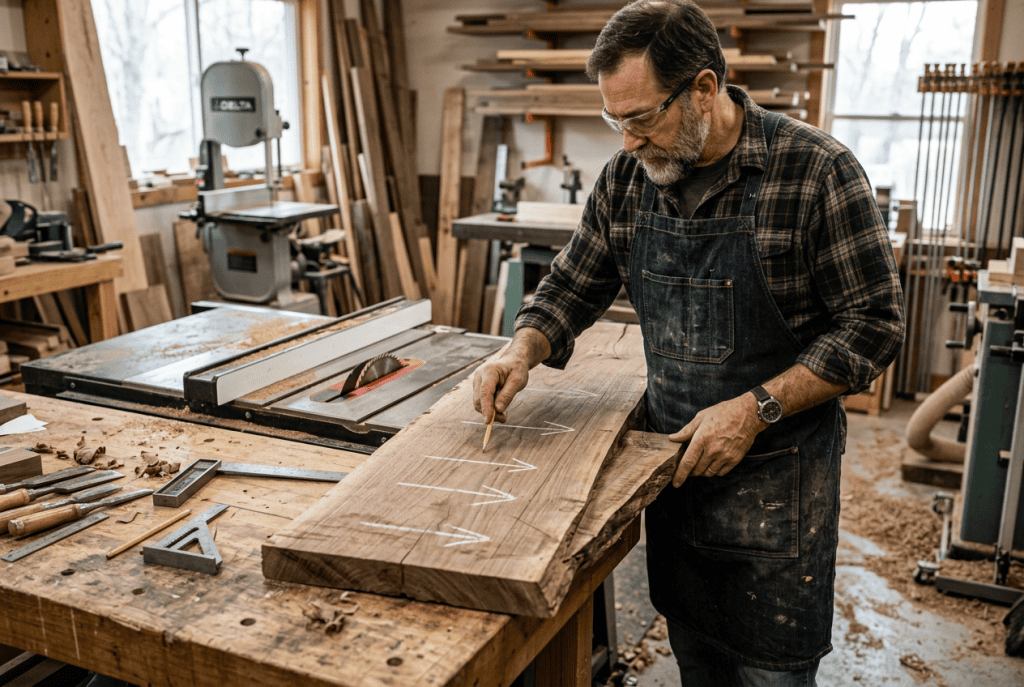
Accurate measuring is the foundation of every successful woodworking project.
Small errors compound quickly. A measurement that is only 1/16 inch off can affect an entire assembly.
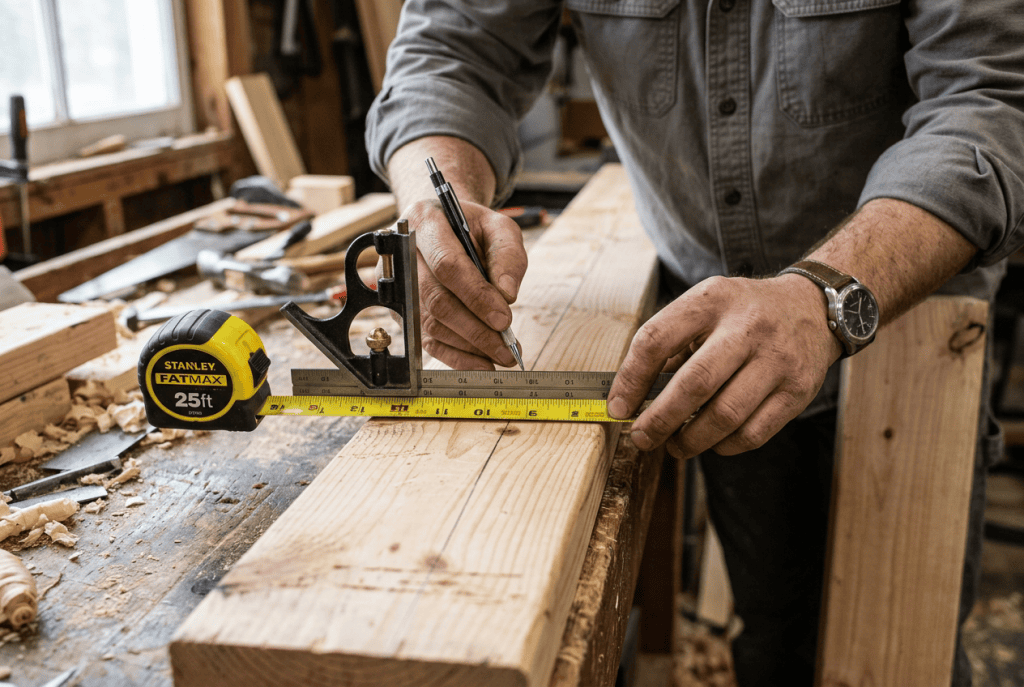
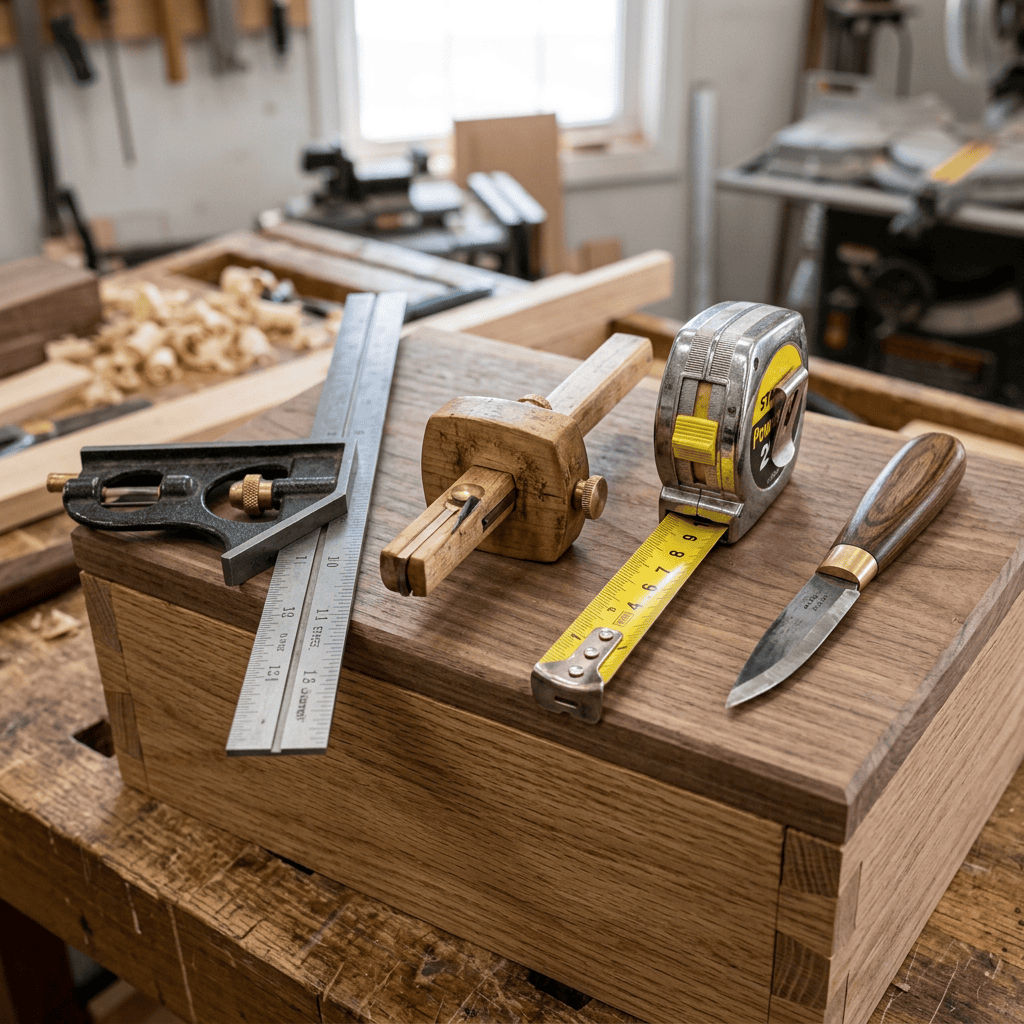
Essential measuring tools include:
| Tool | Purpose |
|---|---|
| Tape measure | Overall dimensions |
| Combination square | 90° and 45° layout |
| Speed square | Quick angle marking |
| Marking gauge | Consistent layout lines |
| Pencil or marking knife | Precise marking |
Best practices
- Measure from the same reference edge.
- Mark clearly.
- Double-check every measurement.
- Verify square before cutting.
- Cut slightly outside the line when possible.
Developing precision during layout dramatically improves final results.
Takeaway: Accurate layout prevents most woodworking mistakes before they happen.
What Cutting Skills Should Beginners Learn?
Master Essential Woodworking Techniques for Cutting
Nearly every woodworking project involves cutting wood.
Beginners should learn both hand-tool and power-tool methods.
Hand saw techniques
Hand saws teach control and accuracy.
Practice:
- Starting the cut gently
- Following the line
- Maintaining consistent pressure
- Letting the saw do the work
Circular saw basics
A circular saw is one of the most versatile beginner power tools.
Learn to:
- Adjust blade depth
- Support material properly
- Use a straightedge guide
- Cut steadily without forcing the blade
Jigsaw skills
Jigsaws excel at curved cuts.
Practice:
- Smooth steering
- Proper blade selection
- Avoiding excessive blade flex
Miter saw fundamentals
Perfect for:
- Crosscuts
- Trim work
- Repeated accurate cuts
Good cutting technique produces cleaner joints and reduces sanding later.
Takeaway: Clean cuts improve both the appearance and structural quality of every project.
How Should Beginners Learn Drilling and Fastening?
Drilling Skills That Improve Every Project
Drilling appears simple, but proper technique improves both appearance and strength.
Important skills include:
- Selecting the correct drill bit
- Drilling straight holes
- Using pilot holes
- Countersinking screws
- Preventing tear-out
Practice drilling into scrap wood before working on finished pieces.
Learn to recognize when screws should be used versus wood glue or joinery.
Takeaway: Accurate drilling creates stronger assemblies and cleaner-looking projects.
What Joinery Techniques Should Beginners Master?
Learn Basic Joinery Techniques
Joinery is the process of connecting pieces of wood.
Strong joints determine how long furniture and projects last.
Beginner-friendly joinery includes:
| Joint | Best For | Difficulty |
|---|---|---|
| Butt joint | Simple projects | Easy |
| Pocket hole joint | Furniture | Easy |
| Lap joint | Frames | Moderate |
| Dowel joint | Cabinets | Moderate |
| Rabbet joint | Boxes | Moderate |
Wood glue matters
Many beginners underestimate wood glue.
Properly glued joints can become stronger than the surrounding wood.
Always:
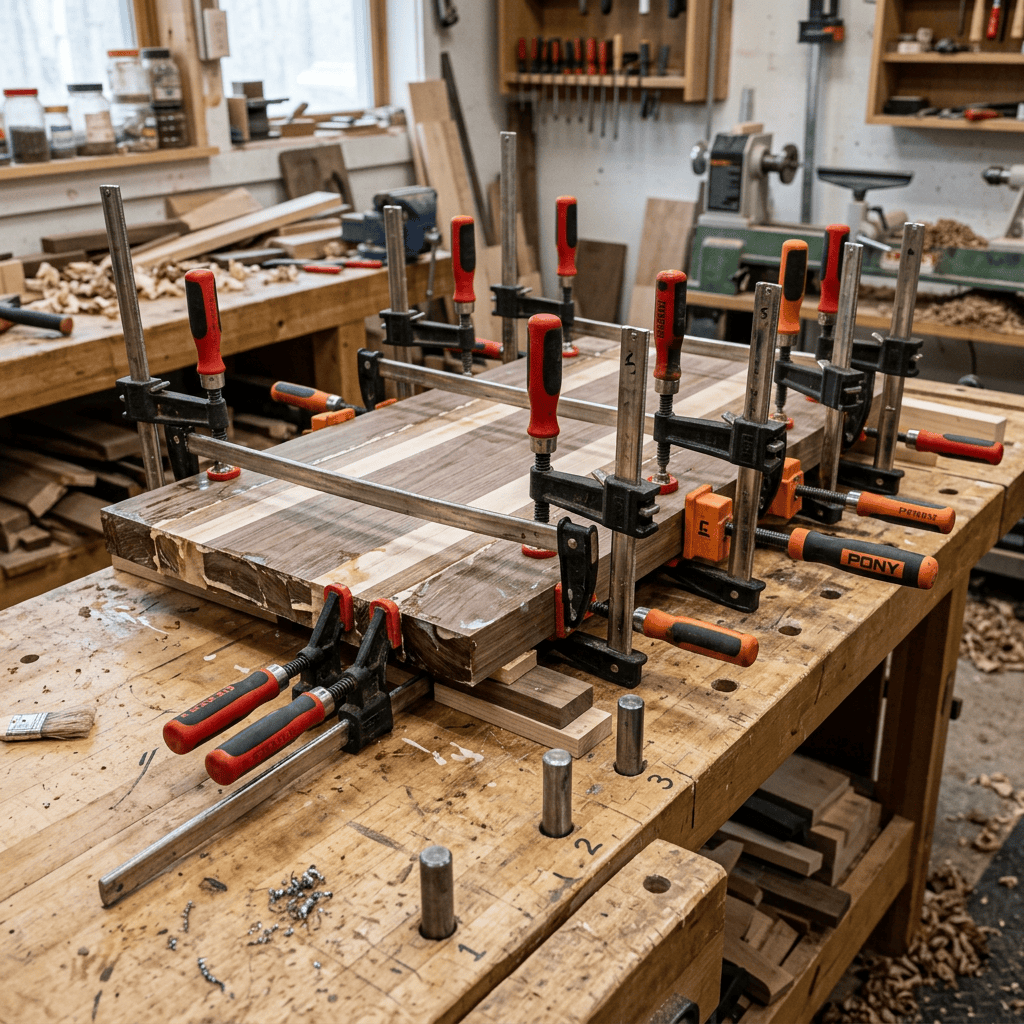
- Apply glue evenly.
- Clamp firmly.
- Remove squeeze-out.
- Allow full curing time.
As your skills improve, you can explore mortise-and-tenon and dovetail joints.
Takeaway: Master simple joints before attempting advanced woodworking joinery.
Why Is Sanding an Essential Woodworking Skill?
Sanding Creates Professional Results
Even perfectly assembled projects require proper sanding.
Sanding removes:
- Saw marks
- Sharp edges
- Glue residue
- Surface imperfections
Typical sanding sequence
- 80 grit
- 120 grit
- 150 grit
- 180 grit
- 220 grit (when appropriate)
Always sand with the grain.
Avoid skipping grits because deeper scratches become harder to remove later.
Use a random orbital sander for larger surfaces and sanding blocks for detailed work.
Takeaway: Careful sanding separates amateur projects from professional-looking work.
How Do You Finish Wood Projects Properly?
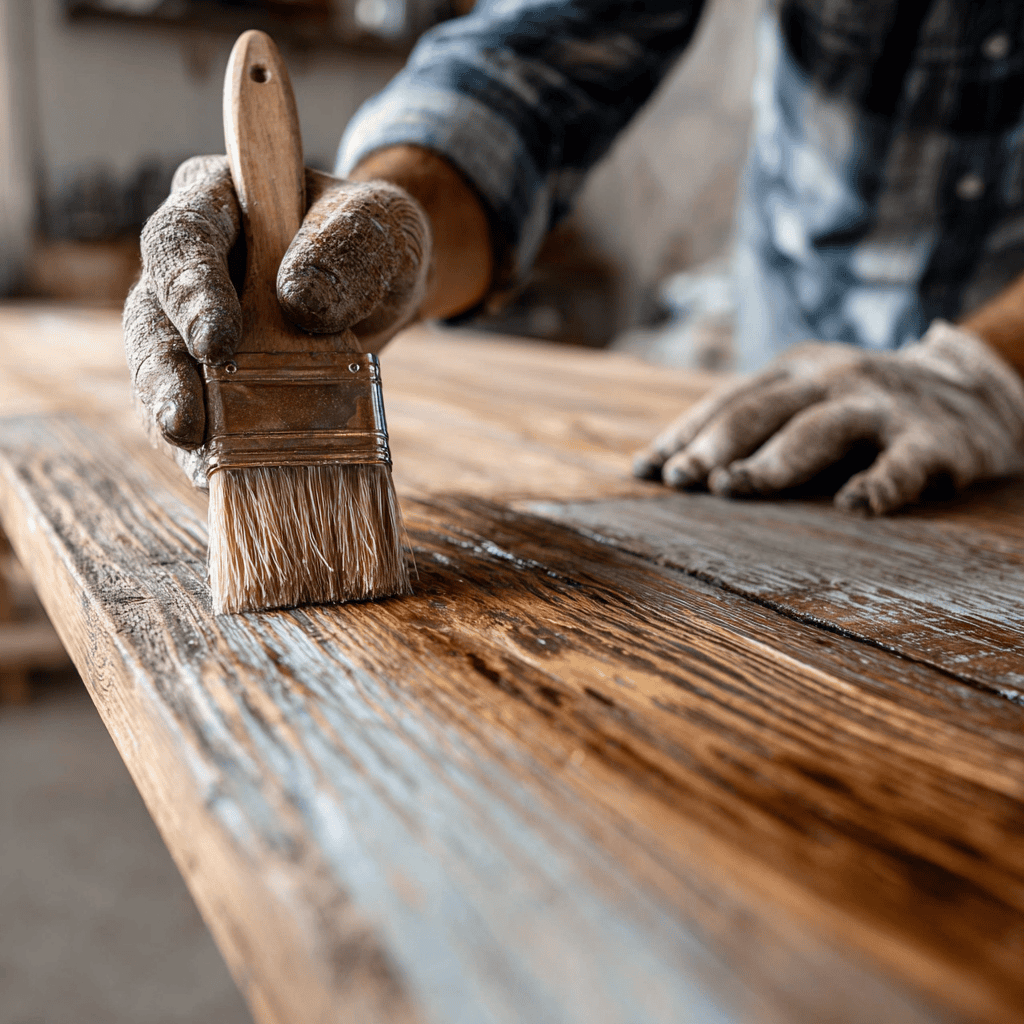
Finishing Wood Projects
Wood finishing protects the surface while enhancing the wood’s natural beauty.
Common finishes include:
| Finish | Best For |
|---|---|
| Oil | Natural appearance |
| Polyurethane | Durable protection |
| Wax | Decorative items |
| Paint | Color and protection |
| Stain + Clear Coat | Rich wood grain |
Best finishing practices
- Remove all dust.
- Test finishes on scrap wood.
- Apply thin coats.
- Allow adequate drying time.
- Sand lightly between coats if recommended.
Patience during finishing often determines how professional the final project looks.
Takeaway: A quality finish protects your work and showcases your craftsmanship.
Which Beginner Woodworking Projects Build Skills Fast?
Beginner Woodworking Projects
The fastest way to improve is through simple projects that reinforce multiple skills.
Recommended beginner woodworking projects include:
- Cutting board
- Wooden crate
- Step stool
- Floating shelf
- Birdhouse
- Tool tote
- Small side table
- Picture frame
Each project teaches measuring, cutting, drilling, joinery, sanding, and finishing.
Focus on completing projects rather than making them perfect.
Takeaway: Repetition through simple builds develops lasting woodworking skills.
What Common Mistakes Should Beginner Woodworkers Avoid?
Many new woodworkers make similar mistakes.
Avoid these common errors:
- Buying too many tools too early
- Ignoring safety procedures
- Rushing measurements
- Using dull blades
- Skipping sanding steps
- Applying thick finish coats
- Failing to clamp properly
- Working without a plan
Learning from these mistakes saves time, money, and frustration.
Takeaway: Slow, careful work consistently produces better results than rushing.
Basic Woodworking Skills Checklist
Use this woodworking skills checklist to track your progress.
| Skill | Beginner | Comfortable | Confident |
|---|---|---|---|
| Workshop safety | □ | □ | □ |
| Measuring accurately | □ | □ | □ |
| Marking layout lines | □ | □ | □ |
| Straight cutting | □ | □ | □ |
| Curved cutting | □ | □ | □ |
| Drilling | □ | □ | □ |
| Driving screws | □ | □ | □ |
| Basic joinery | □ | □ | □ |
| Sanding | □ | □ | □ |
| Applying finish | □ | □ | □ |
| Reading project plans | □ | □ | □ |
Common Questions About Basic Woodworking Skills
What is the first woodworking skill beginners should learn?
Workshop safety should always come first, followed by accurate measuring and marking.
Do I need expensive tools to start woodworking?
No. Many beginner woodworking projects require only a few quality hand tools and one or two basic power tools.
How long does it take to learn woodworking?
Most beginners become comfortable with woodworking fundamentals after completing several simple projects over a few months of consistent practice.
What wood is best for beginners?
Pine, poplar, and common construction lumber are affordable, easy to cut, and forgiving while learning.
Should beginners use hand tools or power tools?
Both are valuable. Hand tools teach precision and control, while power tools improve efficiency.
How can I improve faster?
Practice frequently, complete manageable projects, and focus on mastering one new skill at a time.
Is sanding really that important?
Yes. Proper sanding significantly improves the final appearance and finish quality of any woodworking project.
Why This Matters
Mastering basic woodworking skills is not about building perfect furniture on your first attempt. It’s about developing repeatable habits that improve every future project.
Professional woodworkers continue refining measuring, cutting, joinery, and finishing techniques throughout their careers because these core skills influence every aspect of craftsmanship.
By focusing on woodworking fundamentals instead of advanced techniques, you’ll make fewer mistakes, waste less material, build safer habits, and gain confidence with every completed project.
Over time, these foundational skills become second nature, allowing you to tackle more complex designs with greater precision and creativity.
FAQ
What are the most important basic woodworking skills?
The most important skills include workshop safety, accurate measuring, cutting wood, drilling, basic joinery, sanding, and finishing.
These foundational abilities support nearly every woodworking project and create a strong base for learning more advanced techniques.
Which woodworking skill should beginners practice first?
Safety should always come first. After learning safe tool operation, beginners should practice measuring, marking, and making straight cuts since these skills affect the quality of every project.
What are good beginner woodworking projects?
Simple projects like cutting boards, birdhouses, shelves, tool totes, picture frames, and step stools help beginners practice measuring, cutting, drilling, joinery, sanding, and finishing without becoming overwhelmed.
Why is accurate measuring so important in woodworking?
Precise measuring reduces waste, improves joint fit, and prevents small errors from affecting an entire project. Accurate layout is one of the most valuable woodworking fundamentals to master early.
How do beginners improve their woodworking skills?
Regular practice, completing simple projects, learning proper safety procedures, using quality measuring tools, and focusing on one new technique at a time are the fastest ways to improve woodworking skills.
Final Summary
The essential basic woodworking skills every beginner should master include workshop safety, accurate measuring and cutting wood, drilling, simple joinery techniques, careful sanding, and proper finishing.
These woodworking fundamentals form the foundation for every successful project, from simple shelves to fine furniture.
By practicing these skills consistently through beginner woodworking projects, you’ll build confidence, reduce mistakes, and develop the craftsmanship needed to tackle increasingly advanced builds with accuracy and skill.
For more woodworking guidance, visit OSHA Woodworking Safety, The Wood Database, and Wood Magazine.
Ready to build your woodworking skills faster? Discover the shortcuts, tips, and beginner-friendly plans that help you avoid costly mistakes. Start here: