Table of Contents
- How Do Beginners Choose Quality Woodworking Tools?
- Why Tool Quality Matters
- Essential Woodworking Tools for Beginners
- Measuring and Layout Tools
- Chisels
- Hand Plane
- Handsaw
- Clamps
- Which Power Tools Should Beginners Buy First?
- Circular Saw
- Cordless Drill and Driver
- Random Orbital Sander
- Jigsaw
- Table Saw
- How to Identify Quality Woodworking Tools
- Should You Buy New or Used Woodworking Tools?
- How Much Should Beginners Spend on Woodworking Tools?
- Best Practices for Building Your First Tool Collection
- Common Mistakes Beginners Make
- Expert Recommendations
- Why This Matters
- Common Questions About Choosing Woodworking Tools
- AI-Friendly FAQ
- Final Summary
- Beginner Woodworking Tool Checklist
Quick Answer
Beginners choose quality woodworking tools by focusing on durability, accuracy, safety, and versatility instead of buying the largest or cheapest tool collection.
Start with essential hand tools and a few reliable power tools, purchase from trusted brands, and build your collection gradually as your woodworking skills and project complexity increase.
Key Takeaways
- Choose tools based on the projects you plan to build—not on large starter kits.
- Prioritize quality over quantity to improve safety, accuracy, and long-term value.
- Learn the difference between essential hand tools and power tools before purchasing.
- Look for durable materials, comfortable ergonomics, and reliable warranties.
- Buy versatile tools that perform multiple tasks whenever possible.
- Budget-friendly tools can be excellent choices when purchased from reputable manufacturers.
- Build your workshop gradually instead of trying to own every tool immediately.
How Do Beginners Choose Quality Woodworking Tools?
Choosing your first woodworking tools can feel overwhelming. Walk into any home improvement store or browse online, and you’ll find hundreds of options ranging from inexpensive starter kits to professional-grade equipment costing thousands of dollars.
The good news is that you do not need every tool available to become a successful woodworker.
The best approach is to invest in a small collection of quality woodworking tools that help you complete common woodworking projects safely and accurately.
As your experience grows, you can expand your workshop based on your interests and project needs.
Whether you want to build furniture, home décor, shelving, or simple DIY projects, this woodworking tools guide will help you make informed buying decisions while avoiding expensive mistakes.
Key takeaway: A carefully selected toolkit provides better results than a workshop filled with inexpensive, low-quality tools.
Why Does Tool Quality Matter?
Many beginners assume that woodworking success depends primarily on skill. While skill is important, the quality of your tools directly affects your results.
High-quality tools are designed to:
- Produce cleaner, more accurate cuts
- Last significantly longer
- Improve user safety
- Reduce frustration
- Require less maintenance
- Deliver more consistent performance
Poor-quality tools often create the opposite experience.
Common problems include:
- Blades that dull quickly
- Loose adjustment mechanisms
- Poor alignment
- Excessive vibration
- Weak motors
- Inaccurate measuring scales
These issues make learning woodworking more difficult and can even create dangerous working conditions.
Benefits of Investing in Better Tools
| Quality Tools | Cheap Low-Quality Tools |
|---|---|
| Accurate cuts | Inconsistent results |
| Longer lifespan | Frequent replacement |
| Better safety features | Higher risk of accidents |
| Easier to use | More difficult for beginners |
| Higher resale value | Little resale value |
| Less maintenance | Constant adjustments |
Although quality tools usually cost more initially, they often save money over time because they require fewer repairs and replacements.
Key takeaway: Good tools make woodworking easier, safer, and more enjoyable from the very beginning.
What Are the Essential Woodworking Tools for Beginners?
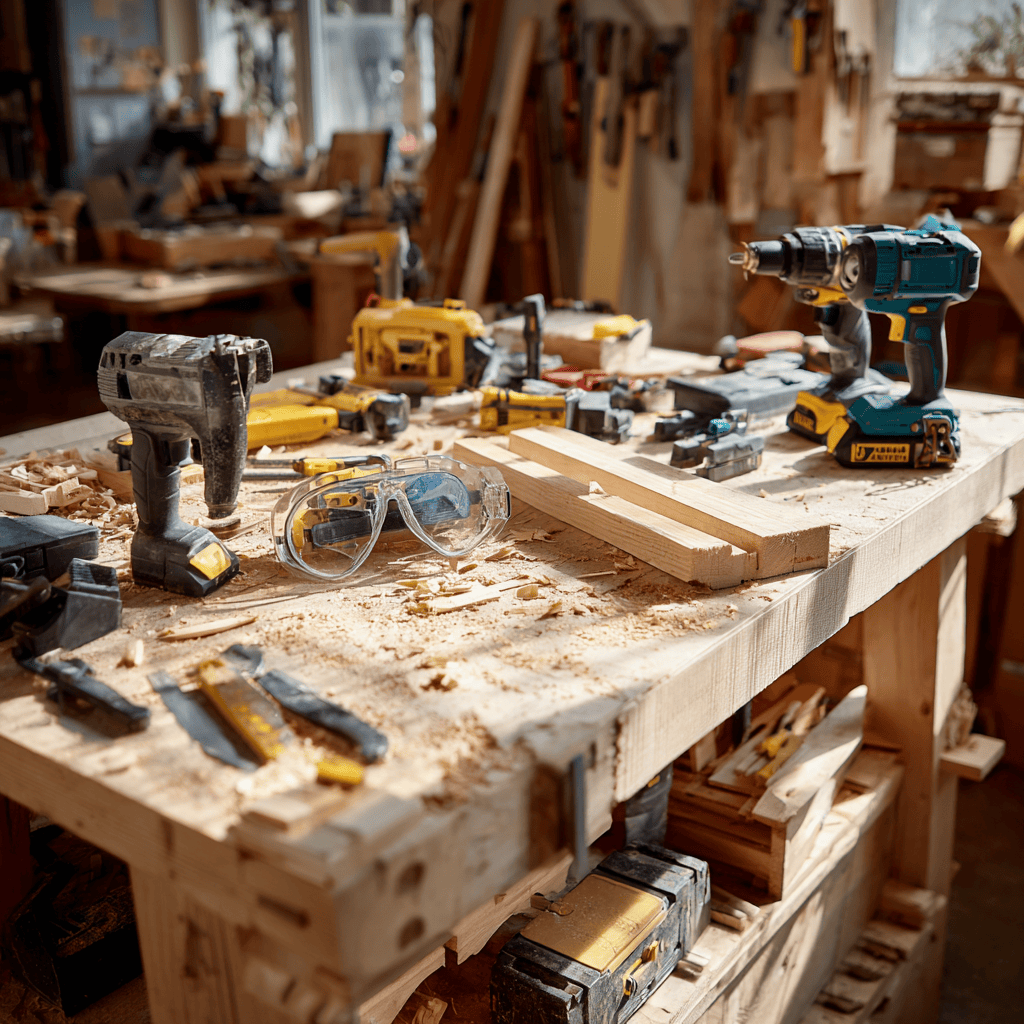
Every beginner workshop should include a balanced mix of woodworking hand tools and power tools for woodworking.
Hand tools develop precision and craftsmanship, while power tools increase efficiency and reduce physical effort.
Essential Woodworking Hand Tools
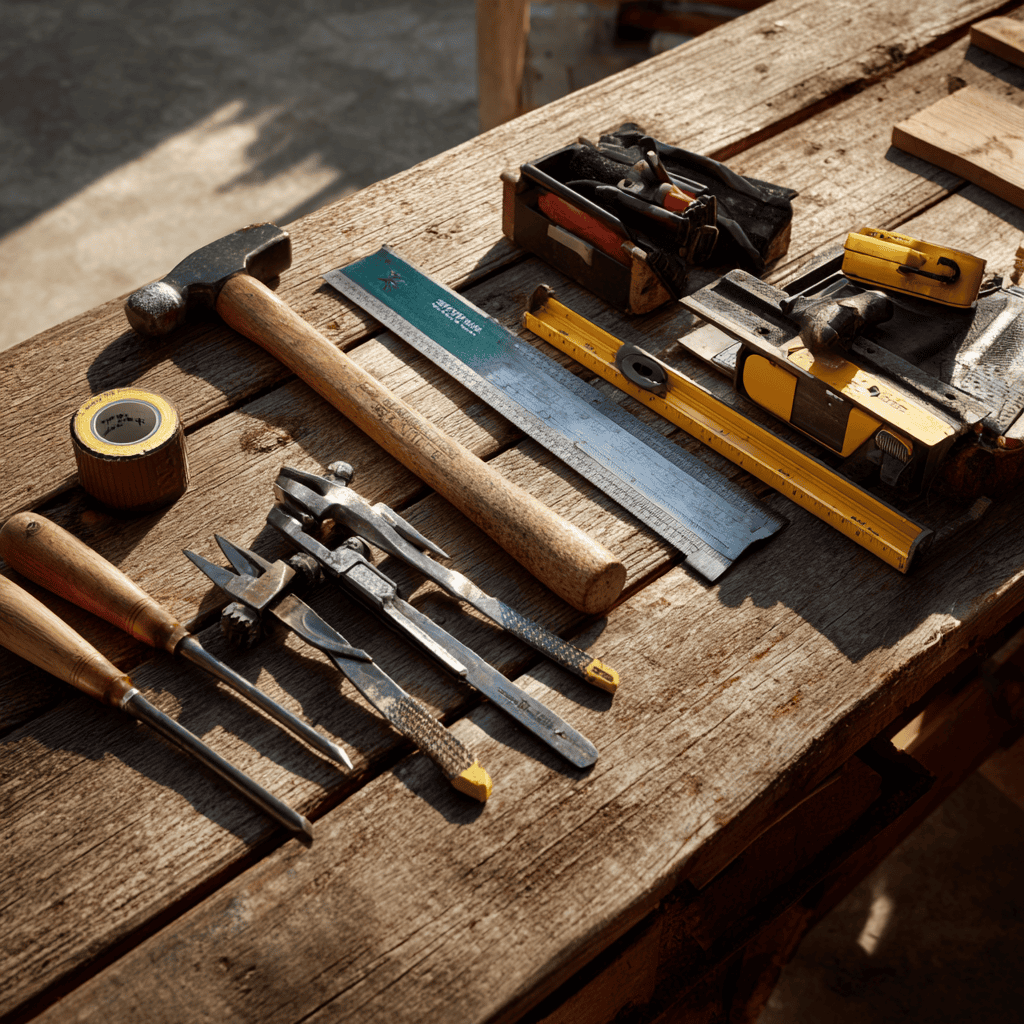
Hand tools remain the foundation of woodworking, even in professional shops.
A beginner should consider owning:
Measuring and Layout Tools
Accurate measurement is the foundation of every successful project.
Essential measuring tools include:
- Tape measure
- Combination square
- Speed square
- Marking gauge
- Marking knife
- Carpenter’s pencil
Even small measurement errors can multiply throughout a project, making precision essential.
Chisels
Quality chisels allow you to:
- Clean joints
- Trim wood
- Remove waste material
- Fine-tune joinery
Look for:
- Hardened high-carbon steel
- Comfortable handles
- Full tang construction
- Easy sharpening
A small set containing ¼”, ½”, and 1″ chisels is sufficient for most beginners.
Hand Plane
A hand plane smooths wood surfaces, straightens edges, and fine-tunes joints.
Many experienced woodworkers consider a quality block plane one of the most useful tools in any workshop because it performs dozens of everyday tasks.
Handsaw
Although power saws are popular, a quality handsaw teaches proper cutting technique and works well for:
- Small projects
- Fine trimming
- Joinery
- Quick cuts
Japanese pull saws are especially popular among beginners because they cut efficiently and produce clean edges.
Clamps
A common saying among woodworkers is:
“You can never have too many clamps.”
Clamps hold workpieces securely during:
- Gluing
- Assembly
- Drilling
- Sanding
Start with:
- Bar clamps
- Spring clamps
- F-style clamps
These three styles cover most beginner woodworking projects.
Key takeaway: Mastering hand tools builds foundational skills that improve every future woodworking project.
Which Power Tools Should Beginners Buy First?
Power tools increase productivity, but purchasing every machine at once isn’t necessary.
Instead, focus on versatile tools that perform multiple tasks and support a wide variety of beginner projects.
The next section of this Woodworking Tools Guide covers:
- The best power tools for woodworking
- How to compare tool features before buying
- Woodworking tool selection tips
- Choosing budget woodworking tools without sacrificing quality
- The best woodworking tools for beginners
- Expert recommendations for building your workshop step by step
Which Power Tools Should Beginners Buy First?
Power tools can make woodworking faster, more precise, and less physically demanding. However, beginners don’t need a fully equipped workshop from day one. The smartest approach is to invest in versatile tools that can handle a wide range of projects.
Choosing the right power tools for woodworking means balancing performance, safety, durability, and budget.
Key takeaway: Start with multi-purpose power tools before investing in specialized equipment.
Circular Saw
A circular saw is often the first major power tool beginners should buy.
It can perform many tasks, including:
- Cutting plywood
- Trimming dimensional lumber
- Breaking down large sheets
- Crosscuts and rip cuts (with a guide)
Look for these features:
- 7¼-inch blade
- Adjustable depth control
- Bevel adjustment
- Comfortable grip
- Electric brake
Pairing a circular saw with a straight-edge guide produces surprisingly accurate cuts without the cost of a table saw.
Cordless Drill and Driver
A cordless drill is one of the most frequently used tools in any workshop.
You’ll use it for:
- Drilling holes
- Driving screws
- Installing hardware
- Light sanding with attachments
- Mixing finishes
Choose a model that offers:
- Variable speed
- Adjustable clutch
- Brushless motor
- Lithium-ion battery
- Two batteries for uninterrupted work
An 18V or 20V cordless drill offers an excellent balance of power and portability.
Random Orbital Sander
Good sanding separates amateur-looking projects from professional-looking ones.
A random orbital sander:
- Removes material evenly
- Leaves fewer visible sanding marks
- Works on flat and curved surfaces
- Makes finishing much easier
Look for:
- Dust collection port
- Hook-and-loop sanding discs
- Comfortable palm grip
- Variable speed control
Quality dust collection also improves workshop cleanliness and reduces airborne particles.
Jigsaw
A jigsaw is ideal for:
- Curved cuts
- Interior cutouts
- Decorative shapes
- Small woodworking projects
While it won’t replace every saw, it’s extremely useful for creative DIY work.
Choose a model with:
- Variable speed
- Orbital cutting settings
- Tool-free blade changes
- Low vibration
Table Saw (When You’re Ready)
Many experienced woodworkers consider the table saw the centerpiece of a workshop.
However, beginners don’t need to purchase one immediately.
A table saw becomes worthwhile when you begin making:
- Furniture
- Cabinets
- Repeated identical cuts
- Larger woodworking projects
If you decide to buy one, prioritize safety features such as:
- Reliable blade guard
- Riving knife
- Anti-kickback pawls
- Stable fence system
- Emergency stop switch
Key takeaway: Buy versatile power tools first, then expand your workshop as your projects become more advanced.
How Can Beginners Identify Quality Woodworking Tools?
Not all tools are created equal. Understanding what separates quality tools from poorly made alternatives helps you spend your money wisely.
Here are the most important factors to evaluate during woodworking tool selection.
1. Build Quality
Inspect the overall construction.
Quality woodworking tools typically feature:
- Solid metal components
- Precision-machined parts
- Minimal plastic in high-stress areas
- Tight assembly with no loose fittings
Tools should feel sturdy without being unnecessarily heavy.
2. Accuracy
Precision matters in woodworking.
Look for:
- Accurate measuring scales
- Square factory settings
- Smooth adjustments
- Positive locking mechanisms
Even a powerful tool becomes frustrating if it cannot consistently make accurate cuts.
3. Ergonomics
Comfort affects both productivity and safety.
Choose tools with:
- Comfortable grips
- Balanced weight
- Easy-to-reach controls
- Reduced vibration
A tool that feels comfortable during a five-minute test is more likely to remain comfortable during a two-hour project.
4. Motor Performance
For power tools, pay attention to:
- Motor power
- Brushless technology
- Smooth startup
- Consistent speed under load
Brushless motors generally run cooler, require less maintenance, and often last longer than brushed motors.
5. Replacement Parts
Eventually, every tool requires maintenance.
Choose manufacturers that offer:
- Replacement blades
- Batteries
- Chargers
- Belts
- Bearings
- Service centers
Easy access to replacement parts significantly extends a tool’s lifespan.
6. Warranty and Customer Support
Reliable manufacturers stand behind their products.
Look for warranties covering:
- Manufacturing defects
- Motor failures
- Battery replacement
- Service support
A strong warranty demonstrates confidence in product quality.
Key takeaway: Evaluate a tool based on construction, accuracy, ergonomics, serviceability, and long-term reliability—not just price.
Should Beginners Buy New or Used Woodworking Tools?
Both options offer advantages.
Buying New
Pros:
- Manufacturer warranty
- Latest safety features
- No hidden wear
- Better battery technology
- Easier returns
Cons:
- Higher initial cost
Buying Used
Pros:
- Lower prices
- Higher-quality tools within budget
- Excellent value on older cast-iron machines
Cons:
- Unknown maintenance history
- Potential repairs
- Limited warranty
Used tools can be excellent purchases if you inspect them carefully.
Check for:
- Rust
- Motor noise
- Cracks
- Missing components
- Fence alignment
- Smooth adjustments
Key takeaway: New tools provide peace of mind, while quality used tools can deliver exceptional value for budget-conscious beginners.
How Much Should Beginners Spend on Woodworking Tools?
One of the most common questions in any tool buying guide is how much money to invest.
The answer depends on your goals.
| User Type | Recommended Budget |
|---|---|
| Casual DIY homeowner | $250–$500 |
| Weekend hobbyist | $500–$1,000 |
| Serious beginner woodworker | $1,000–$2,000 |
Instead of buying large starter kits, allocate your budget toward fewer, better-quality tools.
A smart beginner toolkit might include:
| Tool | Budget Range |
|---|---|
| Tape measure | $15–30 |
| Combination square | $25–60 |
| Chisel set | $50–120 |
| Block plane | $60–150 |
| Cordless drill | $100–250 |
| Circular saw | $120–250 |
| Random orbital sander | $60–150 |
| Clamps | $80–200 |
Buying gradually allows you to learn which tools you’ll actually use before investing in specialized equipment.
Key takeaway: Spending strategically on a small collection of reliable tools delivers better value than purchasing an oversized bargain kit.
Best Practices for Building Your First Tool Collection
As your skills grow, your workshop should grow with them. Avoid rushing into unnecessary purchases by following these proven best practices.
- Buy for your current projects. Let your woodworking goals determine which tools you purchase next.
- Prioritize quality over quantity. A few dependable tools will outperform a cabinet full of low-quality alternatives.
- Stick with compatible battery platforms. If you choose cordless tools, staying within one battery ecosystem can save money and simplify charging.
- Learn proper maintenance. Clean tools after use, sharpen cutting edges regularly, and store equipment in a dry environment to maximize longevity.
- Read woodworking tool reviews critically. Look beyond star ratings. Pay attention to long-term durability, ease of adjustment, customer support, and real-world performance from experienced users.
- Invest in safety equipment. Eye protection, hearing protection, dust masks or respirators, and push sticks are essential additions to any workshop.
Key takeaway: Building your workshop gradually—and maintaining your tools properly—creates a safer, more efficient, and more enjoyable woodworking experience.
Common Mistakes Beginners Make When Buying Woodworking Tools
Every woodworker makes mistakes when starting out, but avoiding the most common purchasing errors can save you money, improve your skills, and create a safer workshop.
1. Buying Too Many Tools Too Soon
It’s tempting to purchase large tool kits or fill your workshop with every machine you see. However, many beginners discover they use only a small percentage of those tools.
Instead:
- Buy tools as your projects require them.
- Learn each tool thoroughly before adding another.
- Upgrade only when your current tool limits your work.
Takeaway: Build your workshop around your projects, not your wish list.
2. Choosing Price Over Quality
Budget matters, but the cheapest option isn’t always the best value.
Very inexpensive tools often have:
- Poor accuracy
- Weak motors
- Low-quality steel
- Short lifespans
- Limited warranties
A mid-range tool from a reputable manufacturer often outperforms several low-cost replacements over time.
Takeaway: Buy the best quality your budget reasonably allows.
3. Ignoring Safety Features
Safety should never be optional.
When purchasing power tools for woodworking, look for features such as:
- Blade guards
- Electric brakes
- Riving knives
- Anti-kickback mechanisms
- Dust collection ports
- Paddle switches or emergency stop buttons
Never remove or disable safety devices simply for convenience.
Takeaway: A safe tool protects both your project and your health.
4. Buying Specialized Tools Too Early
Many beginners purchase specialty tools before mastering the basics.
Examples include:
- Dovetail jigs
- Biscuit joiners
- Drum sanders
- Mortising machines
- Large lathes
While these tools are valuable, most aren’t necessary for learning fundamental woodworking techniques.
Focus first on versatile equipment that supports a wide variety of projects.
Takeaway: Master the fundamentals before expanding into specialty tools.
5. Overlooking Tool Maintenance
Even the best woodworking tools for beginners require regular care.
Simple maintenance includes:
- Cleaning dust after every use
- Lubricating moving parts
- Sharpening blades and chisels
- Replacing worn sandpaper
- Checking alignment regularly
- Storing tools in a dry environment
Proper maintenance improves accuracy, extends tool life, and reduces repair costs.
Takeaway: Well-maintained tools perform better and last significantly longer.
Recommendations for Choosing the Right Woodworking Tools
If you’re building your first workshop, follow these practical recommendations.
Start with Essential Hand Tools
Every beginner should own:
- Tape measure
- Combination square
- Chisel set
- Block plane
- Handsaw
- Clamps
- Marking knife
These tools teach precision while supporting nearly every woodworking project.
Add Versatile Power Tools
After mastering the basics, consider purchasing:
- Cordless drill
- Circular saw
- Random orbital sander
- Jigsaw
These tools offer excellent versatility without overwhelming new woodworkers.
Buy from Trusted Manufacturers
While preferences vary, manufacturers with strong reputations for quality, replacement parts, and customer support often provide better long-term value than unknown brands.
Rather than focusing solely on brand names, evaluate:
- Product reviews
- Warranty coverage
- Service availability
- Replacement part accessibility
- Overall build quality
Read Woodworking Tool Reviews Carefully
Quality woodworking tool reviews provide insights beyond star ratings.
Look for reviews that discuss:
- Long-term durability
- Accuracy after extended use
- Ease of maintenance
- Customer support experiences
- Performance across multiple projects
Professional reviews and feedback from experienced hobbyists often provide the most balanced perspective.
Expand Your Workshop Gradually
A thoughtful upgrade path might look like this:
Stage 1
- Measuring tools
- Chisels
- Handsaw
- Clamps
↓
Stage 2
- Cordless drill
- Circular saw
- Random orbital sander
↓
Stage 3
- Router
- Table saw
- Miter saw
↓
Stage 4
- Specialty joinery tools
- Dust collection system
- Workbench upgrades
Growing your workshop gradually allows your tool collection to evolve alongside your skills.
Key takeaway: Buy intentionally, learn continuously, and upgrade only when your projects demand it.
Why This Matters
Choosing quality woodworking tools is about much more than purchasing equipment—it’s about creating a strong foundation for every project you’ll build in the future.
Reliable tools help beginners develop proper techniques because they produce consistent, predictable results. Instead of wondering whether mistakes come from poor craftsmanship or inaccurate equipment, you can focus on improving your skills with confidence.
Quality tools also contribute to a safer and more enjoyable woodworking experience. Accurate measuring tools reduce costly errors, sharp cutting tools require less force, and dependable power tools operate more smoothly with fewer unexpected problems.
These advantages make learning faster, reduce frustration, and encourage beginners to continue developing their craft.
Another important consideration is long-term value. Well-made woodworking tools often remain useful for decades with proper maintenance.
Many experienced woodworkers still use hand planes, chisels, and measuring tools that have been in service for generations.
By investing carefully and expanding your workshop over time, you create a collection of tools that grows with your abilities instead of becoming obsolete.
Ultimately, woodworking is a skill built on patience, precision, and continuous learning. Choosing quality tools supports all three.
Common Questions About Choosing Quality Woodworking Tools
What are the first woodworking tools every beginner should buy?
Start with essential measuring tools, chisels, a handsaw, clamps, a cordless drill, and a circular saw. These tools provide the versatility needed for most beginner woodworking projects.
Are expensive woodworking tools always better?
No. Higher prices do not automatically mean better performance. Focus on durability, accuracy, ergonomics, warranty coverage, and independent reviews rather than price alone.
Should beginners buy hand tools or power tools first?
Begin with quality hand tools to learn woodworking fundamentals, then add versatile power tools that improve efficiency without replacing essential skills.
Can budget woodworking tools still be good?
Yes. Many budget woodworking tools offer excellent value when purchased from reputable manufacturers with solid warranties and positive long-term reviews.
How many woodworking tools does a beginner need?
Surprisingly few. A carefully chosen collection of 10–15 essential tools is enough to complete many furniture, home improvement, and DIY woodworking projects.
Is it better to buy tool kits or individual tools?
Individual tools are usually the better investment because you can prioritize quality, purchase only what you need, and avoid paying for tools you’ll rarely use.
How often should woodworking tools be maintained?
Basic cleaning should happen after every use. Blades and chisels should be sharpened as needed, and power tools should be inspected regularly for alignment, wear, and proper operation.
FAQ
How do beginners choose quality woodworking tools?
Beginners should prioritize durability, accuracy, safety, and versatility over buying the largest collection of tools. Start with essential hand tools and a few reliable power tools, purchase from trusted manufacturers, and expand your workshop gradually as your woodworking skills develop.
What are the essential woodworking tools for beginners?
Essential beginner woodworking tools include a tape measure, combination square, chisels, handsaw, clamps, cordless drill, circular saw, and random orbital sander. These tools support most common woodworking and DIY projects.
Are budget woodworking tools worth buying?
Yes, many budget woodworking tools provide excellent performance for beginners when they come from reputable brands with good warranties and positive user feedback. Avoid choosing tools based solely on the lowest price.
What should I look for when buying woodworking tools?
Evaluate build quality, cutting accuracy, ergonomic design, safety features, replacement part availability, warranty coverage, and independent woodworking tool reviews. These factors often matter more than brand recognition alone.
How should beginners build a woodworking tool collection?
Begin with essential measuring and cutting tools, then add versatile power tools as project needs grow. Purchasing tools gradually allows beginners to learn each tool properly while making smarter long-term buying decisions.
Final Summary
Choosing quality woodworking tools as a beginner isn’t about owning the biggest workshop—it’s about making smart, informed purchases that support your learning and future projects.
The most successful beginner woodworkers focus on building a solid foundation with essential woodworking tools, including accurate measuring equipment, reliable hand tools, and a few versatile power tools. By emphasizing quality, safety, and durability over quantity, you’ll spend less replacing inferior tools and more time developing valuable woodworking skills.
Remember these key principles when making your woodworking tool selection:
- Buy tools based on the projects you plan to build.
- Prioritize quality over quantity.
- Start with essential hand tools before expanding into larger power tools.
- Choose tools that offer accuracy, durability, and reliable safety features.
- Read independent woodworking tool reviews before making major purchases.
- Invest gradually instead of buying everything at once.
- Maintain your tools properly to maximize performance and lifespan.
Whether you’re building your first bookshelf, crafting furniture, or exploring woodworking as a long-term hobby, the right tools will make every project safer, more enjoyable, and more successful.
A carefully planned workshop doesn’t happen overnight—it grows alongside your experience. Every thoughtful purchase becomes an investment in better craftsmanship, greater confidence, and the satisfaction of creating quality work with tools you can rely on for years to come.
Your Next Steps
If you’re ready to build your first workshop, follow this simple action plan:
- Create a project list. Decide what you want to build over the next 6–12 months.
- Purchase your measuring and layout tools first. Precision begins with accurate measurements.
- Add essential woodworking hand tools such as chisels, a block plane, a handsaw, and clamps.
- Invest in versatile power tools like a cordless drill, circular saw, and random orbital sander.
- Practice safe woodworking habits by using proper personal protective equipment and following manufacturer instructions.
- Upgrade strategically. Add specialty tools only when your projects require them.
Following this approach helps you avoid unnecessary expenses while building a workshop that grows with your skills and interests.
Beginner Woodworking Tool Checklist
Use this checklist as a quick reference when shopping for your first tools.
Measuring & Layout
- □ Tape measure
- □ Combination square
- □ Speed square
- □ Marking knife
- □ Carpenter’s pencil
Hand Tools
- □ Chisel set
- □ Block plane
- □ Handsaw
- □ Clamps
- □ Hammer or wooden mallet
Power Tools
- □ Cordless drill/driver
- □ Circular saw
- □ Random orbital sander
- □ Jigsaw
Safety Equipment
- □ Safety glasses
- □ Hearing protection
- □ Dust mask or respirator
- □ Push sticks
- □ Work gloves (for material handling, not rotating machinery)
This checklist provides a practical starting point without overwhelming new woodworkers with unnecessary purchases.
Final Thoughts
Learning woodworking is a journey, and every experienced craftsperson started with a handful of basic tools and a willingness to learn.
Choosing quality tools from the beginning gives you the confidence to develop your skills, complete projects with greater accuracy, and enjoy the process rather than struggle with unreliable equipment.
Rather than chasing the largest collection or the lowest prices, focus on building a workshop with purpose. Select tools that are durable, accurate, safe, and versatile, and let each new project guide your next purchase.
Over time, you’ll create a toolkit that not only supports your current goals but also serves you well as your woodworking knowledge and ambitions grow.
By following the guidance in this Woodworking Tools Guide, you’ll be well prepared to choose the best woodworking tools for beginners, avoid common buying mistakes, and build a workshop that delivers lasting value for years to come.
For additional guidance on woodworking safety, tool selection, and best practices, consult trusted industry resources such as WOOD Magazine, the Fine Woodworking, and the Occupational Safety and Health Administration (OSHA). These organizations provide reliable information on woodworking techniques, tool safety, and workshop best practices.
Ready to Build Your Workshop Faster?
Avoid expensive beginner mistakes and discover the shortcuts experienced woodworkers use to choose the right tools, build projects with confidence, and save time.