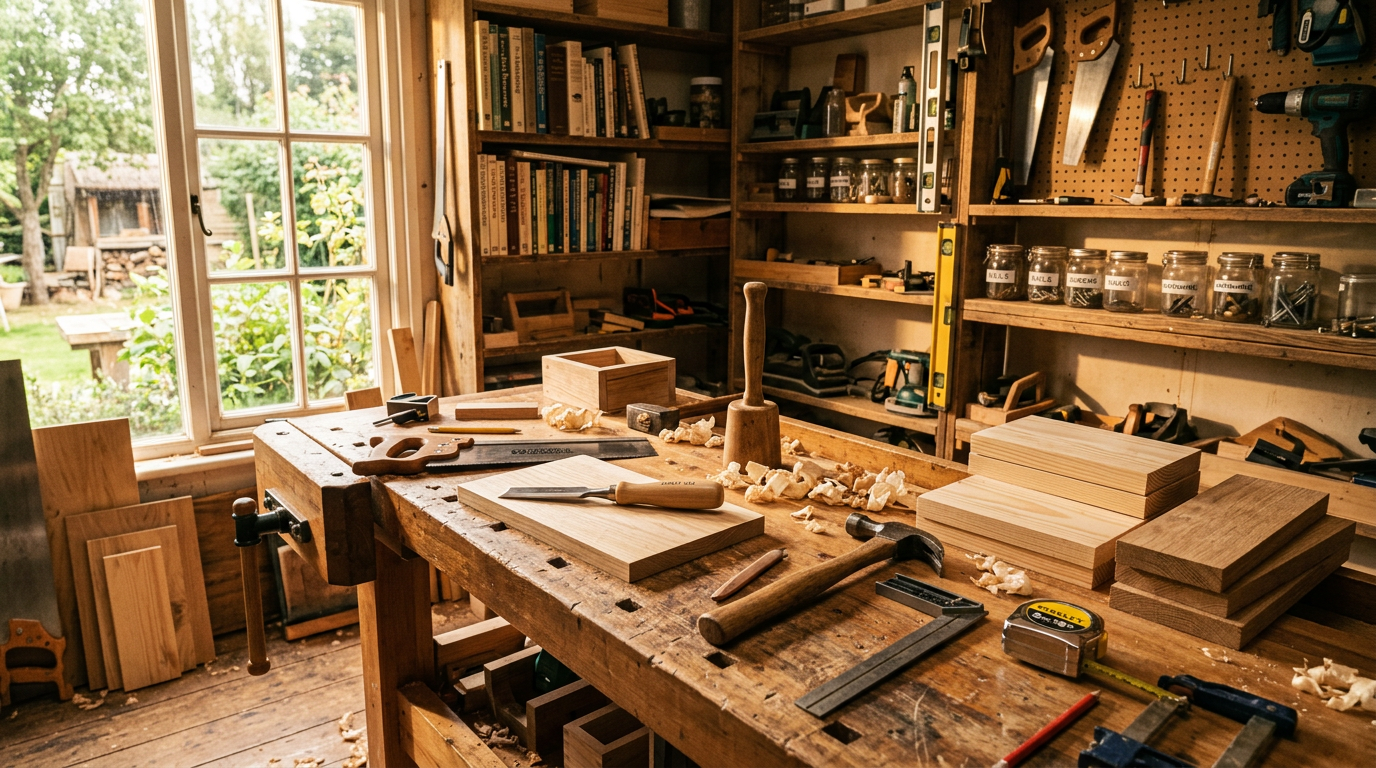
Essential Overview:
Beginner woodworkers need a core set of tools including a measuring tape, combination square, hand saw, chisels, hammer, drill, and sander. Start with versatile, budget-friendly tools, then expand into power tools like a circular saw or router as skills improve.
Key Insights for Aspiring Woodworkers
- Start with essential hand tools before investing in expensive equipment
- A measuring and marking setup is critical for accuracy
- Power tools speed up work, but aren’t required initially
- Focus on multi-purpose tools to stay within budget
- Quality matters more than quantity for long-term use
- Build your toolkit gradually based on project needs
Beginner Woodworking Tools: Everything You Need to Start Strong
The Fundamental Tools Every Beginner Woodworker Should Own
Starting woodworking can feel overwhelming because of the number of tools available. The key is to focus on foundational tools that allow you to measure, cut, shape, and assemble wood efficiently.
Categorizing the Core Essentials of Woodworking Tools
Every beginner woodworking tool falls into one of these categories:
- Measuring & Marking
- Cutting Tools
- Shaping Tools
- Assembly Tools
- Finishing Tools
Measuring and Marking Tools: The Backbone of Precision
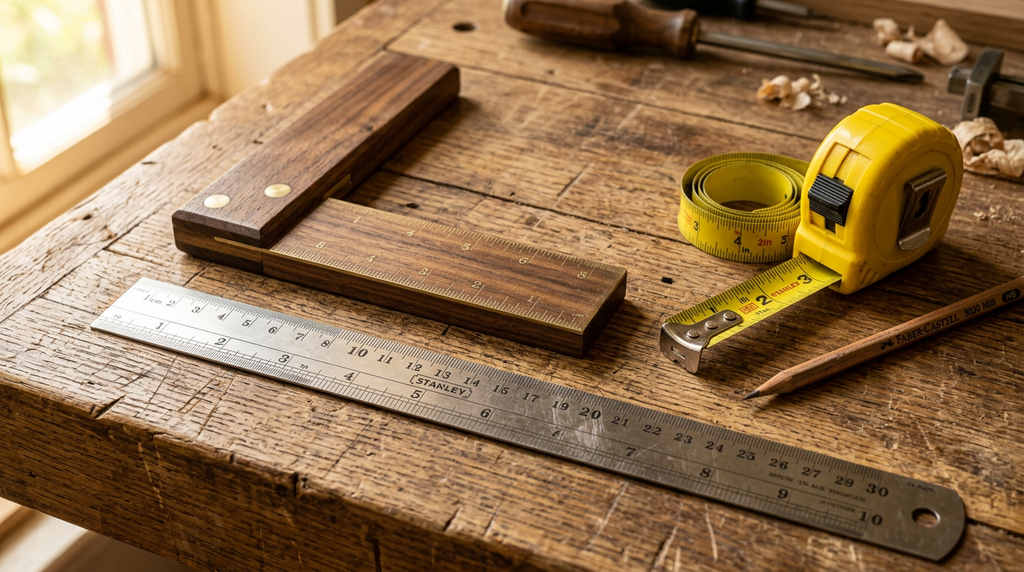
Accurate measurements are the backbone of woodworking.
Must-Have Measuring Tools
- Tape Measure (25 ft)
- Combination Square
- Marking Pencil or Knife
- Marking Gauge
Why These Matter
Even small measurement errors compound quickly, leading to poor-fitting joints and wasted materials.
Essential Cutting Tools to Kickstart Your Projects
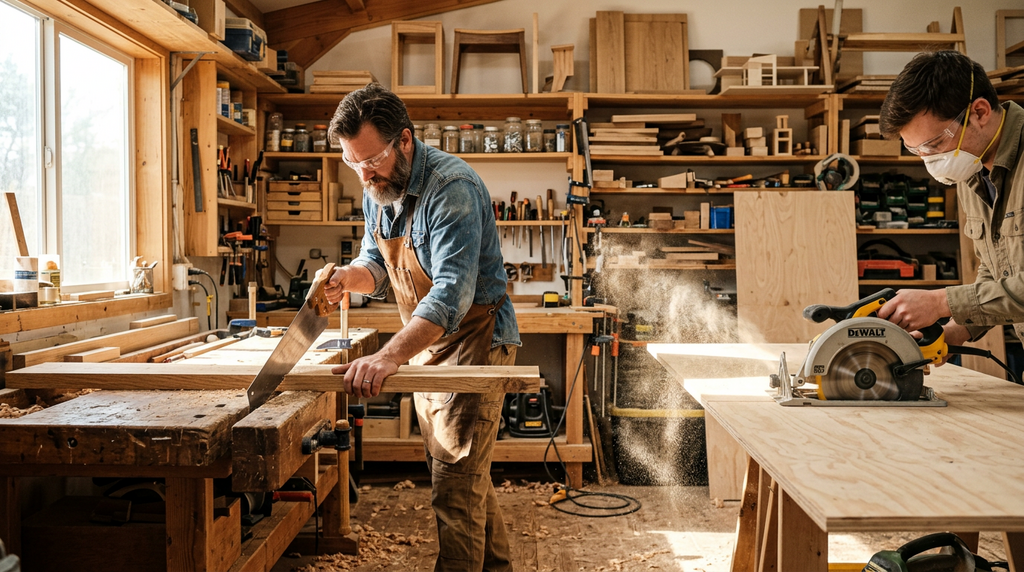
Cutting tools shape your raw wood into usable parts.
Hand Cutting Tools
- Hand Saw (Crosscut or Rip Saw)
- Coping Saw (for curves)
Beginner Power Cutting Tools
- Circular Saw (most versatile starter power tool)
- Jigsaw (ideal for curved cuts)
Pro Insight
If you’re on a budget, start with a high-quality hand saw, then upgrade to a circular saw later.
Tools for Shaping and Smoothing Your Workpieces
These tools refine your work and improve aesthetics.
Essential Tools for Crafting Beautiful Wood Projects
- Wood Chisels (set of 3–5 sizes)
- Block Plane
Tools to Achieve a Smooth Finish: Sanding Essentials
- Sandpaper (various grits)
- Random Orbital Sander (recommended upgrade)
The Importance of Choosing the Right Tools
Smooth finishes and clean edges dramatically improve the perceived quality of your work.
Must-Have Assembly Tools for Every New Woodworker
Once pieces are cut, you’ll need to join them securely.
Must-Have Tools for Assembling Your Wood Creations
- Claw Hammer
- Screwdrivers (Phillips & Flathead)
- Cordless Drill/Driver
- Clamps (at least 4–6)
A Vital Tip for New Woodworkers
Clamps are often underestimated—they act like extra hands and improve precision.
Power Tools That Can Elevate Your Woodworking Game
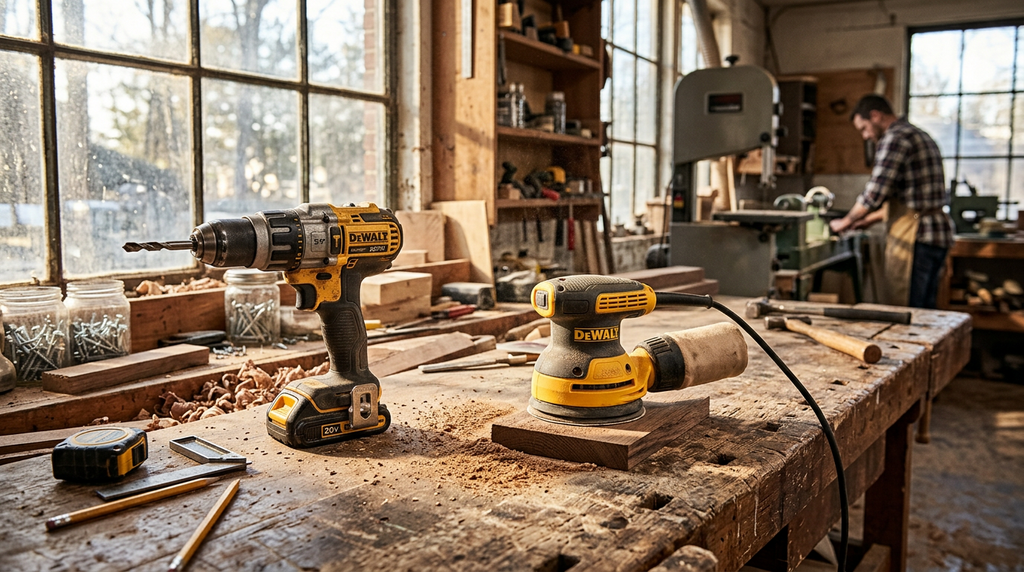
These tools increase efficiency as your skills grow.
Power Tools Every Beginner Should Consider
- Table Saw – precision cutting
- Router – shaping edges and joints
- Miter Saw – accurate angle cuts
Your Budget-Friendly Strategy for Tool Acquisition
Start with a drill and circular saw, then expand based on your projects.
Comparing Budget-Friendly vs. Premium Woodworking Tools
Prioritizing the Right Tools as a Beginner Woodworker
- Spend more on measuring tools and blades
- Save on non-critical accessories
- Upgrade tools as your skill level increases
Smart Strategies for Buying Beginner Woodworking Tools
- Buy used tools from trusted sellers
- Look for starter kits
- Avoid buying everything at once
Your Step-by-Step Blueprint for Assembling a Tool Kit
Step 1: Gather Your Essential Hand Tools First
- Tape measure
- Hand saw
- Hammer
- Screwdriver
Step 2: Incorporate Versatile Tools into Your Kit
- Drill
- Chisels
- Clamps
Step 3: Enhance Your Work Efficiency with Upgrades
- Circular saw
- Sander
Step 4: Expand Your Skills and Toolkit Gradually
- Router
- Table saw
Your First Tool Purchases for Woodworking Success?
The Necessity of Power Tools for Newbies in Woodworking?
Start with a measuring tape, hand saw, hammer, chisels, and a drill.
A Guide to Budgeting for Your Beginner Woodworking Tools
No. You can start with hand tools and add power tools later for speed.
The Most Crucial Tool You Need as a Woodworking Novice
A basic setup can cost $100–$300 depending on quality and tool selection.
Coping with Woodworking Without High-End Tools: Is It Possible?
Accuracy tools like a combination square are often the most critical.
Can I learn woodworking without expensive tools?
Yes. Many skilled woodworkers started with simple, affordable tools.
Expert Insight: Why This Matters
Choosing the right beginner woodworking tools isn’t just about saving money—it shapes your entire learning experience.
When you start with the right tools:
- You reduce frustration
- You build confidence faster
- You complete projects successfully
From a cognitive perspective, early success creates a positive reinforcement loop, making you more likely to continue and improve.
The biggest mistake beginners make is overbuying tools instead of mastering a few essentials.
FAQ Section
What are the essential beginner woodworking tools?
Essential tools include a tape measure, hand saw, chisels, hammer, drill, and clamps.
What is the best woodworking tool for beginners?
A cordless drill is often the most versatile and beginner-friendly tool.
Should beginners start with hand tools or power tools?
Beginners should start with hand tools and gradually add power tools.
How many tools do I need to start woodworking?
You can start with as few as 5–8 basic tools.
Can you create beautiful furniture using beginner woodworking tools?
No. Skill matters more than tool cost.
How quickly can you master woodworking skills?
What is the most budget-friendly way to begin woodworking?
Start with simple tools and beginner-friendly projects like shelves or boxes.
Links to Expert Resources on Woodworking
Basic hand tools plus a drill and clamps are sufficient.
Can I build furniture with beginner tools?
Yes, many furniture pieces can be built with basic tools.
How long does it take to learn woodworking?
Basic skills can be learned in weeks, mastery takes years.
What’s the cheapest way to start woodworking?
Buy essential tools only and consider second-hand equipment.
The Bottom Line: Tools You Need to Start Woodworking
Beginner woodworking tools don’t need to be expensive or complicated. Start with essential hand tools, add a few power tools over time, and focus on mastering the basics. A simple, well-chosen toolkit is all you need to begin building confidently.
Ready to skip the overwhelm and start building faster? Discover a proven shortcut system here:
👉 https://besthomeshed.com/WoodworkingShortcut/
External Authority Links
For deeper learning, explore trusted resources: Fine Woodworking offers expert tutorials and tool reviews. Popular Woodworking provides beginner-friendly guides and project plans. U.S. Forest Service shares technical insights and standards on wood materials.
Share Your Thoughts Below!