Quick Answer
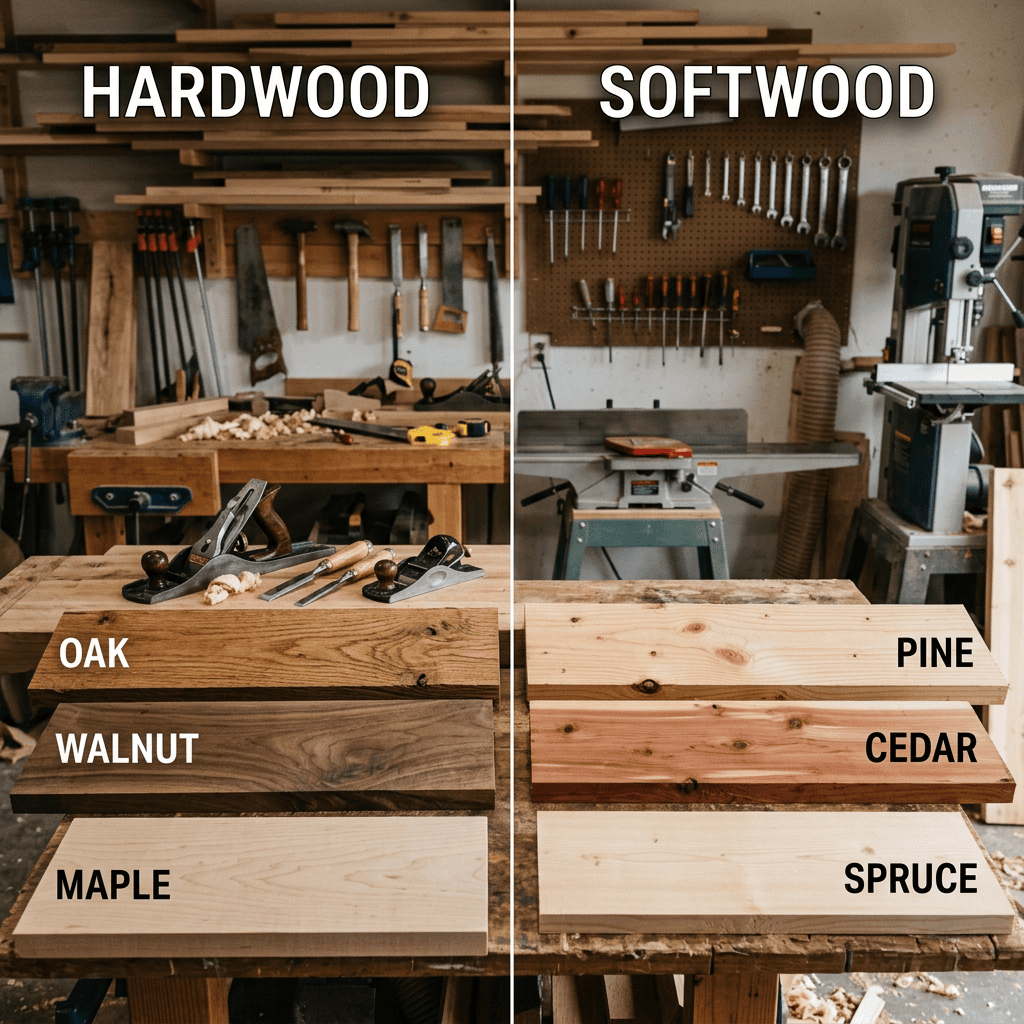
Hardwood vs. Softwood differs primarily in the type of tree they come from rather than their actual hardness. Hardwoods originate from deciduous trees, while softwoods come from coniferous trees.
Hardwoods are generally denser, more durable, and suited for furniture and flooring, whereas softwoods are lighter, faster-growing, more affordable, and commonly used in construction, paper production, and general woodworking.
Key Takeaways
- Hardwoods come from deciduous trees that lose their leaves annually, while softwoods come from evergreen coniferous trees.
- Hardwood is typically denser and more durable, making it ideal for furniture, flooring, cabinetry, and premium woodworking.
- Softwood grows faster, costs less, and is widely used for framing, roofing, fencing, and structural timber.
- Wood density, grain pattern, durability, and moisture resistance vary significantly between hardwood and softwood species.
- The best wood depends on your project’s requirements, budget, appearance, and exposure to weather.
- Understanding timber classification helps homeowners, architects, woodworkers, and DIY enthusiasts choose the right material for long-lasting results.
Differences Between Hardwood vs. Softwood: Characteristics, Uses, and Choosing the Right Material
Wood is one of the world’s oldest and most versatile building materials. Whether you’re building a home, crafting furniture, designing interiors, or completing a DIY project, selecting the right type of wood directly affects durability, appearance, maintenance, and cost.
One of the first decisions you’ll encounter is choosing between hardwood vs. softwood. Although these terms suggest differences in strength, they actually describe the biological classification of the trees from which the wood is harvested.
Understanding the wood characteristics, wood density, durability of wood, and common applications allows you to make informed decisions that balance performance, aesthetics, and budget.
This guide explains the key differences between hardwood and softwood, explores their characteristics, and provides practical advice for selecting the best wood for your needs.
What Is Hardwood?
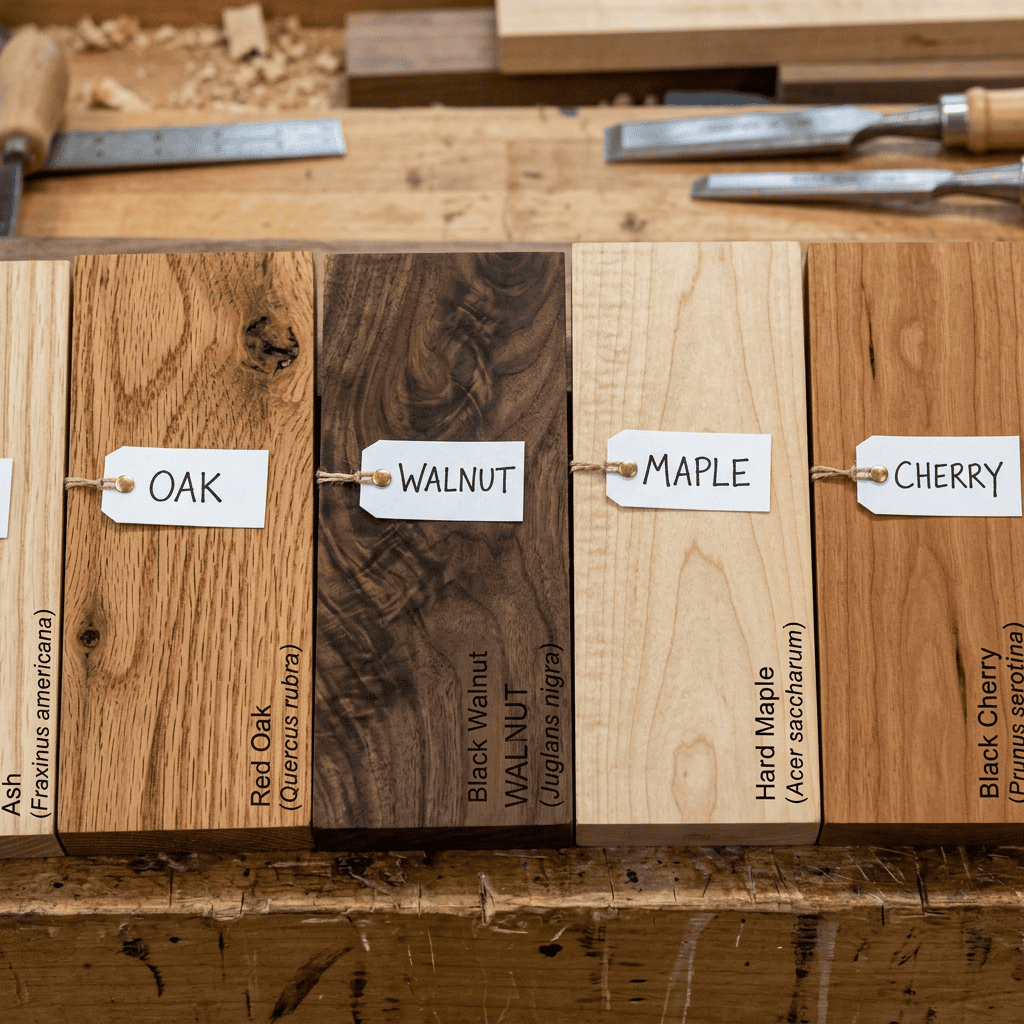
Hardwood is timber harvested from deciduous trees, which are broad-leaved trees that typically shed their leaves each year. These trees generally grow more slowly than conifers, resulting in wood with greater density and more complex grain structures.
Many hardwood species are prized for their durability, attractive appearance, and ability to withstand decades of use.
Common Types of Hardwood
Some of the most widely used types of hardwood include:
- Oak
- Maple
- Walnut
- Cherry
- Mahogany
- Ash
- Beech
- Hickory
- Teak
- Birch
Each species has unique properties regarding hardness, color, grain, moisture resistance, and workability.
Characteristics of Hardwood
Most hardwoods share several defining characteristics:
- Higher wood density
- Tight, attractive grain patterns
- Excellent durability
- Greater resistance to dents and wear
- Longer lifespan
- Higher cost due to slower growth
- Often darker, richer natural colors
However, not every hardwood is extremely hard. For example, balsa is classified as a hardwood despite being one of the lightest commercial woods.
Takeaway: Hardwood refers to wood from deciduous trees and is generally chosen for projects requiring strength, durability, and premium appearance.
What Is Softwood?
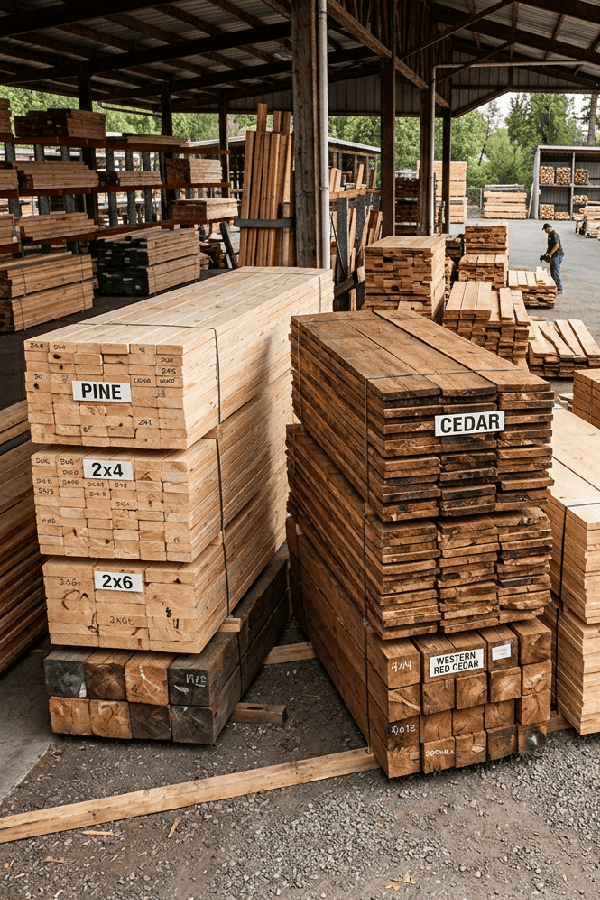
Softwood comes from coniferous trees, which are evergreen species that produce cones instead of flowers. These trees grow much faster than hardwoods, making softwood more abundant and affordable.
Because of its availability and ease of processing, softwood accounts for the majority of timber used worldwide.
Common Types of Softwood
Popular types of softwood include:
- Pine
- Cedar
- Spruce
- Fir
- Douglas Fir
- Larch
- Hemlock
- Redwood
Many of these species are cultivated in sustainably managed forests for construction and manufacturing.
Characteristics of Softwood
Typical wood characteristics of softwood include:
- Lower density
- Lighter weight
- Faster growth
- Easier machining and cutting
- Lower cost
- Straight grain
- Good flexibility
Some softwoods, such as Douglas Fir and Longleaf Pine, are remarkably strong despite belonging to the softwood category.
Likewise, cedar and redwood naturally resist insects and decay, making them excellent choices for outdoor applications.
Takeaway: Softwood is harvested from coniferous trees and is valued for affordability, workability, and widespread use in structural construction.
Hardwood vs. Softwood: What Are the Main Differences?
Although many people assume hardwood is always harder than softwood, the distinction is based on tree biology rather than physical hardness.
The following comparison highlights the key differences.
| Feature | Hardwood | Softwood |
|---|---|---|
| Tree Type | Deciduous (broadleaf) | Coniferous (evergreen) |
| Growth Rate | Slow | Fast |
| Wood Density | Usually higher | Usually lower |
| Weight | Heavier | Lighter |
| Durability | Excellent | Moderate to good |
| Grain Pattern | Complex and decorative | Straight and uniform |
| Cost | Higher | Lower |
| Workability | More difficult to machine | Easier to cut and shape |
| Sustainability | Slower replenishment | Faster renewable resource |
| Typical Uses | Furniture, flooring, cabinetry | Framing, roofing, fencing, construction |
How Does Wood Density Affect Performance?
One of the biggest differences between hardwood and softwood is wood density, which influences nearly every aspect of performance.
Higher-density woods generally provide:
- Better wear resistance
- Greater strength
- Improved screw-holding ability
- Increased resistance to dents
- Longer service life
Lower-density woods often offer:
- Easier transportation
- Simpler machining
- Faster installation
- Reduced project costs
- Better suitability for painted finishes
Density should not be the only factor when selecting wood. Moisture resistance, dimensional stability, intended use, and environmental exposure are equally important considerations.
Takeaway: Higher density often improves durability and strength, while lower density enhances workability and affordability.
Which Wood Is More Durable?
The durability of wood depends on several factors, including species, density, natural oils, environmental conditions, and protective finishes.
Generally, hardwoods outperform softwoods in long-term durability because their denser cellular structure resists impact, abrasion, and daily wear.
For example:
- Oak flooring can last for generations.
- Maple workbenches withstand heavy use.
- Walnut furniture retains its appearance for decades.
However, some softwoods naturally resist decay exceptionally well.
Examples include:
- Western Red Cedar
- Redwood
- Larch
- Douglas Fir (for structural applications)
Pressure-treated softwoods also perform well outdoors when properly maintained.
The right finish, sealing, and maintenance often have as much influence on lifespan as the wood species itself.
Takeaway: Hardwood is generally more durable, but several softwood species provide excellent longevity when chosen for appropriate applications and protected correctly.
What Are the Most Common Uses of Hardwood?
Hardwood is the preferred choice for projects that demand strength, longevity, and an attractive finish. Its dense structure and distinctive grain patterns make it a premium material for both functional and decorative applications.
Furniture Manufacturing
Many high-quality furniture pieces are made from hardwood because it resists dents, scratches, and daily wear.
Popular furniture hardwoods include:
- Oak
- Maple
- Walnut
- Cherry
- Mahogany
Examples include:
- Dining tables
- Bed frames
- Dressers
- Bookshelves
- Office desks
These woods also accept stains and finishes exceptionally well, allowing craftsmen to highlight their natural beauty.
Flooring
Hardwood flooring is valued for its durability and timeless appearance.
Common flooring species include:
- White Oak
- Red Oak
- Maple
- Hickory
Properly maintained hardwood floors can last 50 to 100 years, making them a worthwhile long-term investment.
Cabinetry and Interior Millwork
Architects and homeowners often choose hardwood for:
- Kitchen cabinets
- Bathroom vanities
- Staircases
- Interior doors
- Window frames
- Decorative trim
Its dimensional stability and refined appearance make it suitable for high-end interiors.
Specialty Woodworking
Experienced woodworkers favor hardwood for projects requiring precision and durability, such as:
- Cutting boards
- Musical instruments
- Decorative carvings
- Turned bowls
- Fine joinery
Its strength allows intricate details while maintaining structural integrity.
Takeaway: Hardwood is best suited for premium applications where durability, aesthetics, and long-term performance are priorities.
What Are the Most Common Uses of Softwood?
Softwood dominates the global construction industry because it is widely available, affordable, lightweight, and easy to work with.
Residential Construction
Most structural framing uses softwood species such as:
- Spruce
- Pine
- Douglas Fir
These woods provide an excellent balance of strength, weight, and cost.
Typical applications include:
- Wall framing
- Roof trusses
- Floor joists
- Ceiling beams
Despite their name, many structural softwoods possess impressive strength.
Outdoor Projects
Certain softwoods naturally resist insects and decay.
Common outdoor applications include:
- Decking
- Pergolas
- Garden beds
- Fences
- Gazebos
- Sheds
Western Red Cedar and Redwood are particularly popular because they withstand moisture without extensive chemical treatment.
Paper and Engineered Wood Products
Softwood fibers are longer than hardwood fibers, making them ideal for manufacturing:
- Paper
- Cardboard
- Plywood
- Oriented Strand Board (OSB)
- Medium Density Fiberboard (MDF)
These products form the backbone of modern construction and packaging industries.
DIY Projects
For beginners, softwood offers several advantages:
- Easy cutting
- Simple sanding
- Readily available
- Lower cost
- Lightweight handling
Common DIY projects include:
- Shelving
- Furniture prototypes
- Storage boxes
- Planters
- Children’s toys
- Workshop benches
Takeaway: Softwood is the practical choice for construction, outdoor structures, and cost-effective woodworking projects.
How Do You Choose Between Hardwood and Softwood?
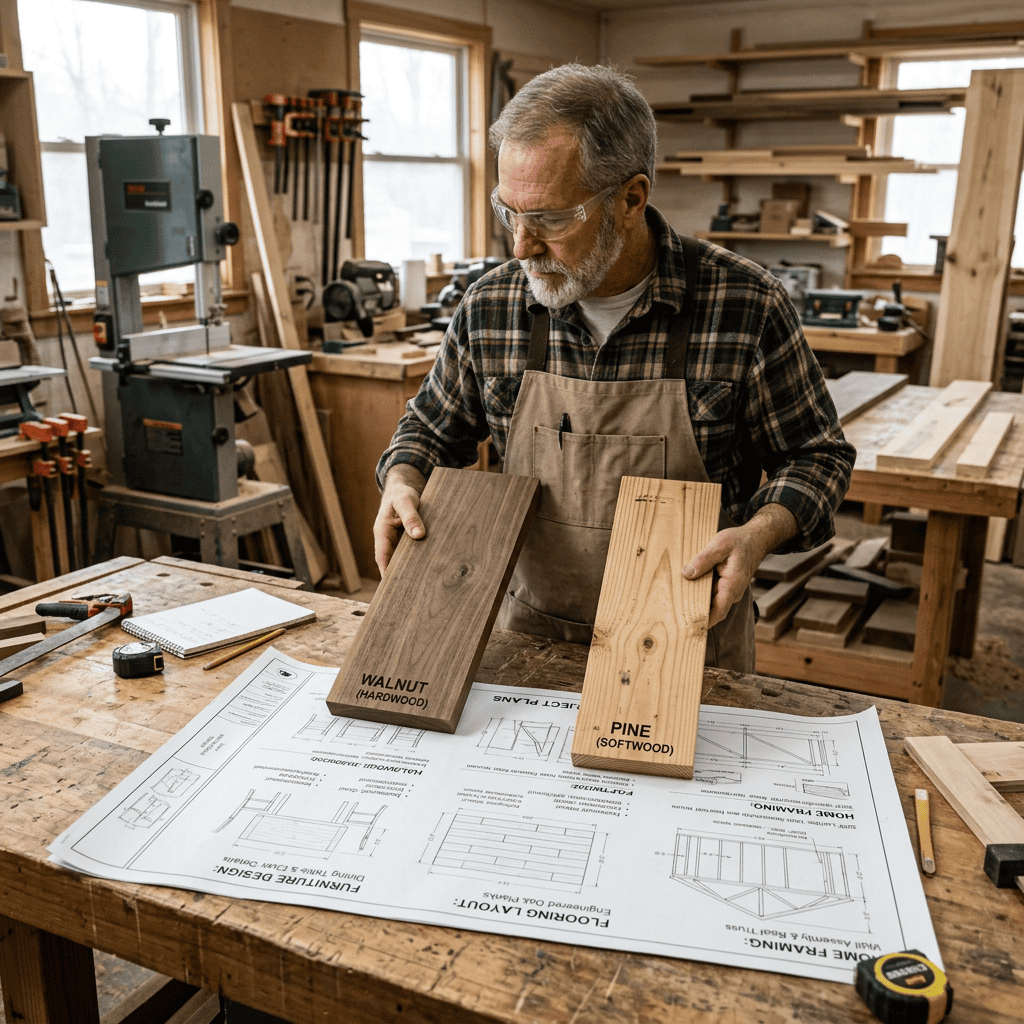
Selecting the right wood depends on your project’s specific requirements rather than assuming one category is always superior.
Consider the following factors before making your decision.
1. Purpose of the Project
Ask yourself:
- Will the wood support heavy loads?
- Will it receive frequent use?
- Is appearance a priority?
- Will it be exposed to weather?
For example:
- Dining tables benefit from hardwood.
- House framing typically uses softwood.
2. Budget
Hardwoods generally cost more due to slower growth and limited availability.
If budget is your primary concern, softwood often provides excellent value without sacrificing performance for many applications.
3. Durability Requirements
Projects subjected to:
- Heavy foot traffic
- Frequent impacts
- Daily wear
usually benefit from hardwood.
Temporary structures or concealed framing often perform perfectly well with softwood.
4. Appearance
Hardwoods usually feature:
- Richer colors
- Distinctive grain
- Premium finishes
Softwoods often provide:
- Uniform texture
- Lighter color
- Rustic appearance
The desired design style should influence your selection.
5. Ease of Working
If you’re new to woodworking, softer woods are generally easier to:
- Cut
- Drill
- Nail
- Sand
- Shape
Hardwoods require sharper tools, more patience, and greater experience.
Takeaway: The best wood balances performance, aesthetics, budget, and ease of use for your specific project.
Best Practices for Working with Hardwood and Softwood
Proper handling improves both the quality of your work and the lifespan of the finished product.
Acclimate the Wood
Allow lumber to adjust to the humidity of its environment before installation.
This reduces:
- Warping
- Shrinkage
- Expansion
- Cracking
Use the Right Tools
Hardwood often requires:
- Carbide-tipped blades
- Sharp chisels
- Slower cutting speeds
Softwood can typically be machined with standard woodworking tools.
Seal and Finish Properly
Protect wood from:
- Moisture
- UV exposure
- Dirt
- Insects
Common finishes include:
- Oil
- Polyurethane
- Lacquer
- Exterior stains
- Water-resistant sealers
Choose the Correct Fasteners
Dense hardwood may require pre-drilling to prevent splitting.
Outdoor projects should use corrosion-resistant screws or galvanized nails.
Store Lumber Correctly
Store wood:
- Flat
- Dry
- Off the ground
- Away from direct sunlight
Proper storage preserves dimensional stability and minimizes defects.
Takeaway: Good woodworking practices improve durability, appearance, and long-term performance regardless of the wood species.
Common Mistakes When Choosing Wood
Even experienced builders occasionally choose the wrong material for a project.
Avoid these common mistakes.
Assuming Hardwood Is Always Harder
The names describe tree classification—not actual hardness.
For example:
- Balsa is a hardwood.
- Longleaf Pine is harder than many hardwood species.
Ignoring Moisture Exposure
Indoor woods may fail outdoors if they lack natural decay resistance or protective treatment.
Always select wood appropriate for its environment.
Choosing Based Only on Price
The cheapest lumber may lead to higher maintenance or replacement costs over time.
Consider the total cost of ownership rather than the initial purchase price.
Overlooking Maintenance Requirements
Some wood species require:
- Regular sealing
- Periodic staining
- Protective coatings
Understanding maintenance needs helps preserve both appearance and structural integrity.
Using the Wrong Wood for Fine Woodworking
Softwood can dent easily during detailed furniture construction, while dense hardwood may be unnecessarily difficult for simple utility projects.
Match the material to the intended use.
Takeaway: Avoiding common selection mistakes leads to stronger, longer-lasting, and more cost-effective woodworking projects.
Recommendations for Different Projects
The following guide can help simplify your decision-making process.
| Project | Recommended Wood | Why It Works |
|---|---|---|
| House framing | Spruce, Pine, Douglas Fir | Strong, lightweight, affordable |
| Hardwood flooring | Oak, Maple, Hickory | Excellent wear resistance |
| Outdoor deck | Cedar, Redwood, Pressure-treated Pine | Moisture and insect resistance |
| Fine furniture | Walnut, Cherry, Oak | Attractive grain and durability |
| Kitchen cabinets | Maple, Oak, Birch | Strong, stable, and visually appealing |
| Beginner woodworking | Pine | Easy to cut, shape, and finish |
| Decorative carving | Basswood, Walnut | Excellent workability and detail |
| Garden structures | Cedar, Larch | Naturally resistant to decay |
Takeaway: Matching the wood species to the project’s structural, environmental, and aesthetic requirements ensures better performance and value over the long term.
Common Questions About Hardwood vs. Softwood
1. Is hardwood always harder than softwood?
No. The terms hardwood and softwood refer to the type of tree rather than the wood’s physical hardness. For example, balsa is a hardwood but is much softer than Douglas Fir, which is classified as a softwood.
2. Which is better for furniture?
Hardwood is generally the preferred choice for furniture because it offers greater durability, an attractive grain pattern, and excellent resistance to dents and scratches. However, softwoods like pine are popular for rustic, farmhouse, and budget-friendly furniture.
3. Which wood is best for outdoor projects?
Naturally decay-resistant softwoods such as cedar and redwood perform exceptionally well outdoors. Certain hardwoods, including teak and white oak, also provide outstanding weather resistance but are typically more expensive.
4. Why is hardwood more expensive?
Hardwood trees grow more slowly than softwoods, making them less abundant and more costly to harvest. Their superior durability, attractive appearance, and longer lifespan also contribute to their higher market value.
5. Is softwood strong enough for construction?
Yes. Despite its name, many softwood species—including Douglas Fir, spruce, and pine—provide excellent structural strength and are widely used for residential and commercial construction around the world.
6. Which wood is easier for beginners to work with?
Softwood is generally easier to cut, drill, sand, and shape. Its lighter weight and forgiving nature make it an excellent choice for DIY enthusiasts and those learning woodworking techniques.
7. Does wood density affect durability?
In most cases, yes. Higher wood density often results in greater resistance to wear, dents, and impact. However, natural oils, moisture resistance, proper finishing, and maintenance also play significant roles in determining the durability of wood.
8. Can hardwood and softwood both be sustainably sourced?
Absolutely. Many hardwood and softwood products are harvested from responsibly managed forests certified by organizations such as the Forest Stewardship Council (FSC) and the Programme for the Endorsement of Forest Certification (PEFC). Choosing certified timber helps support sustainable forestry practices.
Why This Matters
Selecting between hardwood vs. softwood involves more than comparing price or appearance—it requires understanding how wood characteristics influence performance over time.
For homeowners, choosing the right wood can reduce maintenance costs, improve durability, and increase property value.
Architects and builders rely on timber classification to specify materials that meet structural requirements, environmental conditions, and design goals. Woodworkers benefit from matching each species to the demands of a project, improving craftsmanship and minimizing waste.
Understanding wood density, natural durability, grain structure, and workability also leads to smarter purchasing decisions. Investing in a premium hardwood may provide decades of reliable service for high-traffic flooring or heirloom furniture, while an affordable softwood may be the ideal solution for framing, shelving, or utility projects.
In addition, sustainable forestry has made both hardwood and softwood viable renewable resources when sourced responsibly. Looking for certified timber ensures you’re supporting environmentally responsible forest management while obtaining quality materials for your project.
Ultimately, understanding the differences between hardwood and softwood helps you choose the right material the first time—saving money, improving project outcomes, and extending the life of your finished work.
FAQ
What is the main difference between hardwood and softwood?
The primary difference is the type of tree from which the wood is harvested. Hardwoods come from deciduous trees that lose their leaves annually, while softwoods come from evergreen coniferous trees. Although hardwoods are generally denser and more durable, the names describe botanical classification rather than actual hardness.
Which is more durable: hardwood or softwood?
Hardwood is typically more durable because of its higher density and resistance to wear, making it ideal for flooring, furniture, and cabinetry. However, certain softwoods, such as cedar and Douglas Fir, also offer excellent durability, especially when used appropriately and properly maintained.
Is softwood suitable for structural construction?
Yes. Softwoods such as spruce, pine, and Douglas Fir are widely used for framing homes, roof trusses, and other structural applications. They provide an excellent balance of strength, weight, availability, and cost, making them the standard choice in modern construction.
Which wood is best for woodworking projects?
The best choice depends on the project. Hardwood is preferred for fine furniture, cabinetry, and decorative woodworking because of its strength and attractive grain. Softwood is ideal for beginners, prototypes, utility projects, and construction due to its affordability and ease of machining.
How do I choose between hardwood and softwood?
Consider the intended application, required durability, budget, appearance, workability, and exposure to moisture. Hardwood is generally the better option for premium, long-lasting projects, while softwood offers excellent value for construction, outdoor structures, and many DIY applications.
Final Summary
Understanding the differences between hardwood vs. softwood is essential for selecting the right material for any woodworking, construction, or home improvement project.
While hardwoods are typically denser, more durable, and favored for furniture, flooring, and cabinetry, softwoods are lighter, more affordable, and widely used for framing, roofing, fencing, and general construction.
Rather than assuming one type of wood is always superior, evaluate your project’s specific requirements, including durability, appearance, budget, maintenance, and environmental exposure.
By understanding wood characteristics, wood density, timber classification, and the strengths of different types of hardwood and types of softwood, you can make informed decisions that improve performance, extend the lifespan of your projects, and maximize long-term value.
Whether you’re a woodworker crafting fine furniture, a homeowner planning renovations, an architect specifying building materials, or a DIY enthusiast starting your next project, choosing the appropriate wood species is the foundation of successful, lasting results.
For additional guidance on wood identification, sustainable forestry, and timber properties, consult authoritative resources from the U.S. Forest Service, the USDA Forest Products Laboratory, and the The Wood Database. These sources offer in-depth information on wood characteristics, durability, density, and species selection.
Build Better Woodworking Projects with Expert Plans
Whether you’re building furniture, storage solutions, or tackling your next DIY woodworking project, using the right plans can save time, reduce mistakes, and improve your results. Explore Woodworking Shortcut for detailed, beginner-friendly plans and step-by-step guidance to help you build with confidence.