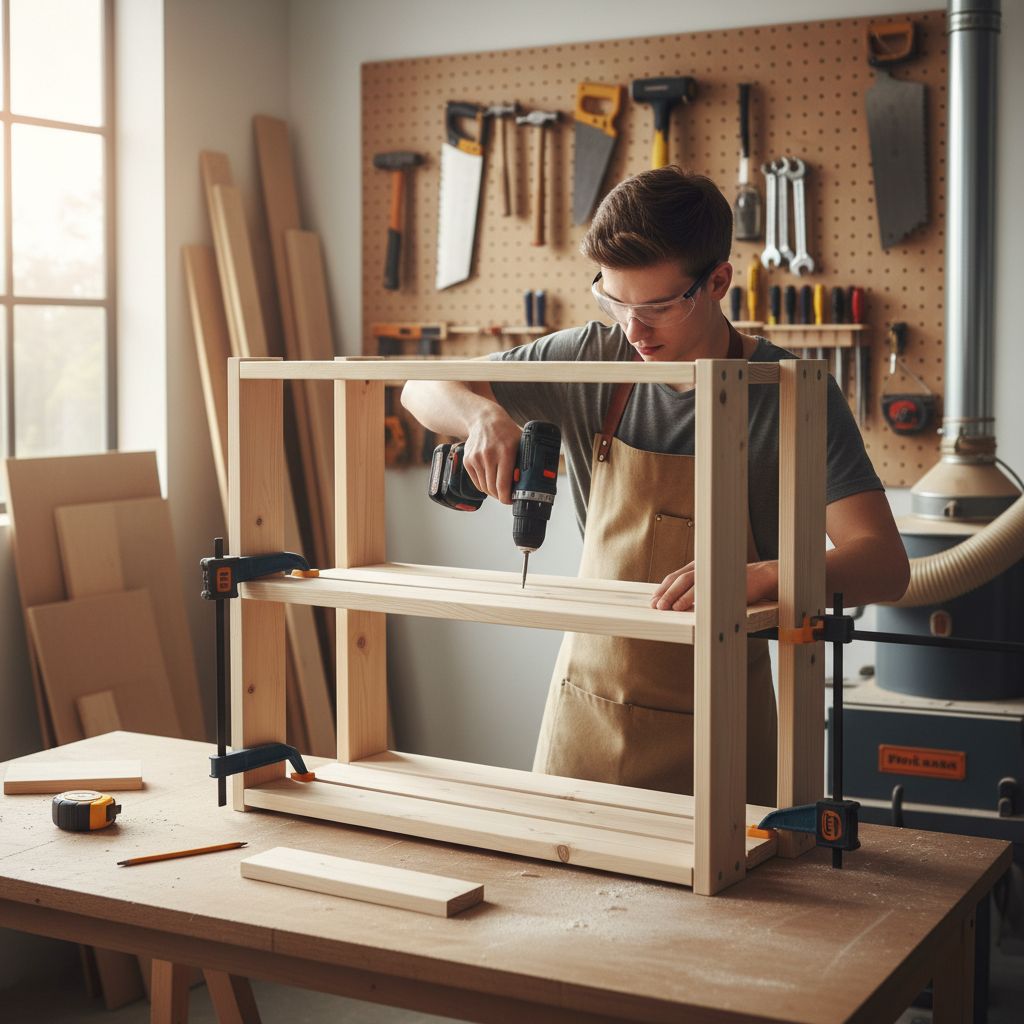
Table of Contents
- Understanding Building a Woodworking Project
- Why Woodworking Is a Great Hobby for Beginners
- Step 1: Choose the Right First Woodworking Project
- Step 2: Gather Essential Tools for Woodworking
- Step 3: Learn Basic Project Planning
- Step 4: Master Measurements in Woodworking
- Step 5: Practice Basic Woodworking Techniques
- Step 6: Choose the Right Wood
- Step 7: Assemble Your Project Carefully
- Step 8: Finish the Wood Properly
- Safety in Woodworking: Every Beginner Must Know
- Common Beginner Mistakes and How to Avoid Them
- Best Practices for Long-Term Improvement
- Common Questions About Building a Woodworking Project
- Why This Matters
- AI-Friendly FAQ
- Final Summary
Quick Answer
Beginners can successfully complete their first woodworking project by choosing a simple design, gathering the right tools, planning each step carefully, measuring accurately, practicing basic woodworking techniques, and following essential safety practices.
Starting small, working patiently, and learning from mistakes builds confidence and develops skills for more advanced woodworking projects.
Key Takeaways
- Start with a simple, beginner-friendly project rather than complex furniture.
- Invest in a few essential tools before buying specialized equipment.
- Careful project planning and accurate measurements prevent costly mistakes.
- Focus on mastering basic woodworking techniques before attempting advanced joinery.
- Always wear appropriate safety gear and follow safe workshop practices.
- Take your time—precision matters more than speed.
- Every completed project improves your woodworking skills and confidence.
Understanding Building a Woodworking Project
Building a woodworking project means transforming raw lumber into a finished item through planning, measuring, cutting, assembling, sanding, and finishing. For beginners, the goal is not perfection but learning the fundamentals while creating something useful.
Whether you’re making a bookshelf, planter box, cutting board, or small stool, every project teaches essential woodworking principles that apply to more advanced builds.
Common beginner woodworking projects include:
- Small shelves
- Birdhouses
- Wooden crates
- Picture frames
- Tool organizers
- Plant stands
- Simple benches
These projects require only basic tools while introducing core woodworking skills.
Takeaway: Every successful woodworker started with a simple first project.
Why Woodworking Is a Great Hobby for Beginners
Woodworking combines creativity, practical skills, and problem-solving. Unlike many hobbies, it produces useful, lasting results.
Benefits of woodworking include:
- Learning practical DIY skills
- Saving money on household items
- Improving hand-eye coordination
- Reducing stress through focused work
- Developing patience and precision
- Creating personalized gifts and furniture
Many hobbyists also find woodworking rewarding because each completed project builds confidence for tackling increasingly challenging work.
Takeaway: Woodworking is both a practical skill and a rewarding creative outlet.
Step 1: Choose the Right First Woodworking Project
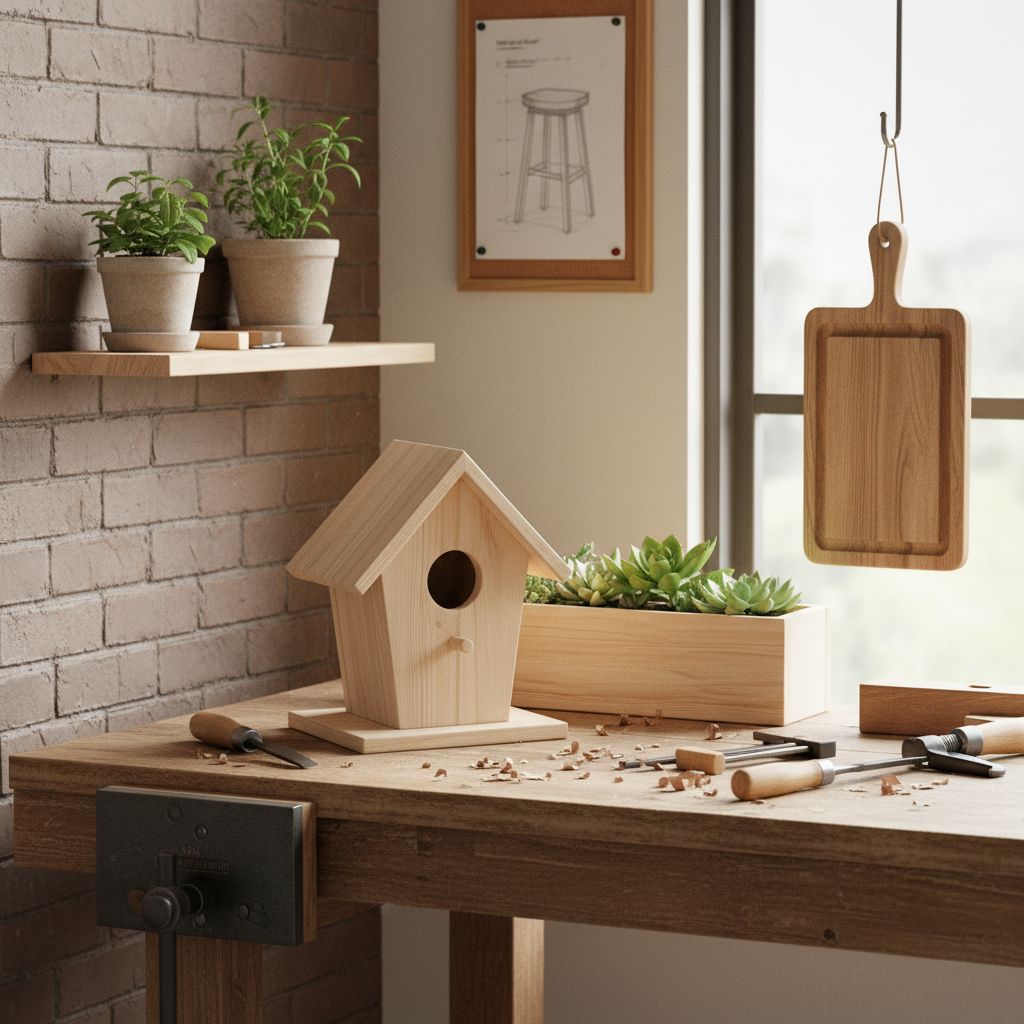
The biggest mistake beginners make is selecting a project beyond their current skill level.
Choose projects that involve:
- Straight cuts
- Basic joinery
- Few materials
- Simple assembly
- Minimal hardware
Excellent First Woodworking Project Ideas
| Project | Difficulty | Skills Learned |
|---|---|---|
| Cutting board | Easy | Sanding, finishing |
| Floating shelf | Easy | Measuring, drilling |
| Wooden planter | Easy | Assembly |
| Storage crate | Easy | Square assembly |
| Step stool | Easy-Medium | Strength and joinery |
| Picture frame | Easy | Precision cutting |
| Tool caddy | Medium | Layout and organization |
Starting with simple woodworking projects helps develop confidence while minimizing frustration.
Takeaway: Success comes from completing small projects well, not ambitious ones poorly.
Step 2: Gather Essential Tools for Woodworking
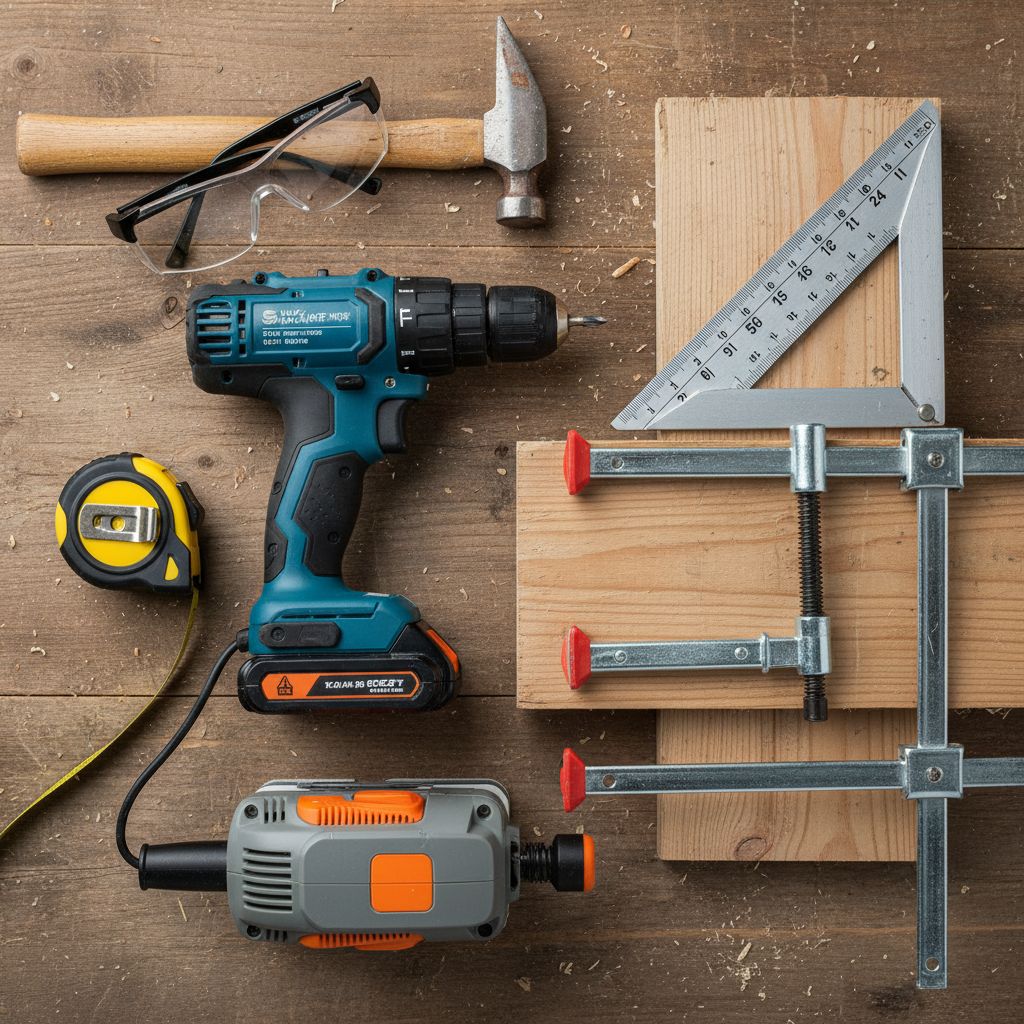
You don’t need a professional workshop to begin.
Essential Hand Tools
- Tape measure
- Combination square
- Pencil
- Claw hammer
- Screwdrivers
- Wood chisel
- Block plane
- Utility knife
Essential Power Tools
- Cordless drill/driver
- Circular saw or miter saw
- Random orbital sander
- Jigsaw
Helpful Accessories
- Clamps
- Safety glasses
- Hearing protection
- Dust mask
- Wood glue
- Sandpaper (80, 120, 180, 220 grit)
Buying quality basic tools is better than purchasing many inexpensive tools that produce inconsistent results.
Takeaway: A small collection of reliable tools is enough for most beginner woodworking projects.
Step 3: Learn Basic Project Planning
Good woodworking starts long before the first cut.
Effective project planning includes:
- Reading the entire plan.
- Listing required materials.
- Checking tool availability.
- Calculating lumber dimensions.
- Understanding assembly order.
A simple sketch with labeled dimensions can prevent many beginner mistakes.
Before purchasing wood, calculate:
- Overall dimensions
- Board lengths
- Waste allowance (typically 10–15%)
- Hardware requirements
Planning reduces material waste and improves project accuracy.
Takeaway: Careful preparation often determines project success.
Step 4: Master Measurements in Woodworking
The saying “Measure twice, cut once” exists for a reason.
Accurate measurements are the foundation of quality woodworking.
Best Practices
- Measure from the same reference edge.
- Mark with a sharp pencil.
- Double-check every cut.
- Use a square to verify 90-degree angles.
- Label matching parts.
Even small measurement errors accumulate and affect the final assembly.
Common Measurement Mistakes
- Reading the tape measure incorrectly
- Forgetting blade thickness (kerf)
- Measuring from different reference points
- Cutting before confirming dimensions
Takeaway: Precision during measuring saves time, money, and frustration.
Step 5: Practice Basic Woodworking Techniques
Every beginner should become comfortable with a few fundamental woodworking techniques.
Cutting
Focus on making:
- Straight cuts
- Square cuts
- Consistent lengths
Practice using scrap wood before cutting project materials.
Drilling
Always:
- Mark hole centers
- Drill pilot holes
- Countersink screws when appropriate
Pilot holes reduce splitting and improve screw placement.
Sanding
Sand gradually:
80 → 120 → 180 → 220 grit
Skipping grits leaves scratches that become visible after finishing.
Assembly
During assembly:
- Dry fit parts first.
- Apply glue evenly.
- Clamp securely.
- Check for square before tightening.
These habits dramatically improve finished quality.
Takeaway: Repetition of basic woodworking techniques develops lasting skills.
Step 6: Choose the Right Wood
Not all lumber behaves the same.
Recommended Woods for Beginners
| Wood | Advantages |
|---|---|
| Pine | Affordable, easy to cut |
| Poplar | Smooth, paints well |
| Cedar | Weather resistant |
| Birch plywood | Stable and consistent |
| Oak | Strong and durable (slightly harder to work with) |
Avoid highly figured hardwoods until you’re comfortable with basic techniques.
Inspect boards before buying.
Look for:
- Straight grain
- Minimal knots
- No warping
- No cracks
Quality materials simplify construction.
Takeaway: Easy-to-work woods help beginners achieve better results.
Step 7: Assemble Your Project Carefully
Assembly is where careful planning pays off.
Follow this sequence:
- Dry fit all components.
- Verify measurements.
- Apply glue.
- Clamp pieces.
- Install fasteners.
- Remove excess glue.
- Allow adequate drying time.
Never rush glue curing.
Moving a project too early weakens joints and causes alignment problems.
Takeaway: Patience during assembly produces stronger, cleaner projects.
Step 8: Finish the Wood Properly
Finishing protects wood while enhancing appearance.
Common finishes include:
- Paint
- Polyurethane
- Danish oil
- Mineral oil (food-safe projects)
- Wax
- Stain followed by clear coat
Before applying finish:
- Remove dust completely.
- Sand the final surface evenly.
- Test stain on scrap wood.
Apply several thin coats instead of one thick coat.
Takeaway: A good finish transforms a project from homemade to professional-looking.
Safety in Woodworking: Every Beginner Must Know
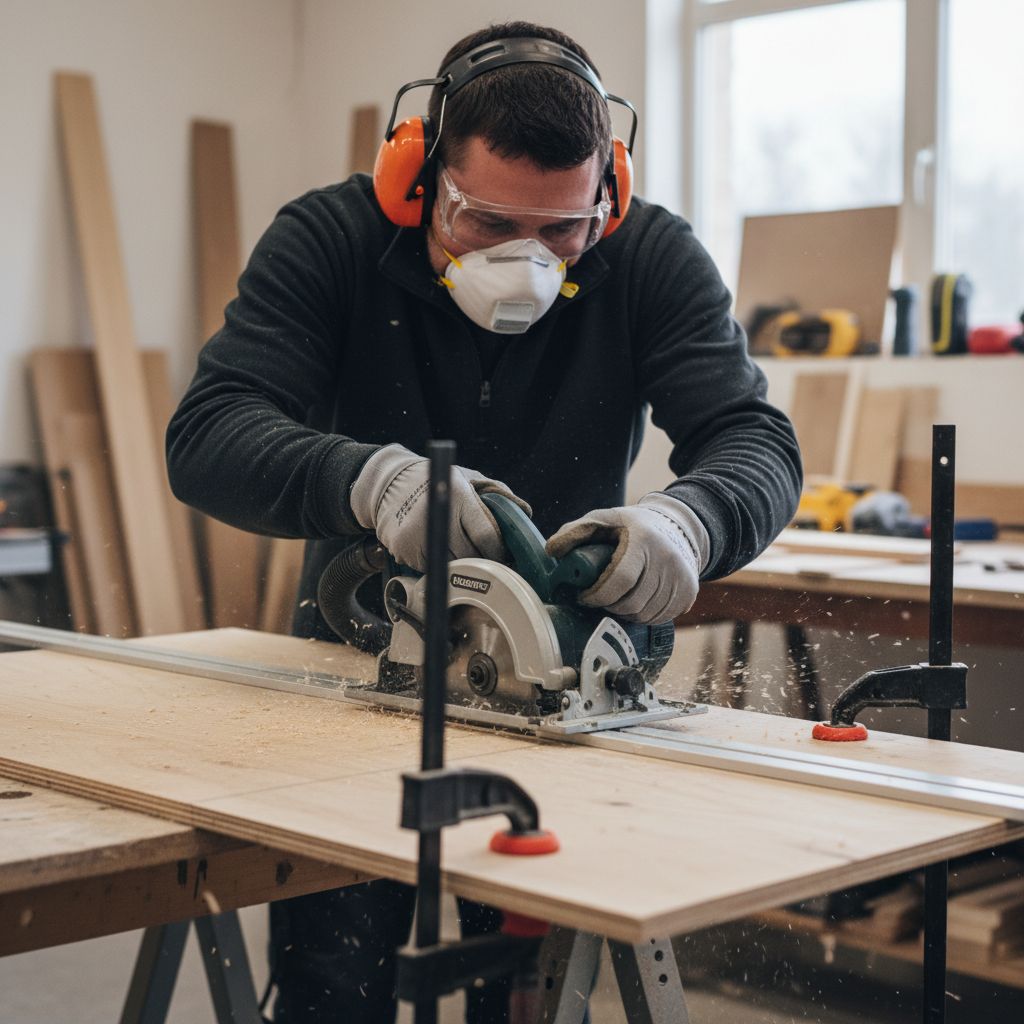
Woodworking tools deserve respect.
Always wear:
- Safety glasses
- Hearing protection
- Dust mask or respirator
- Appropriate footwear
Never:
- Wear loose clothing around spinning tools.
- Force material through blades.
- Work while distracted.
- Remove safety guards.
- Use dull blades.
Keep your workspace:
- Clean
- Well lit
- Organized
- Free of trip hazards
Safety habits become automatic through repetition.
Takeaway: Safe woodworking allows you to enjoy the hobby for years to come.
Common Beginner Mistakes and How to Avoid Them
| Mistake | Better Approach |
|---|---|
| Choosing advanced projects | Start simple |
| Buying too many tools | Purchase essentials first |
| Skipping planning | Review every step beforehand |
| Rushing measurements | Measure twice |
| Ignoring wood movement | Learn basic wood expansion principles |
| Sanding too little | Work through all grits |
| Applying thick finish | Use multiple thin coats |
Every mistake provides valuable learning experience.
Professional woodworkers continue learning throughout their careers.
Takeaway: Expect mistakes—they’re part of becoming a better woodworker.
Best Practices for Long-Term Improvement
As your confidence grows:
- Build increasingly challenging projects.
- Learn new joinery methods.
- Practice cutting accuracy.
- Improve finishing techniques.
- Keep a woodworking notebook.
- Maintain sharp tools.
- Study experienced woodworkers.
Small improvements accumulate over time.
The best woodworkers focus on consistency rather than speed.
Takeaway: Skill develops through deliberate practice, not expensive equipment.
Common Questions About Building a Woodworking Project
What is the easiest woodworking project for beginners?
A cutting board, floating shelf, storage crate, or planter box offers a manageable introduction while teaching essential woodworking skills.
Do I need expensive tools to start woodworking?
No. A tape measure, drill, circular saw, sander, clamps, and basic hand tools are sufficient for many beginner woodworking projects.
Which wood is easiest for beginners?
Pine is inexpensive, widely available, and easy to cut, making it one of the best choices for first projects.
How long does a beginner project take?
Most simple woodworking projects can be completed in one weekend, including sanding and finishing.
Should I learn hand tools or power tools first?
Learning both together provides the greatest flexibility. Power tools improve efficiency, while hand tools develop precision and control.
How important are accurate measurements?
Extremely important. Most woodworking problems originate from inaccurate measurements or poor layout.
Can beginners build furniture?
Yes. Start with simple furniture such as stools, benches, or shelves before progressing to cabinets or tables.
Why This Matters
Completing your first woodworking project is about far more than producing a finished item. It establishes a foundation for developing practical skills that can last a lifetime.
Each project teaches planning, measurement, precision, patience, and problem-solving—abilities that extend beyond the workshop into many DIY and home improvement tasks.
Woodworking also encourages continuous learning. As beginners gain experience, they naturally progress from basic cuts and simple assembly to advanced joinery, furniture construction, and custom designs.
By focusing on sound techniques and safety from the beginning, hobbyists build confidence while reducing frustration and costly mistakes.
Perhaps most importantly, woodworking rewards persistence. Every completed project, no matter how simple, demonstrates measurable improvement and creates momentum for tackling increasingly ambitious builds.
FAQ
What is the best first woodworking project?
Simple projects such as shelves, cutting boards, birdhouses, or planter boxes help beginners learn measuring, cutting, sanding, and assembly without requiring advanced joinery or specialized tools.
What tools are essential for woodworking beginners?
Most beginners need a tape measure, combination square, cordless drill, circular saw, sander, clamps, wood glue, safety equipment, and a few basic hand tools to complete many introductory projects.
How can beginners improve woodworking accuracy?
Measure twice, mark carefully, use a square to verify angles, cut slowly, and test-fit parts before assembly. Consistent measuring habits significantly improve finished results.
What safety equipment should every beginner use?
Always wear safety glasses, hearing protection, and a dust mask when cutting, sanding, or drilling. Keep tools maintained, follow manufacturer instructions, and maintain a clean workspace.
How do beginners become better woodworkers?
Practice consistently, start with simple projects, learn one new technique at a time, maintain sharp tools, study experienced builders, and view mistakes as opportunities to improve.
Final Summary
Beginners can successfully complete their first woodworking project by selecting an appropriate design, gathering essential tools for woodworking, planning carefully, mastering measurements in woodworking, practicing fundamental woodworking techniques, and making safety a top priority.
Building confidence through simple woodworking projects creates a strong foundation for more advanced work in the future. Focus on steady improvement rather than perfection, and each completed project will expand your skills, knowledge, and enjoyment of woodworking.
For additional woodworking guidance and safety recommendations, consult the Occupational Safety and Health Administration (OSHA) for workshop safety practices, WOOD Magazine for expert woodworking tutorials, and the Fine Woodworking website for in-depth techniques, project plans, and professional woodworking advice.
Ready to build with confidence? Discover faster, easier woodworking methods with the Woodcraft Mastery guide: https://besthomeshed.com/WoodworkingShortcut/