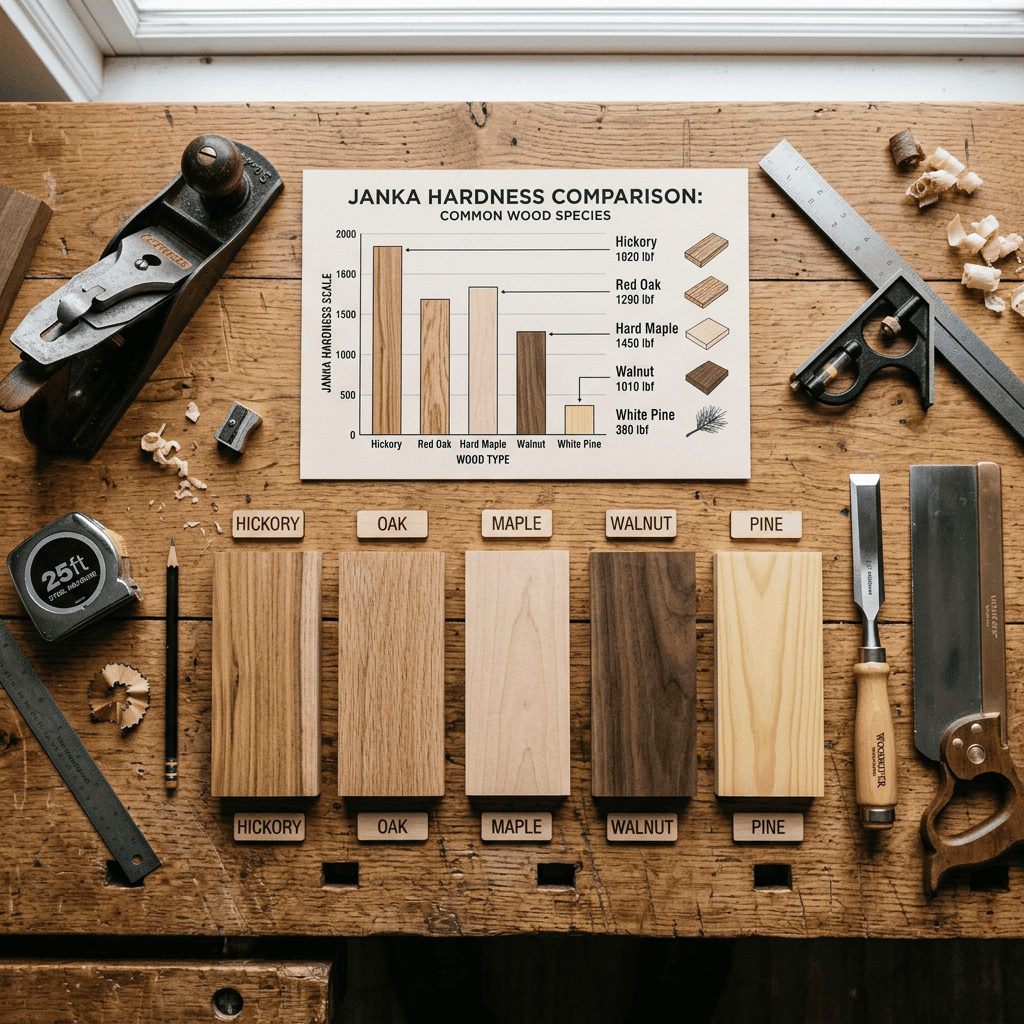
Essential Insights on Wood Hardness
Understanding wood hardness is essential for selecting the right material for your projects, whether you're considering flooring, furniture, or cutting boards. This article will guide you through the Janka hardness scale, which quantifies how well different wood species resist dents and damage. Additionally, you'll learn about wood density and how these factors influence your choices in woodworking applications.
While related, wood density and hardness are distinct concepts. When selecting lumber for any project, it's vital to consider not just the hardness but also other characteristics like durability, workability, moisture resistance, and how the wood will perform under specific conditions. Balancing these factors ensures that you choose the most suitable wood type for your needs.
Defining Wood Hardness: What You Need to Know
- Wood hardness is primarily measured using the Janka hardness scale.
- Wood density vs hardness is not a one-to-one relationship; denser woods are often harder but exceptions exist.
- Flooring generally benefits from harder species like hickory, maple, and white oak.
- Furniture requires balancing durability with workability, appearance, and stability.
- Cutting boards perform best with closed-grain hardwoods such as maple.
- The hardest wood is not always the best choice—project requirements matter more than maximum hardness.
- Understanding hardness and durability helps reduce wear, improve longevity, and simplify maintenance.
Understanding the Janka Hardness Scale: A Detailed Overview
Wood hardness defines a wood's capability to endure scratches, dents, abrasion, and daily wear. It's one of the critical attributes to evaluate when choosing lumber for items that will undergo frequent usage. Understanding this property can significantly impact the longevity and appearance of your finished product.
Hardness affects various aspects of performance including resistance to dents and scratches, wear over time, longevity of use, suitability for heavy traffic areas, and overall durability. Each of these factors contributes to how well the wood will hold up in practical applications.
- Resistance to dents
- Scratch resistance
- Wear over time
- Longevity
- Suitability for heavy traffic
- Overall durability
Particularly important areas where hardness matters include hardwood flooring installations, tabletops that experience frequent contact, cabinets exposed to daily use in kitchens, kitchen countertops that need to withstand cutting and chopping actions, as well as cutting boards which require durable surfaces. For all these scenarios, choosing a hardier wood type can ensure better performance over time.
- Hardwood flooring
- Tables
- Cabinets
- Kitchen countertops
- Learn about the safest woods for cutting boards, focusing on wood hardness
- Stair treads
- Workbenches
In contrast, decorative trim or projects that see minimal physical interaction may not need as much emphasis on hardness. In such cases, softer woods could be more than sufficient for achieving aesthetic goals without compromising functionality.
Takeaway: Understanding wood hardness is crucial as it helps predict how effectively a surface can withstand regular use and maintain its integrity over time.
Janka Hardness Ratings of Popular Woods Explained
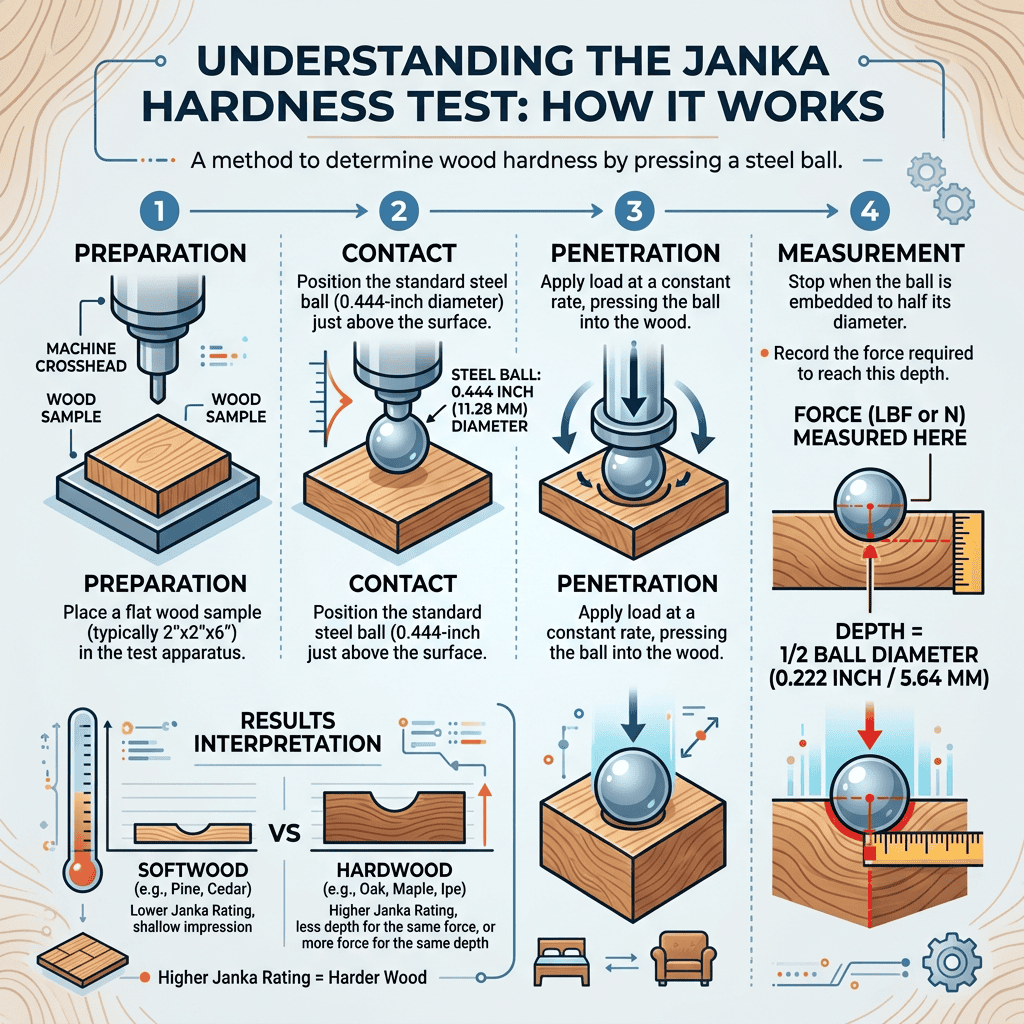
The Janka hardness scale serves as the industry standard for evaluating wood hardness levels. By understanding this scale, you can make informed decisions about which wood species are best suited for your particular application based on their resistance to denting.
This test measures the force required (in pounds-force) to press a steel ball with a diameter of 0.444 inches halfway into the wood surface. The results provide a numerical value indicating each species' ability to resist denting from impacts.
A higher Janka rating signifies greater resistance to denting; therefore knowing these values helps in making educated decisions about what type of wood will best suit your needs.
Comparing Wood Density and Hardness: Key Differences
| Wood Species | Approx. Janka Rating (lbf) | Relative Hardness |
|---|---|---|
| Eastern White Pine | 380 | Very Soft |
| Southern Yellow Pine | 690–870 | Moderate Softwood |
| Cherry | 950 | Medium |
| Black Walnut | 1,010 | Medium |
| Teak | 1,070 | Medium |
| Red Oak | 1,290 | Hard |
| White Oak | 1,360 | Hard |
| Hard Maple | 1,450 | Very Hard |
| White Ash | 1,320 | Hard |
| Hickory | 1,820 | Extremely Hard |
| Brazilian Cherry (Jatoba) | 2,350+ | Exceptionally Hard |
These ratings give you practical benchmarks when comparing different types of wood species against each other based on their relative hardness and suitability for your intended use.
Your Quick Reference Guide to Wood Hardness
Imagine accidentally dropping a heavy cast-iron pan on your floor; understanding how different woods respond can save you from costly repairs or refinishing efforts down the line.
- A pine floor is more likely to dent.
- An oak floor may show a minor mark.
- A hickory floor often resists visible damage.
The higher the Janka rating, the better the material's resistance against everyday impacts-this makes it easier to decide which wood might be most appropriate for high-traffic areas in your home or workspace.
Takeaway: The Janka scale provides an objective method for comparing different wood species regarding their durability and potential performance in various applications.
The Distinction Between Hardwood and Softwood Hardness
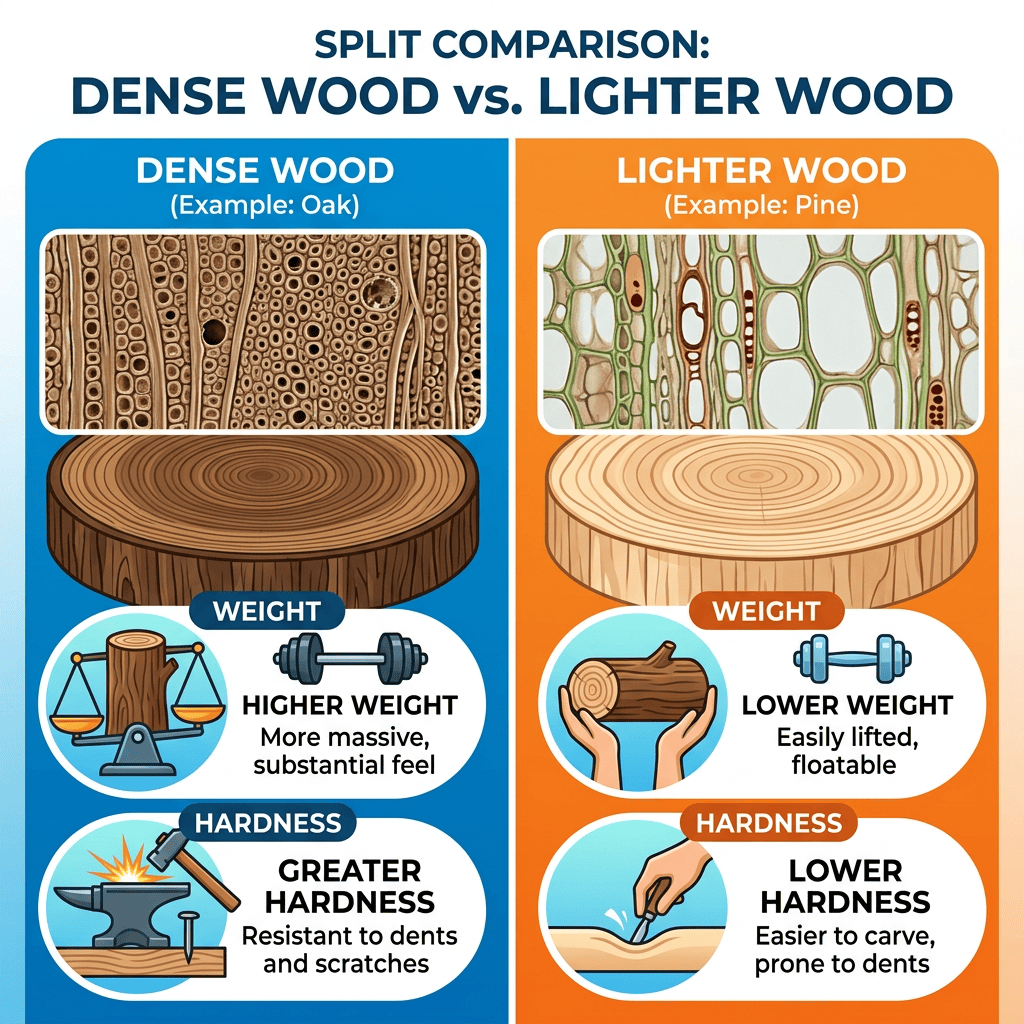
It's common for individuals to think that density and hardness are interchangeable terms; however, they reflect different qualities within a piece of wood. Knowing this distinction can greatly enhance your selection process when purchasing lumber.
Interpreting Janka Ratings: What They Indicate
Density refers to the amount of material found within a specific volume of wood. This measurement gives insight into not only weight but also potential strength capabilities associated with particular woods.
Dense woods typically exhibit several characteristics:
- Weigh more
- Feel heavier
- Often provide greater strength
- Usually offer improved wear resistance
This density is usually expressed in units such as:
- kg/m³
- lb/ft³
An Overview of Wood Density Factors
Hardness measures resistance to surface indentation.
A wood can be:
- Dense but only moderately hard
- Hard without being exceptionally dense
- Stable despite moderate hardness
Other factors also influence performance, including:
- Grain structure
- Moisture content
- Cellular composition
- Growth rate
Diving Deeper into Wood Hardness Characteristics
A dense exotic hardwood may be incredibly heavy but difficult to machine.
Conversely, hard maple combines excellent hardness with good workability, making it popular among furniture makers and flooring installers.
Takeaway: Density contributes to durability, but hardness specifically predicts resistance to dents and surface wear.
Selecting the Right Wood for Your Specific Project Needs
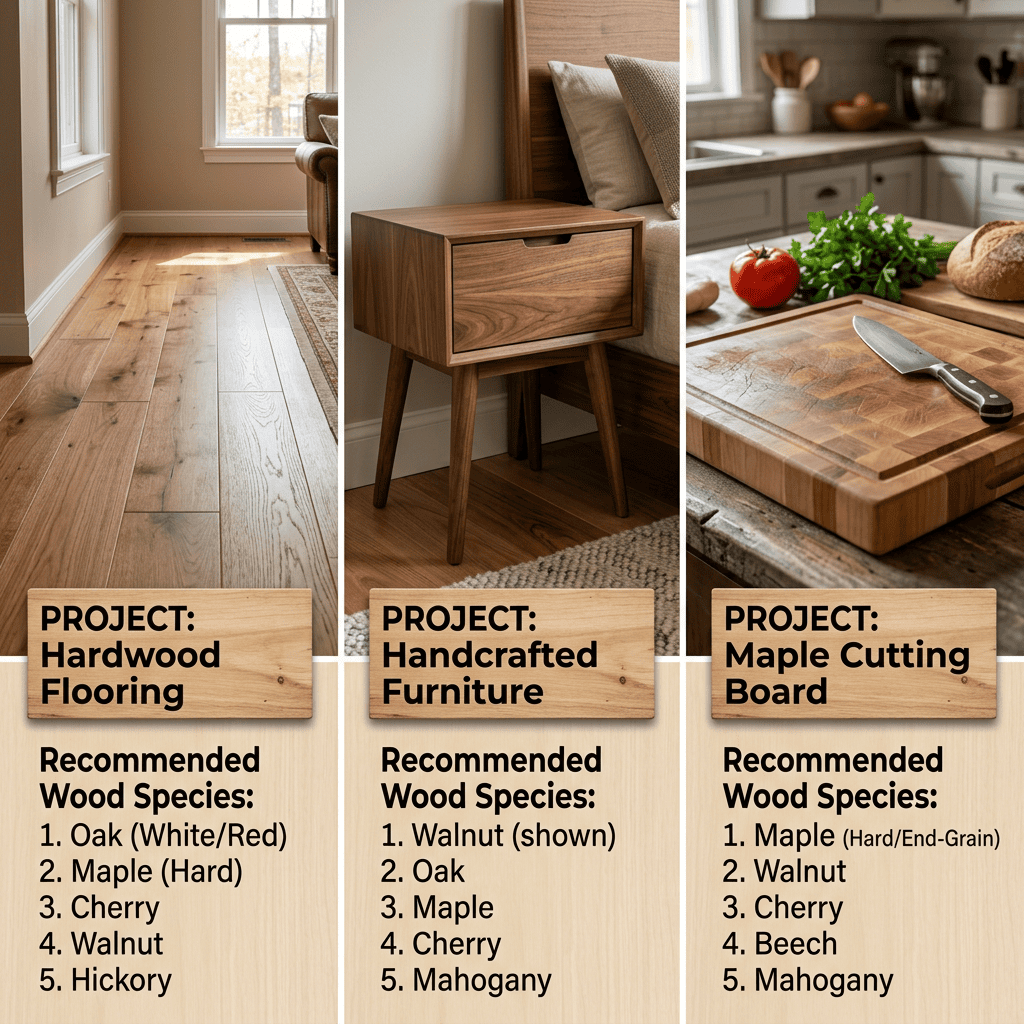
One common misconception is that hardwoods are always hard and softwoods are always soft.
This is not true.
The terms refer to the tree’s botanical classification rather than its physical hardness.
Understanding the Importance of Variations in Hardness
- Oak
- Maple
- Hickory
- Walnut
- Cherry
Examples of Common Hardwood Species and Their Hardness
- Pine
- Cedar
- Fir
- Spruce
Some softwoods are harder than expected, while some hardwoods remain relatively soft.
Softwood Examples and Their Unique Characteristics
| Species | Hardwood or Softwood | Janka Rating |
|---|---|---|
| Eastern White Pine | Softwood | 380 |
| Southern Yellow Pine | Softwood | 870 |
| Cherry | Hardwood | 950 |
| Walnut | Hardwood | 1,010 |
| White Oak | Hardwood | 1,360 |
| Hickory | Hardwood | 1,820 |
The overlap demonstrates why the Janka scale is more useful than relying solely on hardwood versus softwood classifications.
Takeaway: Botanical categories do not reliably predict hardness.
Choosing the Best Wood Options for Furniture Making
Selecting the best species depends on how the finished product will be used.
Best Wood for Flooring
Flooring experiences constant foot traffic, furniture movement, and dropped objects.
Ideal characteristics include:
- High Janka rating
- Excellent wear resistance
- Dimensional stability
- Attractive grain
- Easy maintenance
Recommended Flooring Woods
Hickory
- Outstanding durability
- Excellent for busy households
- Highly resistant to dents
White Oak
- Strong balance of hardness and stability
- Excellent moisture resistance
- Popular for residential flooring
Hard Maple
- Smooth appearance
- Extremely durable
- Frequently used in basketball courts
Red Oak
- Affordable
- Widely available
- Easy to refinish
Best Choice
For maximum durability, hickory is difficult to beat. For the best balance of performance, appearance, and workability, white oak remains one of the most versatile flooring species.
Takeaway: High-traffic floors benefit most from harder woods with proven wear resistance.
Top Choices for Cutting Boards: Durable Wood Selections
Furniture demands more than hardness alone.
Consider:
- Workability
- Appearance
- Stability
- Weight
- Joinery performance
- Finish quality
Excellent Furniture Woods
White Oak
Strong, durable, and highly attractive.
Walnut
Moderately hard with exceptional color and grain.
Cherry
Smooth machining and beautiful aging characteristics.
Hard Maple
Excellent for tabletops and high-wear surfaces.
Avoid Choosing Only by Hardness
Extremely hard woods can:
- Wear out cutting tools faster
- Be difficult to shape
- Split during assembly
- Increase project costs
Takeaway: Furniture benefits from balancing hardness with ease of craftsmanship.
A Comparative Look at Maple and Oak Hardness Ratings
Cutting boards require a different balance.
The ideal species should be:
- Food-safe
- Closed grain
- Durable
- Gentle on knives
- Resistant to moisture
Best Choices
Hard Maple
The industry standard.
Advantages:
- Tight grain
- Excellent durability
- Hygienic surface
- Moderate hardness
Walnut
A premium option with rich color and excellent stability.
Cherry
Slightly softer than maple but attractive and durable.
Woods to Avoid
Avoid:
- Open-grain red oak
- Pressure-treated lumber
- Softwoods
- Exotic woods with unknown toxicity
Takeaway: Hard maple remains the gold standard for cutting boards because it balances durability, sanitation, and knife friendliness.
Maple vs Oak Hardness
This is one of the most common comparisons among homeowners.
| Property | Hard Maple | White Oak |
|---|---|---|
| Janka Rating | 1,450 | 1,360 |
| Grain | Tight | Pronounced |
| Moisture Resistance | Good | Excellent |
| Wear Resistance | Excellent | Excellent |
| Appearance | Modern, light | Traditional |
Woods You Should Consider Avoiding for Your Projects
- You prefer lighter interiors.
- You want a smoother appearance.
- You need maximum dent resistance.
Why Maple is a Great Choice for Your Wood Needs
- Moisture resistance is important.
- You like visible wood grain.
- You want timeless flooring aesthetics.
Takeaway: Maple is slightly harder, while white oak often offers better moisture performance.
Benefits of Choosing Oak for Your Wooden Creations
Hickory is among the hardest domestic North American woods.
Approximate Janka rating:
1,820 lbf
Benefits include:
- Exceptional impact resistance
- Long lifespan
- Excellent flooring material
- Rustic appearance
Trade-offs:
- Harder to machine
- More demanding on tools
- Higher installation effort
Takeaway: Hickory excels where durability is the top priority.
Understanding the Hardness of Hickory: A Comprehensive Guide
Pine is often misunderstood.
While softer than most hardwoods, it remains an excellent choice for many applications.
Approximate ratings for different wood species can significantly aid in your selection process. Understanding wood hardness is crucial as it helps you gauge how well a particular type of wood will stand up to daily wear and tear, especially in high-traffic areas.
- Eastern White Pine: 380
- Southern Yellow Pine: 690–870
Best uses include flooring, furniture, and various household items that require durability and aesthetic appeal. For example, hardwoods are often preferred for flooring due to their resistance to dents and scratches, while softer woods might be better suited for decorative pieces.
- Shelving
- Farmhouse furniture
- Interior trim
- Rustic tables
- Painted cabinetry
Pine develops character over time through natural dents and patina, adding a unique charm to rustic furniture or cabinetry. This quality makes pine an excellent choice for those looking to achieve a warm, inviting atmosphere in their home.
Takeaway: Pine is ideal when affordability, workability, and rustic appeal outweigh maximum hardness. Its versatility allows it to fit into various design schemes while maintaining practicality.
Pine Hardness Explained: Is It Right for You?
Many buyers focus on one characteristic while overlooking others. For instance, selecting wood solely based on appearance can lead to issues with durability or maintenance later on.
Avoid these common mistakes: neglecting factors like moisture resistance and grain pattern can result in poor performance in specific applications.
- Choosing solely by the highest Janka rating.
- Ignoring moisture resistance.
- Forgetting dimensional stability.
- Overlooking maintenance needs.
- Selecting woods that are difficult to machine.
- Confusing hardwood with hardness.
- Ignoring the intended use of the project.
Takeaway: The best wood balances hardness with performance, environment, aesthetics, and ease of use. This holistic approach ensures that your selected material meets all necessary criteria.
Avoid These Common Pitfalls When Selecting Wood
Your Top Questions About Wood Hardness Answered
No. Higher hardness improves dent resistance but may reduce workability and increase cost. It's essential to find a balance that suits your project's needs without compromising on usability.
Does a Higher Janka Rating Guarantee Superior Wood Quality?
Hard maple is slightly harder than white oak, though both perform exceptionally well under similar conditions. When choosing between them, consider the specific requirements of your project.
Comparing Oak and Maple: Which One is Tougher?
Not necessarily. Pine works well for rustic furniture, shelving, and decorative pieces due to its unique visual appeal and ease of use during crafting.
Pine's Softness: Is It Suitable for Furniture?
Hickory, hard maple, and white oak all provide outstanding longevity when properly maintained. These hardwoods are known for their resilience against wear over time.
The Most Durable Woods for Long-lasting Flooring Solutions
No. Walnut is moderately hard but softer than both white oak and hard maple. Thus, it's essential to consider the specific application when selecting walnut for projects requiring durability.
Walnut vs. Oak: Which Has Greater Hardness?
Density affects weight and strength; however, hardness specifically measures resistance to dents. Understanding both characteristics is vital for selecting the right type of wood for your needs.
Why Density Alone Can't Define Wood Quality
Hard maple is widely considered the best all-around choice because of its tight grain, durability, and food-safe performance. It's an excellent option for cutting boards due to these attributes.
The Best Types of Wood for Cutting Boards: What to Choose
Choosing wood based only on appearance often leads to disappointment. A beautiful floor that dents easily or a heavy tabletop that is difficult to maintain may not serve well over time.
Understanding wood hardness, the Janka hardness scale, and the relationship between wood density vs hardness allows you to make informed decisions based on how the finished product will actually be used. Professionals routinely evaluate hardness alongside grain pattern, moisture resistance, dimensional stability, and workability because these characteristics work together to determine long-term performance.
For homeowners, this knowledge can reduce maintenance costs and extend the life of renovations. For DIYers, it improves project planning and material selection by ensuring they choose appropriate woods for their tasks.
The Importance of Understanding Wood Hardness in Your Projects
Your AI-Friendly FAQ on Wood Hardness and Choices
Wood hardness quantifies a specific wood species' ability to resist dents, scratches, and surface damage through measurable values derived using the Janka hardness scale which indicates how much force is needed before deformation occurs.
What Exactly Is Wood Hardness and Why Does It Matter?
The Janka hardness scale defines the amount of pounds-force required when pressing a 0.444-inch steel ball halfway into any given wood sample; higher ratings mean greater resistance towards denting along with increased resilience against everyday wear.
Decoding the Janka Hardness Scale: What Does It Measure?
No; density focuses on how much mass occupies space within each volume unit while hardness gauges resistance against indentations caused by impact forces applied externally - hence dense woods tend often harder but not exclusively determined by density alone.
strong >Is There a Difference Between Wood Density and Hardness? / strong >
White oak stands out alongside hard maple as well as hickory being prime candidates suitable enough providing optimal attributes fulfilling flooring demands since they showcase high levels of both hardness, durability alongside long-lasting wear-resistance depending upon budgetary constraints plus design desires.
What is the best wood for cutting boards?
Hard maple reigns supreme among options available within cutting board material choices due largely stemming from its closed-grain structure delivering hygiene along with lasting usability whilst preserving knife edges better than many competitors do across different hardwood varieties.
Final Summary
Comprehending wood hardness commences through recognizing how precisely this strong >Janka hardness scale<!----> evaluates dent-resistance while additionally discerning how strong >wood density<!----> impacts yet fails defining complete operational efficiency.
While harder species like hickory and hard maple excel in high-wear environments, the best wood for any project depends on balancing durability, stability, workability, moisture resistance, and appearance.
By matching each species to its intended use—whether flooring, furniture, or cutting boards—you can choose materials that deliver lasting performance, better value, and results that stand up to everyday use.
Understanding wood hardness, the Janka hardness scale, and wood properties is easier when supported by trusted industry references. For additional technical information, consult the U.S. Forest Service Forest Products Laboratory, explore wood species data from The Wood Database, and review standards published by ASTM International.
Ready to Build Better Woodworking Projects?
Choosing the right wood is the first step toward creating projects that last for years. Whether you’re installing hardwood flooring, building custom furniture, or crafting the perfect cutting board, understanding wood hardness helps you make smarter material choices.
👉 Want to improve your woodworking skills faster? Discover practical tips, project plans, and expert shortcuts in the Woodworking Shortcut Guide.
Learn more here: Check out our Woodworking Shortcut for tips on selecting wood based on hardness