Quick Answer
Wood grain patterns affect a wood’s strength, stability, appearance, workability, and durability.
Understanding wood grain patterns helps woodworkers, furniture makers, and designers choose the right material for each project, improve machining and finishing results, reduce defects, and create products that are both beautiful and structurally reliable.
Key Takeaways
- Wood grain patterns influence strength, stability, and machining performance.
- Different species produce unique grain characteristics that affect appearance and durability.
- Reading wood grain correctly helps prevent tear-out, splitting, and finishing problems.
- Selecting wood by grain is just as important as selecting wood by species.
- Grain orientation affects woodworking techniques such as planing, carving, sanding, and joining.
- Straight grain is ideal for structural applications, while figured grain excels in decorative work.
- Understanding grain patterns leads to better craftsmanship, longer-lasting projects, and improved material efficiency.
Understanding Grain Patterns in Wood: What You Need to Know
Wood is much more than a building material—it is a natural product whose internal structure directly influences its beauty and performance. One of the most important characteristics of any piece of lumber is its wood grain pattern.
Whether you’re building furniture, designing interiors, crafting cabinets, or starting your first DIY woodworking project, understanding grain patterns allows you to make better decisions from material selection through finishing.
In this guide, you’ll learn what wood grain is, why it matters, how to identify different grain patterns, and how grain affects woodworking techniques, durability, and aesthetics.
What Are Wood Grain Patterns?
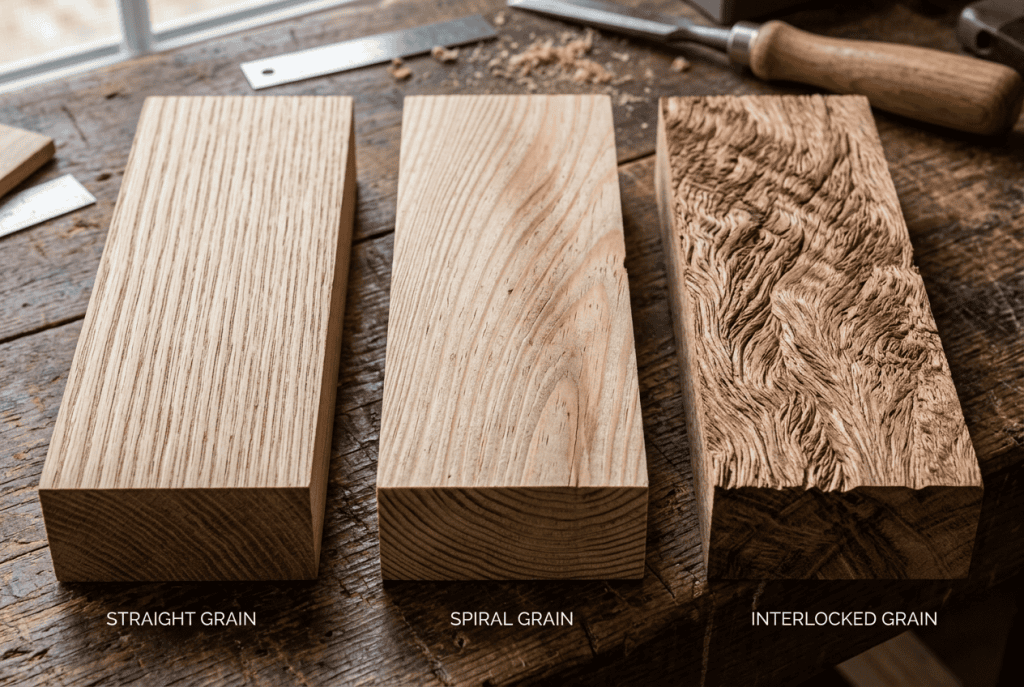
Wood grain refers to the direction, arrangement, and visual appearance of wood fibers created as a tree grows. These fibers form annual growth rings and cellular structures that become visible when lumber is cut.
The pattern you see depends on several factors:
- Tree species
- Growth conditions
- Cutting method
- Fiber direction
- Natural figure and defects
Although many people associate grain with appearance alone, grain also determines how wood behaves during machining, gluing, finishing, and long-term use.
Takeaway: Wood grain is both a structural characteristic and a visual design feature.
Why Is Wood Grain Significant?
The significance of wood grain extends far beyond aesthetics.
Grain affects strength
Wood is strongest when force follows the grain direction. Loads applied across the grain can increase the likelihood of splitting or cracking.
Examples include:
- Table legs
- Structural beams
- Chair components
- Tool handles
Grain affects stability
Wood naturally expands and contracts across the grain as humidity changes.
Boards with predictable grain orientation experience:
- Less warping
- Reduced cupping
- Better dimensional stability
Grain affects appearance
Grain creates the visual personality of wood.
Examples include:
- Elegant straight lines
- Dramatic curly figure
- Cathedral arches
- Swirling burls
These characteristics heavily influence furniture style and interior design.
Grain affects workability
Proper grain orientation makes woodworking easier by improving:
- Planing
- Carving
- Sanding
- Routing
- Turning
Ignoring grain direction often results in tear-out and rough surfaces.
Takeaway: Grain influences nearly every stage of woodworking, from structural performance to final appearance.
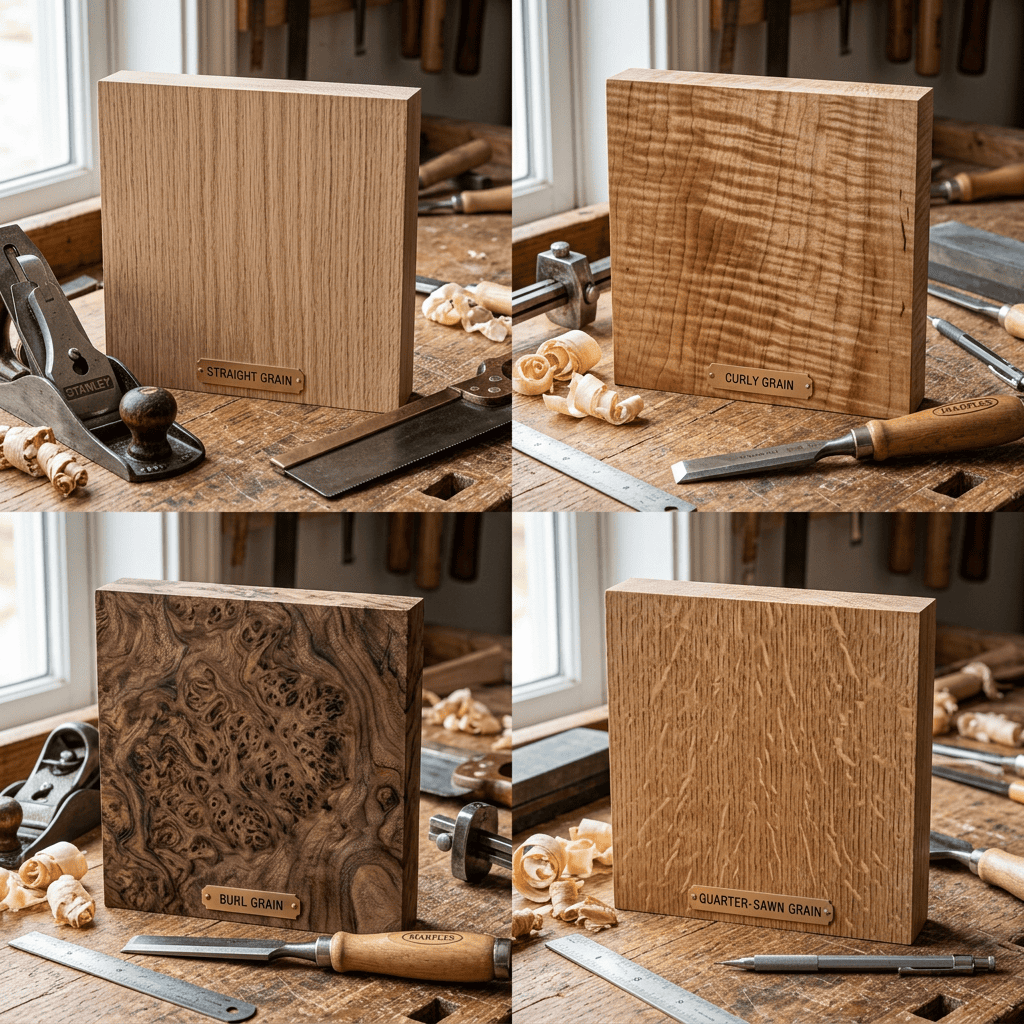
Types of Wood Grain
Understanding the major types of wood grain helps match wood to specific projects.
| Grain Type | Characteristics | Best Uses |
|---|---|---|
| Straight Grain | Fibers run parallel | Furniture, flooring, structural work |
| Spiral Grain | Fibers twist around trunk | Rustic projects, specialty lumber |
| Interlocked Grain | Fibers alternate direction | Decorative furniture, veneers |
| Wavy Grain | Gentle wave-like pattern | Musical instruments, premium furniture |
| Curly Grain | Rippled figure | High-end cabinetry, decorative panels |
| Bird’s Eye Grain | Small circular figure | Veneers, luxury interiors |
| Burl Grain | Highly irregular growth | Artistic pieces, tabletops, bowls |
Straight grain offers the most predictable machining, while figured grain often commands premium prices because of its striking appearance.
Takeaway: Every grain pattern offers unique advantages depending on functional and aesthetic goals.
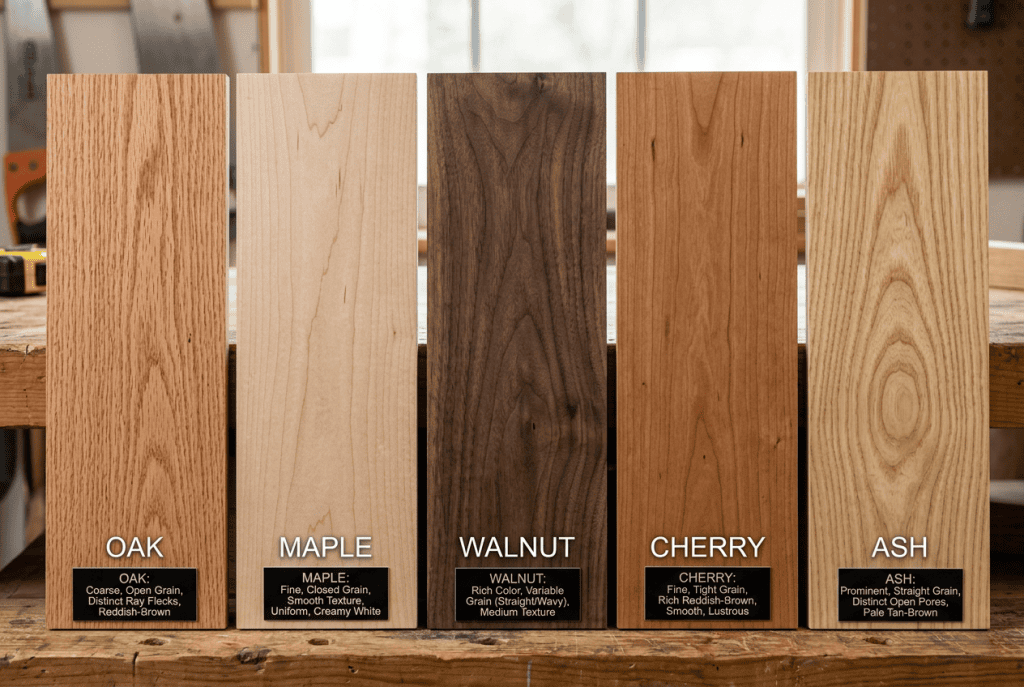
Grain Patterns in Different Woods
Different tree species naturally produce different grain characteristics.
| Wood Species | Typical Grain Pattern | Common Applications |
|---|---|---|
| Oak | Prominent open grain | Flooring, cabinets |
| Maple | Fine, smooth grain | Furniture, cutting boards |
| Walnut | Rich flowing grain | Luxury furniture |
| Cherry | Fine straight grain | Cabinets, fine woodworking |
| Ash | Bold open grain | Sports equipment, furniture |
| Pine | Straight with visible growth rings | Construction, DIY projects |
| Mahogany | Straight to interlocked | High-end furniture, boat building |
Understanding grain patterns in different woods helps buyers balance appearance, performance, and cost.
Takeaway: Species selection and grain pattern should always be considered together.
How to Read Wood Grain
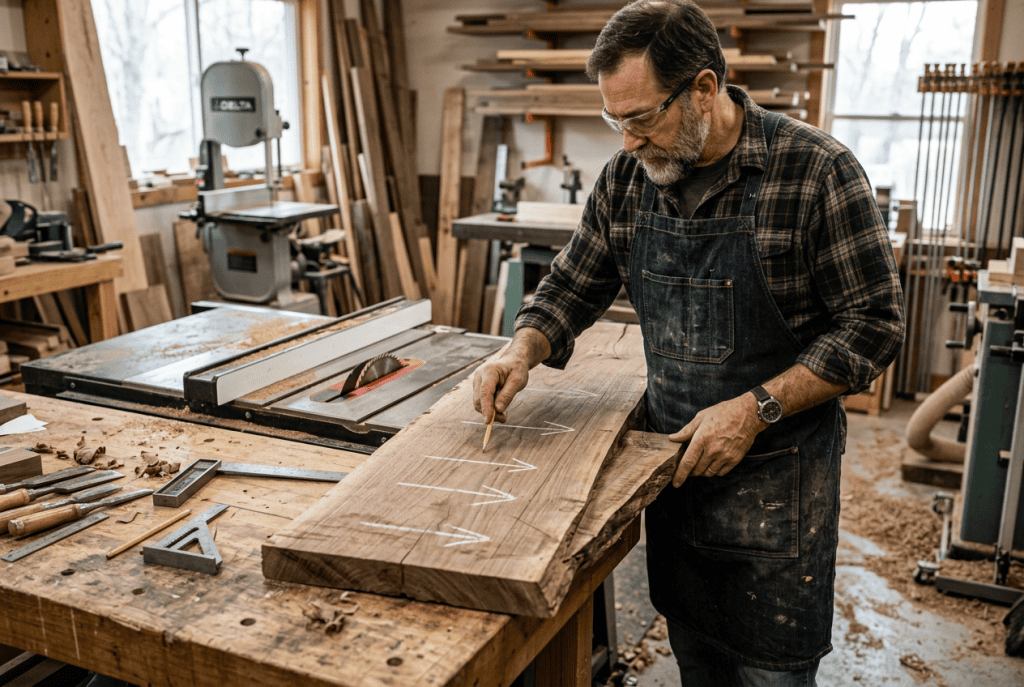
Knowing how to read wood grain is one of the most valuable woodworking skills.
Step 1: Examine the board face
Look for:
- Long parallel lines
- Curved cathedral patterns
- Swirls
- Figure changes
These reveal fiber direction.
Step 2: Inspect the edge
The edge often provides the clearest indication of grain direction.
Step 3: Feel the surface
Running your hand along the grain usually feels smoother than moving against it.
Step 4: Watch machining behavior
When planing:
- Smooth cuts usually follow the grain.
- Rough or torn fibers often indicate cutting against the grain.
Step 5: Observe end grain
Growth rings reveal:
- Quarter-sawn lumber
- Flat-sawn lumber
- Rift-sawn lumber
Each cut produces different visual effects and dimensional stability.
Takeaway: Reading grain before cutting saves time, reduces waste, and improves finished results.
How Grain Affects Woodworking
The effects of grain on woodworking appear throughout every project.
Cutting
Proper cutting direction reduces:
- Splintering
- Tear-out
- Blade resistance
Planing
Always plane “with the grain” whenever possible.
Benefits include:
- Cleaner surfaces
- Less sanding
- Better finish quality
Carving
Carving against grain direction increases:
- Chipping
- Fiber lifting
- Tool resistance
Sanding
Following grain direction prevents visible scratch marks.
Finishing
Grain influences:
- Stain absorption
- Color consistency
- Finish depth
- Surface texture
Open-grain woods like oak often require grain fillers for glass-smooth finishes.
Takeaway: Grain direction should guide nearly every woodworking technique.
Selecting Wood by Grain
Choosing lumber based solely on species is a common mistake.
Instead, consider these factors when selecting wood by grain.
For strength
Choose:
- Straight grain
- Tight annual rings
- Minimal knots
For decorative furniture
Look for:
- Curly grain
- Bird’s eye figure
- Burl figure
- Flame grain
For cabinetry
Prefer:
- Consistent grain
- Color matching
- Stable quarter-sawn boards
For flooring
Select grain that balances:
- Wear resistance
- Stability
- Visual consistency
For carving
Choose woods with:
- Uniform grain
- Minimal interlocking fibers
Takeaway: Matching grain to project requirements improves both appearance and durability.
Best Practices for Working With Wood Grain
Professional woodworkers follow several proven techniques.
- Inspect every board before cutting.
- Arrange boards for attractive grain flow.
- Plane and sand with the grain.
- Match grain across panels and doors.
- Test stain on scrap pieces first.
- Account for seasonal wood movement.
- Orient structural components with grain for maximum strength.
These habits improve efficiency while reducing costly mistakes.
Takeaway: Good planning around grain produces better craftsmanship with less waste.
Common Mistakes When Working With Wood Grain
Avoid these frequent errors.
Ignoring grain direction
This often causes tear-out during machining.
Selecting boards only by color
Appearance should include grain consistency as well.
Overlooking wood movement
Expansion across the grain can damage furniture if not accommodated.
Using figured wood structurally
Highly figured grain may reduce predictable strength.
Sanding across the grain
Cross-grain scratches remain visible even after finishing.
Takeaway: Most grain-related problems are preventable with careful inspection and planning.
Practical Examples
Dining Table
Straight-grain oak offers stability while maintaining a timeless appearance.
Decorative Coffee Table
Walnut with curly grain creates dramatic visual appeal.
Cutting Board
Fine-grained maple provides durability, food safety, and smooth finishing.
Cabinet Doors
Quarter-sawn white oak minimizes seasonal movement while showcasing attractive ray flecks.
Hand-Carved Bowl
Cherry’s uniform grain makes carving easier and produces a refined finish.
Takeaway: The best grain pattern depends on the project’s functional and visual goals.
Common Questions About Wood Grain Patterns
Does wood grain affect strength?
Yes. Wood is strongest along the grain and weaker across it, making grain direction critical for structural components.
Which grain pattern is easiest to work with?
Straight grain is generally the easiest to cut, plane, sand, and finish.
Why do some boards warp more than others?
Warping often results from grain orientation, moisture changes, and the way the lumber was sawn.
Is figured wood stronger?
Not necessarily. Highly figured wood is often prized for appearance rather than structural strength.
Why does stain look different on different boards?
Grain density and pore structure affect stain absorption, producing variations in color.
What is quarter-sawn wood?
Quarter-sawn lumber is cut to expose vertical growth rings, improving stability and creating distinctive grain patterns.
Can grain direction affect glue joints?
Yes. Proper grain orientation typically produces stronger, more reliable joints.
Why This Matters
Understanding wood grain characteristics transforms woodworking from trial and error into informed craftsmanship. Grain determines how a board behaves under tools, responds to environmental changes, accepts finishes, and performs over decades of use.
Professionals rarely select lumber based on species alone. They evaluate grain direction, figure, stability, and intended application before making a purchase. This approach reduces waste, minimizes defects, improves structural integrity, and elevates the visual quality of the finished piece.
For woodworkers, interior designers, furniture makers, and DIY enthusiasts alike, learning to recognize and work with grain patterns is an investment that pays dividends in every project.
FAQ
How do wood grain patterns affect woodworking?
Wood grain patterns influence strength, stability, machining, finishing, and appearance. Working with the grain reduces tear-out, improves surface quality, and produces stronger, longer-lasting projects.
What are the main types of wood grain?
The most common types include straight, spiral, interlocked, wavy, curly, bird’s-eye, and burl grain. Each offers unique visual characteristics and woodworking properties.
How can I identify wood grain direction?
Examine the board’s face, edge, and end grain. Parallel lines indicate fiber direction, while machining behavior and surface feel also help identify grain orientation.
Why is straight grain preferred for furniture?
Straight grain provides excellent strength, predictable machining, improved stability, and easier finishing, making it ideal for many furniture applications.
Does grain affect wood finishing?
Yes. Grain density and pore structure determine how stains, oils, and clear finishes penetrate the wood. Open-grained species often require fillers for a smooth finish.
Final Summary
Wood grain patterns influence far more than a board’s appearance. They determine strength, stability, workability, finishing performance, and long-term durability.
By understanding the types of wood grain, learning how to read wood grain, and considering grain patterns in different woods when selecting lumber, you can make smarter material choices and produce higher-quality woodworking projects.
Whether you’re building fine furniture, designing interiors, or tackling DIY projects, mastering wood grain is a foundational skill that leads to better craftsmanship and more successful results.
For additional technical information about wood grain, wood properties, and lumber selection, visit the USDA Forest Service, the Wood Database, and the USDA Forest Products Laboratory.
Ready to improve your woodworking skills? Discover professional tips, faster techniques, and step-by-step project guidance at: