Your Quick Reference for Outdoor Furniture Woods
The Learn about the best wood for outdoor furniture and how to choose depends on your priorities. Teak offers the highest durability, weather resistance, and lowest long-term maintenance but comes at a premium price.
Acacia offers a great combination of strength and cost-effectiveness along with moderate upkeep requirements. Meanwhile, Cedar stands out due to its natural rot resistance and light weight, making it suitable for various outdoor applications without breaking the bank. This variety in characteristics allows you to select wood that best fits your lifestyle and budget constraints.
Your Key Takeaways on Selecting Outdoor Furniture Wood
- Teak is the most durable outdoor furniture wood and can last 40–75 years with proper care.
- Acacia offers excellent value, combining hardwood strength with a significantly lower purchase price than teak.
- Cedar naturally resists insects, moisture, and decay, making it a popular choice for patios, gardens, and outdoor seating.
- Maintenance requirements vary: teak requires the least ongoing protection, while acacia benefits from regular sealing, and cedar performs best with periodic stain or sealant applications.
- Climate, budget, and intended use are just as important as wood species when selecting outdoor furniture.
- Investing in higher-quality wood often reduces replacement costs over the furniture’s lifespan.
Exploring the Best Wood for Outdoor Furniture: A Detailed Comparison
Outdoor furniture is continuously subjected to various environmental factors such as sunlight, rain, humidity, fluctuating temperatures, and seasonal wear. The type of wood you choose significantly impacts not only the aesthetic appeal of your furniture but also its longevity and maintenance needs. Selecting the right wood can ensure that your outdoor pieces remain beautiful and functional over time.
Among the most sought-after options are teak, acacia, and cedar, each providing unique benefits that cater to different preferences. By examining their performance in terms of durability, weather resistance, maintenance demands, and overall costs, you'll be better equipped to make a well-informed investment that aligns with your financial plan and lifestyle choices.
This thorough outdoor furniture wood comparison elucidates the strengths and weaknesses associated with each type of wood. With this knowledge in hand, you can approach your purchasing decision with confidence, ensuring that your selected material meets both practical requirements and aesthetic desires.
Takeaway:The ideal wood for outdoor furniture hinges on finding the right balance between longevity expectations, maintenance levels required, and overall budget instead of simply opting for the highest-priced option available.
Determining Which Wood Is Best for Your Outdoor Furniture Needs
Determining which type of wood is best truly depends on what aspects are most important to you as a buyer. Whether it's durability or aesthetics or perhaps something else entirely influences this decision-making process.
| Priority | Best Choice | Why |
|---|---|---|
| Maximum durability | Teak | Exceptional lifespan and natural oils protect against weather and decay |
| Best value | Acacia | Strong hardwood at a more affordable price |
| Lowest upfront cost | Cedar | Naturally resistant to insects and moisture while remaining budget-friendly |
| Minimal maintenance | Teak | Requires little more than occasional cleaning |
| Lightweight furniture | Cedar | Easy to move and ideal for patios or gardens |
| Luxury appearance | Teak | Rich golden-brown color with premium appeal |
Before diving into an individual assessment of these three woods-teak, acacia, and cedar-it's beneficial first to understand what features render any type of wood appropriate for outdoor usage.
Essential Qualities of the Best Wood for Outdoor Furniture
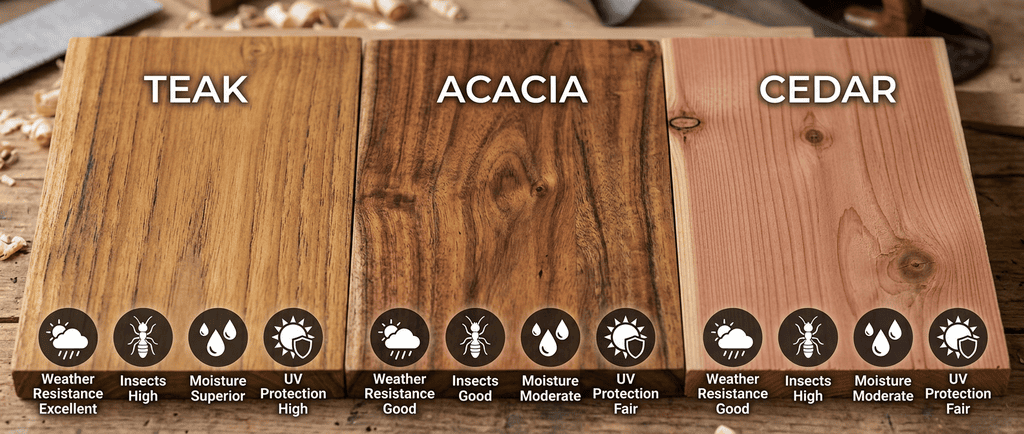
Wood intended for outdoor use must endure environmental conditions that can rapidly damage many varieties typically found indoors. Factors such as moisture exposure from rain or dew can lead to significant degradation if not properly addressed.
Several key characteristics dictate how well a particular wood performs over time in outdoor settings. Understanding these traits will help you evaluate which materials are more suited for your specific needs.
1. Natural Weather Resistance in Outdoor Woods
Outdoor woods face challenges from exposure to elements like rain or UV rays; thus many types tend to crack or warp under such conditions. The most effective options contain natural oils or compounds designed to minimize moisture absorption while protecting their fibers from damage.
The best outdoor woods include those rich in natural oils or other protective compounds that mitigate moisture retention while safeguarding their structural integrity against decay.
Examples include various hardwoods known for their density as well as tropical species prized for their high oil content. Choosing wisely based on these attributes will enhance your furniture's lifespan significantly.
- Natural oils
- Dense grain structure
- Moisture resistance
- UV tolerance
Such characteristics bolster the wood's overallweather resistance, enhancing performance while reducing deterioration risk over time when exposed to harsh conditions.
2. How Different Woods Resist Rot and Decay
Outdoor furnishings frequently come into contact with moisture due to environmental factors like rain or dew accumulation on surfaces.
Without protection, fungi and bacteria break down wood fibers, leading to rot.
Species with strong rot and decay resistance naturally repel moisture and microorganisms, extending furniture lifespan without relying entirely on chemical treatments.
3. Insect Resistance: Protecting Your Outdoor Investment
Certain woods naturally discourage termites, carpenter ants, and wood-boring insects.
Natural oils found in teak and aromatic compounds in cedar provide built-in protection that reduces the need for chemical preservatives.
4. Understanding Density and Strength in Outdoor Woods
Dense hardwoods resist dents, scratches, and structural movement better than softer woods.
High-density wood is particularly valuable for:
- Dining tables
- Benches
- Lounge furniture
- Commercial outdoor seating
5. Maintenance Requirements for Different Types of Wood
No outdoor wood is completely maintenance-free.
However, some species require much less upkeep than others.
Maintenance may include:
- Cleaning
- Sealing
- Oiling
- Sanding
- Refinishing
Choosing a low maintenance outdoor wood can save significant time and money over many years.
Takeaway: The best outdoor furniture woods naturally resist moisture, insects, UV exposure, and decay while requiring minimal maintenance.
Why Teak is the Gold Standard in Outdoor Furniture Materials
When discussing teak outdoor furniture, professionals often consider it the benchmark against which other woods are measured.
Native primarily to Southeast Asia, teak is an exceptionally dense hardwood with a high concentration of natural oils and silica.
These natural characteristics make it uniquely suited for outdoor environments.
The Advantages of Choosing Teak for Your Outdoors
Exceptional Durability
Teak is renowned for its remarkable lifespan.
High-quality teak furniture commonly lasts:
- 40–50 years with minimal care
- 75 years or longer with proper maintenance
This longevity makes teak one of the most durable materials available for outdoor living spaces.
Outstanding Weather Resistance of Teak Explained
Teak naturally withstands:
- Heavy rain
- Snow
- High humidity
- Salt air
- Intense sunlight
- Freeze-thaw cycles
Unlike many hardwoods, teak rarely warps or cracks when exposed to changing weather conditions.
Its natural oils continuously protect the wood from moisture penetration.
Superior Rot and Decay Resistance
One of teak’s greatest strengths is its exceptional rot and decay resistance.
The wood’s natural oils act as an internal preservative, limiting fungal growth and reducing moisture absorption without requiring frequent protective treatments.
This is one reason teak has long been used for:
- Marine decking
- Yacht construction
- Luxury outdoor furniture
- Public park benches
Low Maintenance
Many homeowners choose teak because it requires relatively little ongoing care.
Routine maintenance typically includes:
- Washing with mild soap and water.
- Removing surface dirt.
- Allowing the wood to weather naturally or preserving its original color with teak-specific treatments.
Over time, untreated teak develops a distinctive silver-gray patina that many homeowners consider attractive.
Importantly, this color change is cosmetic and does not reduce structural integrity.
Premium Appearance
Fresh teak displays a warm golden-brown tone with elegant grain patterns.
Its refined appearance complements many outdoor design styles, including:
- Contemporary patios
- Coastal homes
- Luxury decks
- Resort-style landscaping
Drawbacks of Teak
Despite its many advantages, teak has limitations.
- Highest purchase price
- Heavy weight
- Quality varies depending on grade (Grade A, B, or C)
- Sustainable sourcing should be verified through reputable certifications
Takeaway: Teak delivers unmatched durability and weather resistance, making it the premium choice for homeowners seeking decades of reliable outdoor performance.
Is Acacia the Smart Choice for Affordable Outdoor Furniture?
Acacia outdoor furniture has become increasingly popular because it offers the appearance and strength of hardwood at a much lower price than teak.
Acacia grows relatively quickly compared to teak, making it more widely available and generally more affordable.
Its attractive grain patterns and rich natural color make it a favorite for homeowners seeking stylish outdoor furniture on a moderate budget.
Advantages of Acacia
Excellent Strength
Acacia is a dense hardwood capable of handling everyday outdoor use.
It performs well for:
- Dining sets
- Patio tables
- Conversation seating
- Garden benches
Its hardness also helps resist scratches and dents better than many softwood alternatives.
The Best Wood for Outdoor Furniture: A Natural Choice
Acacia features rich brown tones ranging from honey gold to deep chocolate.
Its distinctive grain provides a premium appearance that resembles more expensive hardwoods.
Many manufacturers highlight this visual appeal in contemporary outdoor furniture collections.
Affordable and Stylish Hardwood for Your Outdoors
Compared with teak, acacia typically costs significantly less while still providing many desirable hardwood characteristics.
For buyers searching for budget outdoor furniture wood, acacia often represents one of the strongest overall values.
Weather Resistance: Key to Choosing the Best Wood
Acacia naturally tolerates outdoor conditions better than many indoor hardwoods.
However, unlike teak, it contains fewer protective oils.
As a result, prolonged exposure to moisture and direct sunlight may eventually cause:
- Surface checking
- Minor cracking
- Color fading
- Drying
Regular maintenance helps prevent these issues and extends the furniture’s lifespan.
Takeaway: Acacia offers an excellent balance of affordability, durability, and visual appeal, making it one of the best value choices for outdoor furniture when properly maintained.
Cedar: A Cost-Effective Option for Stylish Outdoor Spaces
Cedar outdoor furniture is a favorite among homeowners, gardeners, and DIY enthusiasts because it combines natural beauty with excellent resistance to moisture and insects. Unlike dense hardwoods such as teak and acacia, cedar is a softwood, making it lighter and easier to move while still offering impressive outdoor performance.
Although cedar doesn’t match teak’s longevity, it provides outstanding value for those seeking attractive, functional furniture without a premium price tag.
Why Cedar Stands Out in Outdoor Furniture Choices
Cedar's Natural Resistance to Rot and Decay
Cedar contains naturally occurring oils and compounds called thujaplicins that help protect it against:
- Rot
- Fungal growth
- Moisture damage
- Insect infestation
This built-in rot and decay resistance makes cedar a dependable choice for humid climates and gardens.
Durability Meets Lightweight Design in Outdoor Woods
Because cedar weighs significantly less than teak or acacia, it’s ideal for furniture that needs to be moved regularly, including:
- Adirondack chairs
- Garden benches
- Bistro sets
- Porch furniture
- Planters and raised garden beds
Its lighter weight also makes cedar popular among DIY builders.
Discover the Naturally Beautiful Appearance of Teak
Fresh cedar features warm reddish-brown tones with subtle grain patterns that complement a wide range of outdoor aesthetics, from rustic gardens to modern patios.
Over time, untreated cedar develops a soft silver-gray patina similar to weathered teak.
Budget-Friendly Choices for Quality Outdoor Furniture
If you're on the lookout for the best wood for outdoor furniture, cedar stands out as an attractive choice, balancing affordability with inherent durability suited for outdoor conditions. This wood type is not only budget-friendly but also provides a natural resilience that makes it ideal for outdoor settings.
While prices can vary based on the specific species and quality of construction, cedar generally tends to be more affordable than teak. It often competes closely in price with high-quality acacia furniture, making it an excellent option for those looking to enhance their outdoor space without overspending.
Understanding the Drawbacks of Choosing Cedar
However, as a softwood, cedar does come with certain limitations that homeowners should consider before making a purchase. While it offers decent durability, it may not withstand extreme weather conditions as robustly as some hardwood options.
Compared to more durable woods like teak and acacia, cedar may be more vulnerable to wear over time. This means that if you live in an area with harsh weather, you might need to pay closer attention to its maintenance needs.
- Surface dents
- Scratches
- Heavy impacts
- Gradual wear in high-traffic settings
To maintain its beauty and functionality, cedar benefits from periodic sealing or staining. These protective measures help preserve its original color while reducing the effects of weathering over time.
Takeaway: Cedar is an outstanding choice for homeowners seeking lightweight outdoor furniture that naturally resists the elements-all at a price point that won't break the bank.
Comparing Maintenance Needs of Teak, Acacia, and Cedar Woods
When selecting outdoor furniture, maintenance often emerges as a critical factor. Although all three types of wood-teak, acacia, and cedar-benefit from occasional cleaning, the extent of care required can vary significantly between them.
Your Guide to Outdoor Furniture Maintenance Comparisons
| Maintenance Factor | Teak | Acacia | Cedar |
|---|---|---|---|
| Routine cleaning | Low | Moderate | Moderate |
| Annual sealing | Optional | Recommended | Recommended |
| Oiling required | Optional | Occasionally | Rarely |
| UV fading | Turns silver naturally | May fade unevenly | Gradually grays |
| Moisture resistance | Excellent | Good | Very good |
| Overall maintenance | Lowest | Moderate | Moderate |
Teak shines as the most low-maintenance option among these woods due to its natural oils that offer built-in protection against environmental factors. This means you can enjoy your furniture without dedicating excessive time to upkeep.
On the other hand, acacia necessitates a bit more attention to prevent issues like drying and cracking over time. Cedar also requires occasional protective finishes which help maintain its aesthetic appeal while ensuring longevity.
Takeaway: If your primary goal is to minimize maintenance efforts in your outdoor space, teak is undoubtedly the top contender among these wood options.
Choosing Between Teak Oil and Sealant: What's Right for You?
A frequently asked question from buyers pertains to whether teak oil vs sealant is the superior choice for maintaining their furniture's appearance and longevity. The answer largely hinges on what you aim to achieve with your outdoor furniture care routine.
Understanding your goals will guide you toward selecting either option effectively. Each has its own advantages depending on how you wish to manage the upkeep of your teak furniture.
The Benefits of Using Teak Oil on Outdoor Furniture
Interestingly, despite being labeled as 'teak oil', many commercial products contain blends of oils such as linseed or tung oil along with mineral spirits rather than pure oil derived from teak trees itself. This can influence how well they protect and preserve your furniture.
Teak oil primarily serves cosmetic purposes by enhancing the wood's appearance but doesn't substantially improve its already impressive durability characteristics. Therefore, it's essential to have realistic expectations when applying these products.
- Restores color
- Enhances grain
- Provides temporary cosmetic improvement
Repeated applications of oil can sometimes lead to unwanted effects such as mildew growth in humid areas if excess residue remains on surfaces. Thus, careful application and regular monitoring are crucial.
Repeated oil applications can also encourage mildew in humid environments if excess oil remains on the surface.
How Teak Sealant Enhances Your Outdoor Furniture's Longevity
A teak sealant, conversely, creates a breathable barrier that enhances protection against moisture while allowing air circulation which is vital for preserving the integrity of the wood over time.
- Reduce UV fading
- Slow moisture absorption
- Preserve the wood’s golden-brown appearance longer
- Extend intervals between maintenance
Many outdoor furniture experts recommend sealants over teak oil for homeowners who want to maintain teak’s original color.
Should You Apply Treatment to Your Teak Furniture?
Not necessarily.
One of teak’s greatest advantages is that it performs exceptionally well without either oil or sealant.
Many owners simply wash the furniture periodically and allow it to develop its distinctive silver-gray patina naturally.
This weathered appearance is purely aesthetic and does not indicate structural deterioration.
Best Practice: Use a quality teak sealant if you prefer to preserve the original honey-gold color. If you enjoy the weathered gray appearance, routine cleaning alone is usually sufficient.
Takeaway: Teak oil improves appearance, while sealants offer longer-lasting color protection. Neither is essential for teak’s structural performance.
Which Wood Truly Lasts the Longest Outdoors? A Comparative Study
Expected lifespan varies depending on climate, maintenance, and furniture quality.
Averaging Lifespan: Comparing Outdoor Woods for Durability
| Wood | Typical Lifespan |
|---|---|
| Teak | 40–75+ years |
| Acacia | 15–25 years |
| Cedar | 15–30 years |
These estimates assume:
- Quality construction
- Proper drainage
- Periodic cleaning
- Reasonable maintenance
- Seasonal protection in harsh climates
Furniture left continuously exposed to standing water or extreme weather without care will generally have a shorter lifespan regardless of wood species.
Takeaway: Teak offers the greatest long-term value through exceptional longevity, while acacia and cedar provide excellent service life when properly maintained.
Selecting the Best Wood for Various Outdoor Environments
Different climates place different demands on outdoor furniture.
Choosing Wood for Coastal Area Conditions
Best Choice: Teak
Salt air, humidity, and frequent moisture have minimal impact on teak’s natural oils, making it ideal for coastal homes.
Outdoor Wood Choices for Rainy or Humid Regions
Best Choices:
- Teak
- Cedar
- Acacia
Both teak and cedar naturally resist moisture, fungi, and insects.
Dry, Sunny Climates
All three woods perform well, but UV exposure gradually changes their appearance.
Applying UV-resistant finishes helps preserve color, especially for acacia and cedar.
Seasonal Climates
Where summers are hot and winters bring snow or freezing temperatures, furniture covers and winter storage help extend the life of all wood species.
Takeaway: Matching the wood species to your local climate improves durability and reduces maintenance over time.
Common Mistakes When Buying Outdoor Wood Furniture
Choosing the wrong furniture often results from focusing only on price.
Avoid these common mistakes:
1. Ignoring Wood Grade
Not all teak or acacia is equal.
Look for reputable manufacturers that specify wood quality and sustainable sourcing.
2. Underestimating Maintenance
Lower-cost furniture often requires more frequent sealing or refinishing.
Factor ongoing maintenance into your purchasing decision.
3. Confusing Weather Resistance with Waterproofing
Even highly durable woods benefit from proper drainage and should not sit in standing water for extended periods.
4. Buying Based Only on Appearance
Beautiful furniture should also match your climate, intended use, and maintenance preferences.
5. Neglecting Protective Accessories
Furniture covers, breathable storage bags, and proper winter storage can significantly extend the life of outdoor furniture regardless of wood species.
Takeaway: Considering long-term ownership costs—not just purchase price—helps you choose furniture that delivers lasting value.
How to Select the Best Wood for Outdoor Furniture
The best choice ultimately depends on your priorities.
Opt for Teak If You Desire Longevity and Durability:
- Maximum durability
- Minimal maintenance
- Luxury appearance
- Outstanding weather resistance
- Long-term investment
Consider Acacia for a Budget-Friendly Option:
- Excellent value
- Hardwood strength
- Attractive grain
- Moderate maintenance
- Affordable premium styling
Select Cedar for Lightweight and Affordable Choices:
- Lightweight furniture
- Natural insect resistance
- DIY-friendly material
- Lower upfront cost
- Rustic or garden-style aesthetics
Recommendations Tailored to Your Outdoor Needs
| Buyer | Recommended Wood | Why |
|---|---|---|
| Luxury homeowner | Teak | Long lifespan and premium appearance |
| Budget-conscious homeowner | Acacia | Excellent balance of quality and affordability |
| DIY enthusiast | Cedar | Easy to work with and naturally durable |
| Coastal property owner | Teak | Superior resistance to salt air and moisture |
| Garden enthusiast | Cedar | Lightweight, attractive, and naturally insect-resistant |
| Commercial patio | Teak | Handles heavy use with minimal maintenance |
Takeaway: There is no universally perfect choice. The best wood for outdoor furniture is the one that aligns with your budget, climate, maintenance preferences, and expected lifespan.
Your Questions Answered About the Best Wood for Outdoor Furniture
Is Investing in Teak Worth It?
Yes—if you want furniture that can last for decades. Although teak has the highest upfront cost, its exceptional durability, natural weather resistance, and minimal maintenance often result in a lower total cost of ownership over its lifespan.
Can Acacia Furniture Withstand Year-Round Outdoor Exposure?
Acacia can remain outdoors year-round in many climates, but it performs best when protected with a quality exterior sealant and covered during prolonged rain, snow, or freezing temperatures. Regular maintenance helps prevent drying, cracking, and fading.
Does Cedar Wood Attract Pests?
No. Cedar naturally contains aromatic oils that repel many insects, including termites and certain wood-boring pests. This natural protection is one reason cedar has remained a popular choice for outdoor furniture and garden structures.
What Causes Teak to Turn Gray Over Time?
Exposure to sunlight causes teak to develop a silver-gray patina over time. This is a natural aging process that affects only the wood’s appearance—not its structural strength or weather resistance.
Which Type of Wood Requires Minimal Upkeep?
Teak requires the least maintenance because its high concentration of natural oils protects it from moisture, decay, and insects without frequent sealing or refinishing.
Cedar vs. Acacia: Which is Better for DIY Outdoor Projects?
Cedar is generally easier to cut, shape, and assemble due to its lighter weight and softer texture. Acacia offers greater strength but requires harder tools and more effort during construction.
Which Wood Stands Up Best in Wet Conditions?
Teak performs best in consistently wet environments thanks to its outstanding moisture resistance. Cedar is also an excellent option because of its natural resistance to rot and fungal growth.
Can You Leave Outdoor Furniture Unprotected from the Elements?
While premium woods such as teak can tolerate continuous outdoor exposure, using breathable furniture covers and storing cushions during severe weather will extend the life and appearance of any outdoor furniture.
The Importance of Choosing the Right Wood for Outdoors
Choosing outdoor furniture isn’t simply about selecting a style that complements your patio—it is an investment in long-term performance, maintenance, and overall value.
Many buyers focus primarily on purchase price, only to discover that inexpensive furniture requires frequent refinishing or replacement within a few years. By understanding how teak, acacia, and cedar differ in durability, weather resistance, and maintenance, you can make a decision that aligns with both your budget and expectations.
For example:
- A homeowner designing a luxury outdoor entertaining area may benefit most from teak’s decades-long lifespan.
- A family furnishing a backyard patio may find acacia offers the ideal balance between quality and affordability.
- A DIY enthusiast building a garden retreat may appreciate cedar’s lightweight construction and natural resistance to insects.
It’s also important to consider your local climate. Coastal regions, humid environments, and areas with harsh winters place greater demands on outdoor furniture than mild climates. Selecting a wood species suited to those conditions reduces maintenance, extends service life, and protects your investment.
Finally, sustainable sourcing matters. Look for furniture certified by organizations such as the Forest Stewardship Council (FSC®) or other reputable forestry certification programs. Responsibly harvested wood supports healthier forests while helping ensure long-term material quality.
Expert Insight: The best purchasing decision isn’t determined by the lowest price—it’s determined by how well the wood matches your climate, maintenance preferences, and expected years of use.
Your FAQs about the Best Wood for Outdoor Furniture
The Ultimate Choice: What is the Best Wood for Outdoor Furniture?
When it comes to selecting the best wood for outdoor furniture, teak stands out as a premier choice due to its remarkable durability, natural resistance to weather conditions, and minimal upkeep requirements. Acacia is an excellent alternative that balances affordability with strength, making it ideal for those on a moderate budget. Meanwhile, cedar is lightweight and boasts natural insect resistance, which makes it particularly suitable for outdoor settings like gardens and patios.
Is teak better than acacia for outdoor furniture?
Absolutely, teak generally surpasses acacia in terms of durability, weather resistance, and overall lifespan. However, acacia presents a cost-effective option while still delivering an appealing aesthetic and dependable performance outdoors. This combination of value and appearance makes acacia an attractive choice for many homeowners who desire quality without breaking the bank.
Does cedar last as long as teak outdoors?
Cedar does not match the longevity of teak; typically, it can last around 15-30 years with proper maintenance. In contrast, high-quality teak furniture is known to endure for 40-75 years or more. While cedar remains a durable option in its own right, teak offers superior long-term durability and requires less ongoing maintenance, making it a preferred choice for those looking to invest in outdoor furniture.
Should teak furniture be oiled or sealed?
Teak furniture does not necessitate oil or sealant for structural integrity. If you wish to maintain its original golden-brown hue, using a high-quality teak sealant is more effective than applying teak oil. Alternatively, if you appreciate the natural silver-gray patina that develops over time, routine cleaning may suffice without needing additional treatments.
What is the most affordable wood for outdoor furniture?
For those seeking budget-friendly options without compromising quality, cedar and acacia are often the top contenders. Cedar provides built-in resistance against insects and decay due to its natural properties. On the other hand, acacia combines hardwood strength with beautiful grain patterns while remaining more affordable than teak.
Final Summary
Ultimately, choosing between teak vs. acacia vs. cedar will depend on your unique preferences as a homeowner. The best wood for outdoor furniture hinges on various factors including your budget constraints, desired longevity, and specific climate conditions where the furniture will be placed.
If your primary focus is achieving maximum durability alongside exceptional weather resistance and minimal maintenance over time,teak remains unmatched in the industry. Its natural oils provide outstanding protection against rot and decay while offering an impressive lifespan that truly sets it apart as the premium choice for outdoor living areas.
Should you seek an optimal blend of quality and affordability,acacia proves to be a wise investment. It delivers impressive hardwood characteristics combined with a rich visual appeal at a price point that's easier on the wallet. With regular sealing and care practices in place, acacia can offer many years of dependable service outdoors.
For homeowners prioritizing lightweight construction along with natural insect resistance and ease of DIY projects,cedar is indeed a fantastic option. It performs admirably across various climates while providing lasting value for those looking for attractive furniture without incurring luxury costs.
Before finalizing your selection, it's essential to weigh four critical factors: durability expectations, maintenance requirements, budgetary limits, and climate considerations.
- Your local climate and weather conditions.
- Your maintenance preferences.
- Your available budget.
- How long you expect the furniture to last.
By carefully evaluating these factors alongside each wood species' strengths and weaknesses, you'll be better equipped to choose outdoor furniture that harmonizes comfort with durability while delivering exceptional value over many years.
For additional information on sustainable wood sourcing and wood properties, consult the Forest Stewardship Council (FSC), the U.S. Forest Service, and The Wood Database. These trusted resources provide in-depth information on wood species, durability, responsible forestry, and best practices for outdoor applications.
Build Better Projects with Confidence
Whether you're purchasing pre-made outdoor furniture or embarking on building your own pieces from scratch, selecting appropriate wood is just one aspect of your journey. Familiarizing yourself with techniques that enhance your woodworking projects will allow you to create stronger constructions that stand the test of time while minimizing frustration during assembly.
👉 Discover the Woodworking Shortcut System:
Gain access to step-by-step woodworking plans, expert techniques, and practical tips to build beautiful outdoor furniture, garden projects, and home improvements with confidence.