Quick Answer
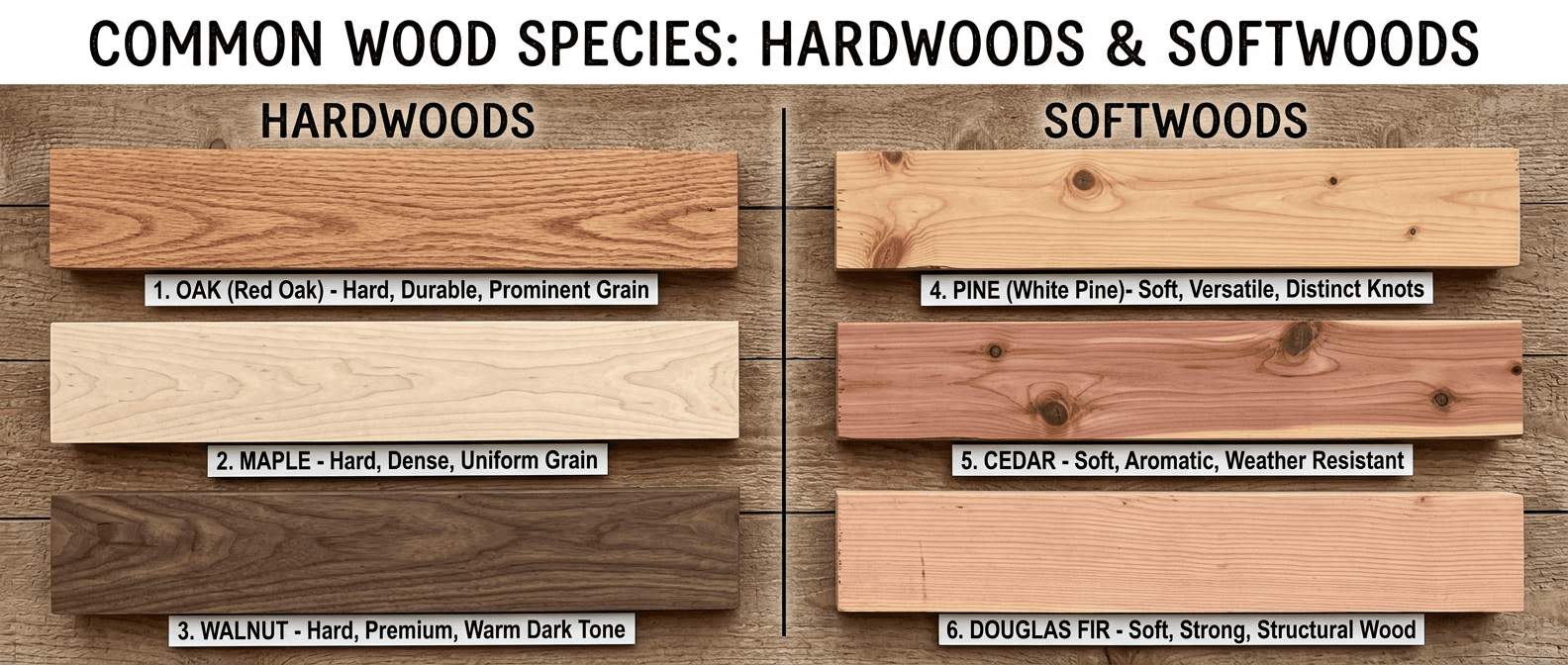
Hardwood and softwood differ primarily by the type of tree they come from—not necessarily by how hard the wood is.
Hardwoods come from deciduous trees and are generally denser, more durable, and better for furniture and flooring.
Softwoods come from coniferous trees and are typically lighter, easier to work with, less expensive, and ideal for framing, construction, and many DIY projects.
Key Takeaways
- Hardwood comes from deciduous (broadleaf) trees, while softwood comes from coniferous (evergreen) trees.
- Hardwoods are generally denser, stronger, and more durable but cost more.
- Softwoods are lighter, easier to cut, and usually more affordable.
- The Janka hardness scale measures a wood’s resistance to dents and wear—not whether it is classified as hardwood or softwood.
- Furniture, flooring, cabinetry, and premium woodworking typically use hardwood.
- Framing, trim, outdoor structures, and general construction commonly use softwood.
- Choosing the right wood depends on durability requirements, budget, appearance, and intended use.
Hardwood vs. Softwood: Understanding the Differences and Choosing the Right Wood
Selecting the right wood is one of the most important decisions in any woodworking or construction project.
Whether you’re building furniture, installing flooring, framing a house, or completing a DIY project, understanding hardwood vs softwood helps you choose materials that balance strength, appearance, durability, and cost.
Although many people assume hardwood is always hard and softwood is always soft, the reality is more nuanced. The classification depends on the type of tree rather than the wood’s physical hardness.
Let’s explore the differences in detail.
What Is Hardwood?
Hardwood comes from deciduous trees, which lose their leaves seasonally.
These trees generally grow more slowly, producing wood with tighter grain patterns and higher density.
Common hardwood species examples
- Oak
- Maple
- Walnut
- Cherry
- Ash
- Hickory
- Mahogany
- Birch
- Beech
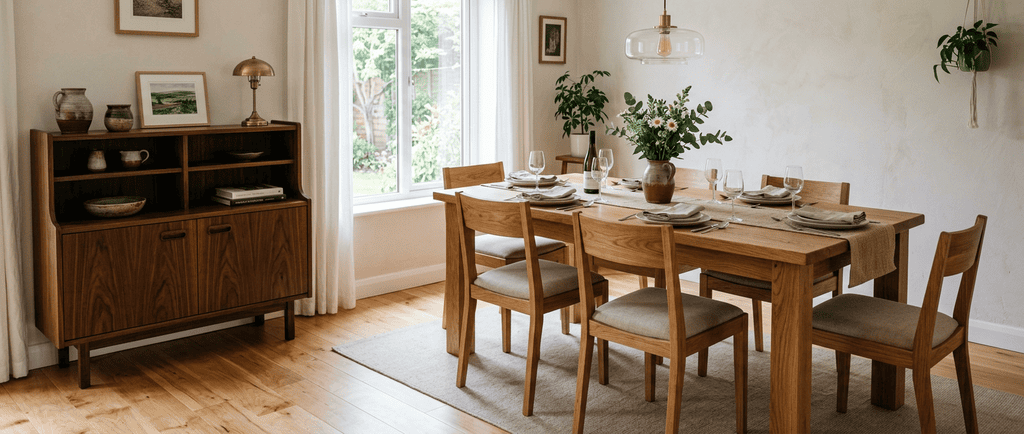
Hardwoods are widely used for projects that require durability, strength, and an attractive finish.
Typical hardwood uses
- Furniture
- Hardwood flooring
- Cabinets
- Cutting boards
- Doors
- Staircases
- Decorative trim
- Fine woodworking
- Musical instruments
Takeaway: Hardwood is often the best choice when long-term durability and appearance matter most.
What Is Softwood?
Softwood comes from coniferous trees, which usually remain evergreen and produce cones.
These trees grow much faster than hardwood species, making softwood more readily available and typically less expensive.
Common softwood species examples
- Pine
- Cedar
- Spruce
- Fir
- Douglas Fir
- Redwood
- Hemlock
- Larch
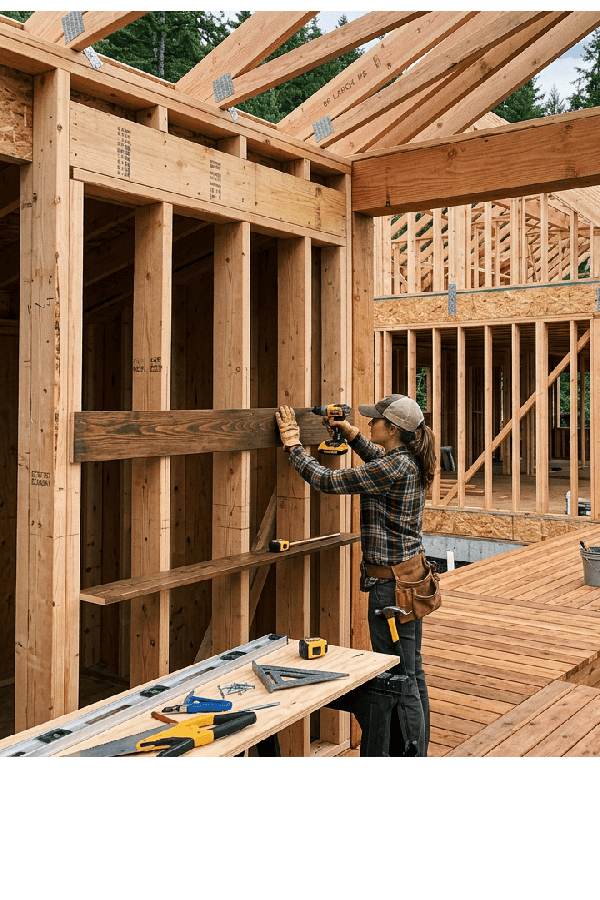
Despite the name, many softwoods are surprisingly strong and widely used in structural construction.
Typical softwood uses
- House framing
- Roof trusses
- Decking
- Fence posts
- Interior trim
- Plywood
- Shelving
- Outdoor structures
- General DIY projects
Takeaway: Softwood offers an excellent balance of affordability, workability, and structural performance.
What Are the Main Differences Between Hardwood and Softwood?
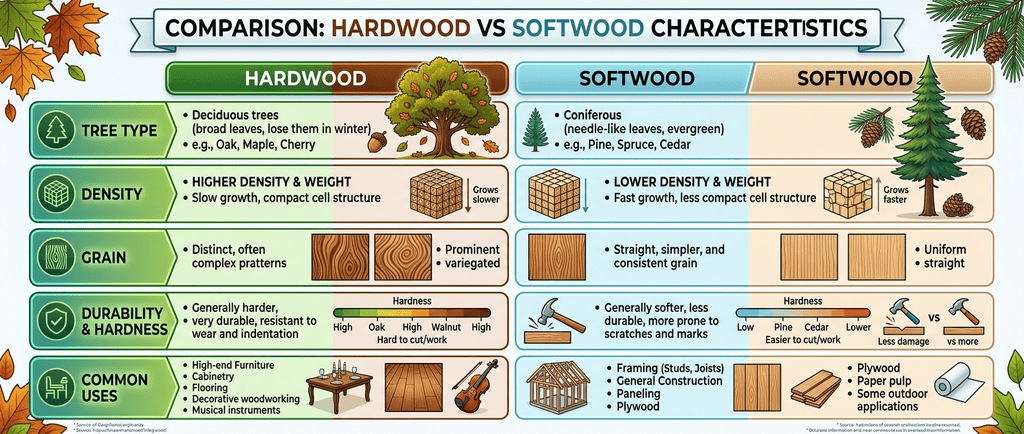
The biggest differences involve tree type, density, strength, grain, workability, price, and applications.
| Feature | Hardwood | Softwood |
|---|---|---|
| Tree Type | Deciduous | Coniferous |
| Growth Rate | Slow | Fast |
| Density | Usually higher | Usually lower |
| Weight | Heavier | Lighter |
| Durability | Higher | Moderate |
| Cost | More expensive | Less expensive |
| Workability | Harder to machine | Easier to cut and shape |
| Typical Uses | Furniture, flooring, cabinetry | Framing, construction, DIY |
| Grain | Often complex | Generally straighter |
It’s important to remember that these are general trends rather than absolute rules.
For example:
- Balsa is technically a hardwood but is extremely soft.
- Yew is classified as a softwood but is harder than many hardwoods.
Takeaway: Tree classification—not physical hardness—determines whether wood is hardwood or softwood.
How Does Wood Density Affect Strength and Durability?
One of the biggest differences between hardwood and softwood is density.
Higher-density woods generally provide:
- Better wear resistance
- Greater structural strength
- Improved dent resistance
- Longer service life
Lower-density woods often provide:
- Easier machining
- Reduced weight
- Faster installation
- Lower material costs
However, density alone doesn’t determine performance. Moisture resistance, grain orientation, and proper finishing also affect durability.
Examples
High-density woods:
- Hickory
- White Oak
- Hard Maple
Lower-density woods:
- Pine
- Cedar
- Spruce
Takeaway: Wood density and durability often go hand in hand, but project requirements should always guide your selection.
What Is the Janka Hardness Scale?
The Janka hardness scale measures how resistant wood is to denting and wear.
Specifically, it measures the force required to embed a steel ball halfway into the wood.
Higher Janka ratings indicate greater hardness.
Example Janka ratings
| Species | Approximate Rating |
|---|---|
| Eastern White Pine | 380 |
| Douglas Fir | 660 |
| Cherry | 950 |
| Red Oak | 1,290 |
| Hard Maple | 1,450 |
| White Oak | 1,360 |
| Hickory | 1,820 |
The Janka scale is especially useful when selecting:
- Flooring
- Countertops
- Tables
- Workbenches
- High-traffic furniture
It does not determine whether wood is hardwood or softwood.
Takeaway: Use the Janka hardness scale to compare wear resistance between wood species.
Hardwood vs. Softwood Pros and Cons
Hardwood Pros
- Exceptional durability
- Beautiful grain patterns
- Long lifespan
- Excellent resale value
- Better scratch resistance
- Ideal for premium furniture
Hardwood Cons
- Higher cost
- Heavier weight
- Harder on cutting tools
- More difficult for beginners
- Longer growth cycles
Softwood Pros
- Lower cost
- Lightweight
- Easy to machine
- Widely available
- Excellent for construction
- Beginner-friendly
Softwood Cons
- Dents more easily
- Less wear resistant
- Shorter lifespan in some applications
- May require more maintenance
Takeaway: The best material depends on balancing performance, budget, and ease of use.
When Should You Use Hardwood?
Choose hardwood when your project requires long-lasting durability, attractive grain, and superior strength.
Best hardwood uses
Furniture
Dining tables, chairs, desks, and dressers benefit from hardwood’s durability and appearance.
Flooring
Hardwood flooring withstands decades of foot traffic while adding long-term home value.
Cabinets
Kitchen and bathroom cabinets made from hardwood resist wear and maintain their appearance.
Cutting Boards
Hard maple and walnut are popular because they resist excessive wear while remaining food-safe with proper finishing.
Decorative Projects
Premium trim, stair railings, mantels, and architectural millwork often use hardwood for its refined appearance.
Takeaway: Hardwood is ideal when quality, beauty, and longevity outweigh cost considerations.
When Should You Use Softwood?
Softwood excels in projects where affordability, speed, and ease of installation are priorities.
Best softwood uses
House Framing
Spruce, pine, and fir dominate residential construction because they provide excellent strength-to-weight ratios.
Outdoor Projects
Pressure-treated pine and naturally durable cedar work well for decks, pergolas, fences, and garden beds.
DIY Furniture
Pine offers an affordable option for beginners learning woodworking skills.
Shelving
Softwood shelves are economical and easy to customize.
Interior Trim
Baseboards, molding, and window casings commonly use pine or fir because they paint well.
Takeaway: Softwood is often the practical choice for construction, remodeling, and budget-conscious projects.
How Much Does Hardwood Cost Compared to Softwood?
The cost of hardwood vs softwood varies by species, location, and availability.
In general:
Softwood is typically 30–70% less expensive than comparable hardwood.
Several factors influence pricing:
- Growth rate
- Availability
- Demand
- Import costs
- Milling complexity
- Grade and quality
For example:
- Pine is among the most affordable lumber.
- Walnut and mahogany are premium-priced hardwoods.
- Oak and maple occupy the middle to upper price range.
When budgeting, also consider waste, machining costs, and finishing requirements—not just the initial purchase price.
Takeaway: Softwood generally offers better value for large structural projects, while hardwood justifies its higher cost for visible, long-lasting work.
Is Hardwood or Softwood More Sustainable?
The sustainability of hardwood vs softwood depends on forest management rather than wood type alone.
Softwoods often have sustainability advantages because they:
- Grow faster
- Reach harvest age sooner
- Are widely planted
- Regenerate quickly
Many hardwood forests are also sustainably managed through responsible forestry programs.
Look for certifications such as:
- FSC (Forest Stewardship Council)
- PEFC (Programme for the Endorsement of Forest Certification)
Buying certified wood helps support responsible forest management regardless of species.
Takeaway: Sustainably sourced hardwood and softwood are both environmentally responsible choices when harvested from certified forests.
Common Mistakes When Choosing Wood
Avoid these common errors:
- Assuming hardwood is always harder.
- Choosing based only on price.
- Ignoring moisture exposure.
- Overlooking finishing requirements.
- Forgetting wood movement caused by humidity.
- Selecting appearance over function.
- Using indoor wood outdoors without protection.
Proper planning reduces waste and improves project longevity.
Takeaway: Match the wood to the environment and intended use instead of relying on general assumptions.
How to Choose Between Hardwood and Softwood
Ask yourself these questions:
1. Will the project receive heavy wear?
If yes, hardwood is often the better option.
2. Is budget your biggest concern?
Softwood usually offers the best value.
3. Will the wood be painted?
Softwood paints exceptionally well.
4. Is natural grain important?
Hardwood often delivers richer grain patterns.
5. Is weight a concern?
Softwood is easier to transport and install.
6. Will the project be outdoors?
Choose naturally rot-resistant species such as cedar, redwood, or pressure-treated lumber.
Decision Guide
| Project | Recommended Wood |
|---|---|
| Dining Table | Hardwood |
| Hardwood Flooring | Hardwood |
| Kitchen Cabinets | Hardwood |
| House Framing | Softwood |
| Fence | Softwood |
| Deck | Cedar or treated softwood |
| DIY Bookshelf | Softwood |
| Fine Woodworking | Hardwood |
Takeaway: Evaluate durability, appearance, budget, and environmental conditions before making your final decision.
Common Questions About Hardwood vs. Softwood
Is hardwood always harder than softwood?
No. Hardwood and softwood are botanical classifications. Some hardwoods are soft, while some softwoods are surprisingly hard.
Why is pine so popular?
Pine is affordable, widely available, lightweight, and easy to work with, making it ideal for beginners and construction.
Which wood lasts longer?
In general, hardwood lasts longer because of its higher density and wear resistance, although properly treated softwood can also provide decades of service.
Can softwood be used for furniture?
Yes. Pine, cedar, and Douglas fir are commonly used for furniture, especially rustic, farmhouse, and painted designs.
What wood is best for beginners?
Pine is usually the easiest and most forgiving wood for new woodworkers.
Is cedar a hardwood?
No. Cedar is a softwood despite its natural durability and resistance to decay.
Does hardwood require more maintenance?
Not necessarily. Proper finishing and routine care are more important than whether the wood is hardwood or softwood.
Why This Matters
Choosing between hardwood and softwood affects far more than the initial cost of your project. The right material influences durability, maintenance, appearance, ease of construction, and long-term value.
A well-informed choice can prevent premature wear, reduce replacement costs, and improve the overall quality of your work.
For beginners, understanding the fundamental differences builds confidence and leads to better project outcomes.
For experienced woodworkers, selecting the appropriate species based on density, grain, moisture resistance, and intended use results in stronger, longer-lasting craftsmanship.
Rather than assuming one type of wood is universally better, focus on matching the material’s properties to the specific demands of the project.
FAQ
Which is better: hardwood or softwood?
Neither is universally better. Hardwood is generally more durable and attractive for furniture and flooring, while softwood is more affordable, lightweight, and ideal for framing, construction, and many DIY projects. The best choice depends on the project’s requirements.
What are the biggest differences between hardwood and softwood?
The main differences are the tree species they come from, their typical density, durability, growth rate, cost, and common applications. Hardwoods come from deciduous trees, while softwoods come from coniferous trees.
Is hardwood worth the extra cost?
For projects requiring long-term durability, premium appearance, and high wear resistance—such as flooring, cabinetry, and fine furniture—hardwood often justifies its higher price through longer service life and improved aesthetics.
Does the Janka hardness scale determine whether wood is hardwood or softwood?
No. The Janka hardness scale measures resistance to dents and wear. Hardwood and softwood classifications are based on the type of tree, not the wood’s hardness.
Which wood is best for DIY beginners?
Pine is one of the best choices for beginners because it is inexpensive, widely available, lightweight, easy to cut, and forgiving to work with. It allows new woodworkers to practice techniques without the higher cost of premium hardwoods.
Choosing the Right Wood
Understanding hardwood vs softwood starts with recognizing that the distinction is based on tree type rather than hardness alone. Hardwoods generally offer greater density, durability, and visual appeal, making them ideal for furniture, flooring, and cabinetry.
Softwoods provide affordability, ease of use, and excellent structural performance, making them the preferred choice for framing, construction, and many DIY projects.
When choosing between hardwood and softwood, consider your project’s purpose, expected wear, budget, appearance, and environmental conditions.
By matching the wood’s characteristics to your specific needs, you’ll create projects that perform better, last longer, and deliver greater value over time.
For more information about wood species, durability, and sustainable forestry practices, visit the USDA Forest Service, the Forest Stewardship Council (FSC), and The Wood Database.
Ready to Build Better Woodworking Projects?
Choosing the right wood is the first step toward creating projects that last. Whether you’re building furniture, cabinets, shelves, or outdoor structures, having the right plans and techniques can save time, reduce mistakes, and improve your results.