Quick Answer
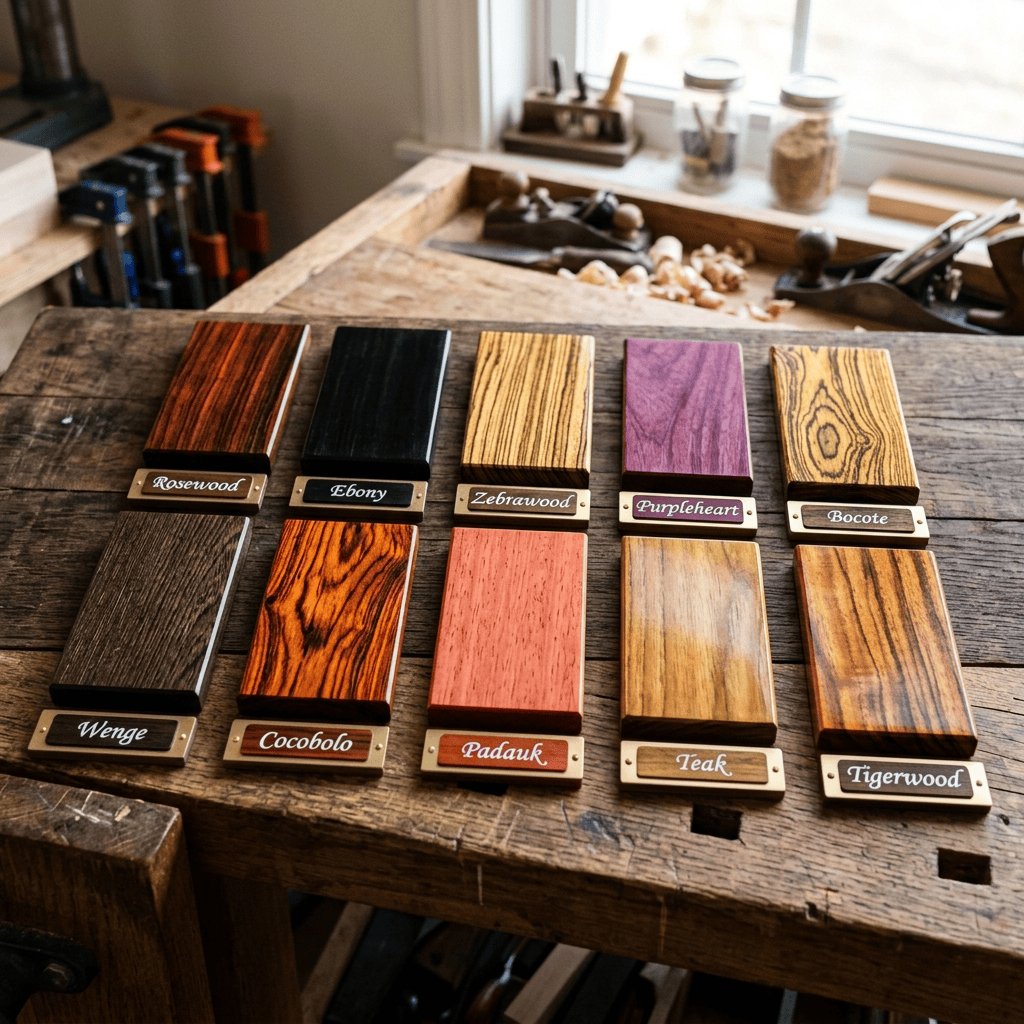
Exotic woods are premium hardwoods sourced from tropical and non-native regions that offer exceptional durability, striking grain patterns, rich colors, and unique working properties.
The top 10 exotic woods are valued for furniture, flooring, musical instruments, luxury interiors, decorative woodworking, and specialty projects, with sustainability and responsible sourcing becoming increasingly important when selecting exotic lumber.
Key Takeaways
- Exotic woods are prized for their distinctive appearance, durability, and performance.
- Different species excel in different applications, from luxury furniture to musical instruments.
- Sustainability certifications such as FSC help ensure responsible sourcing of exotic wood.
- Density, hardness, stability, and workability should guide wood selection.
- Proper finishing and maintenance maximize the beauty and lifespan of exotic lumber.
- Understanding each species’ strengths helps woodworkers make better purchasing decisions.
What Are Exotic Woods?
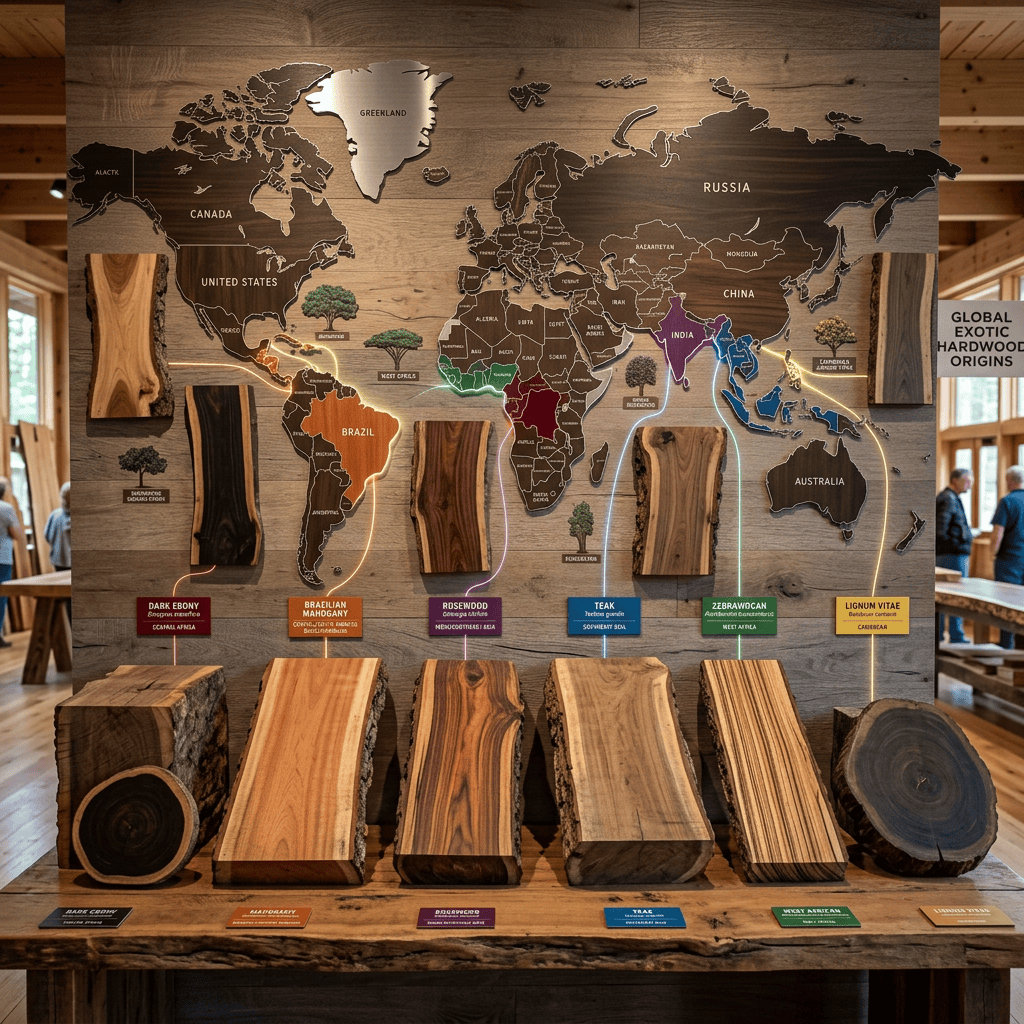
Exotic woods are wood species that originate outside a buyer’s local region, typically from tropical forests in Africa, South America, Southeast Asia, and parts of Oceania.
Unlike common domestic hardwoods such as oak, maple, and walnut, exotic woods are appreciated for their unusual colors, dramatic grain patterns, exceptional hardness, and natural resistance to insects and decay.
Their unique beauty makes them highly desirable among:
- Professional woodworkers
- Furniture makers
- Interior designers
- Architects
- Luthiers (musical instrument makers)
- Luxury home builders
Although exotic woods often command premium prices, their performance and visual appeal frequently justify the investment.
Takeaway: Exotic woods combine aesthetics and performance, making them ideal for premium woodworking projects.
Why Are Exotic Woods So Popular?
Several characteristics distinguish exotic woods from more common hardwoods.
Exceptional Appearance
Many species display colors rarely found in domestic lumber, including:
- Deep purple
- Bright orange
- Rich crimson
- Jet black
- Golden yellow
- Chocolate brown
Natural figure such as ribbon grain, curl, burl, and quilting further enhances their appeal.
Superior Durability
Many rare wood types contain natural oils that improve resistance to:
- Moisture
- Rot
- Insects
- Wear
- UV exposure
Outstanding Mechanical Properties
Many exotic woods possess:
- High density
- Excellent dimensional stability
- Superior hardness
- Long service life
These qualities make them ideal for high-end furniture and architectural applications.
Takeaway: Their combination of beauty, strength, and longevity explains why exotic woods remain highly sought after.
Top 10 Exotic Woods and Their Unique Characteristics
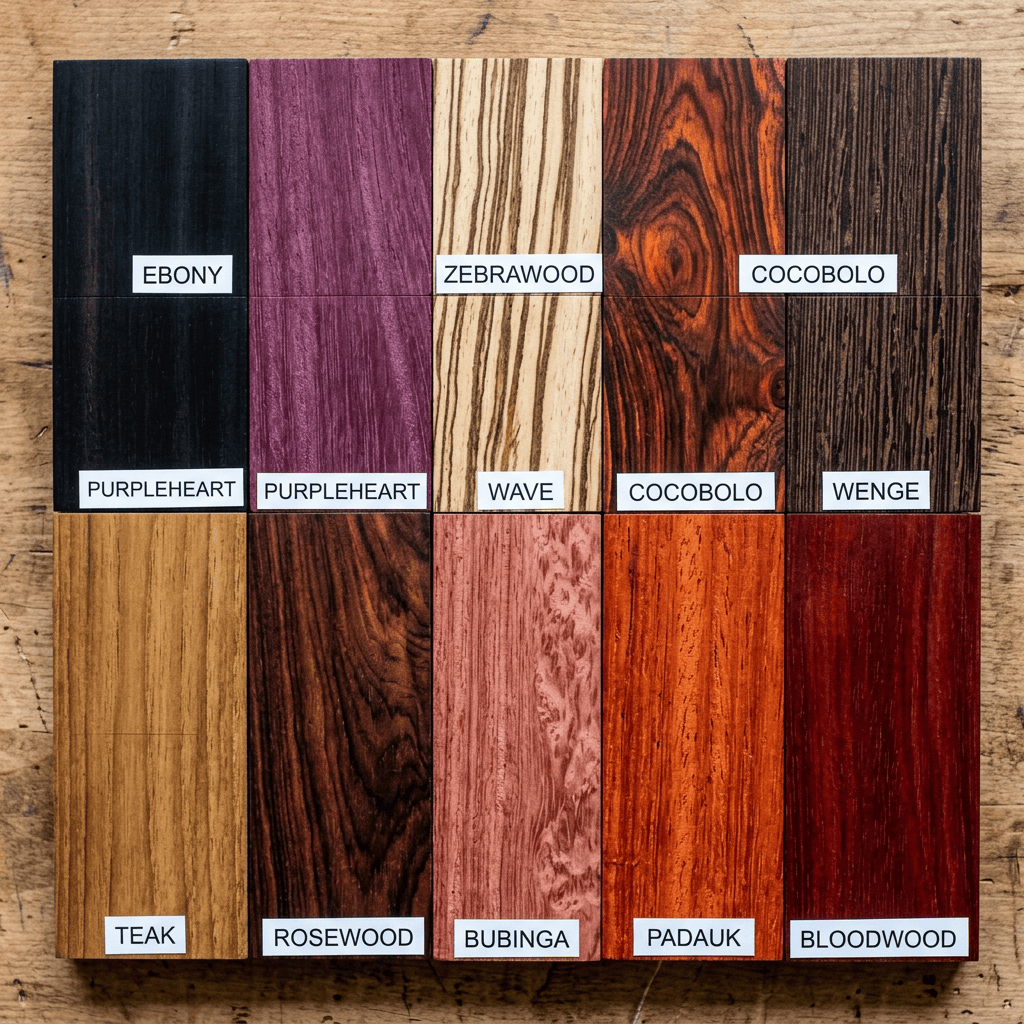
| Exotic Wood | Origin | Distinctive Characteristics | Common Uses |
|---|---|---|---|
| Ebony | Africa, Asia | Deep black color, extremely dense | Musical instruments, luxury furniture |
| Cocobolo | Central America | Vibrant colors, oily texture | Knife handles, fine furniture |
| Purpleheart | South America | Naturally purple heartwood | Decorative furniture, flooring |
| Zebrawood | West Africa | Bold striped grain | Cabinetry, veneers |
| Bubinga | Africa | Reddish-brown with dramatic figure | Furniture, musical instruments |
| Padauk | Africa & Asia | Bright orange-red color | Flooring, carvings |
| Wenge | Central Africa | Dark chocolate color, coarse texture | Flooring, luxury furniture |
| Rosewood | South America & India | Rich aroma, beautiful grain | Guitars, fine furniture |
| Teak | Southeast Asia | Naturally oily, weather resistant | Outdoor furniture, boats |
| Bloodwood | South America | Brilliant deep red color | Decorative woodworking |
1. Ebony
Ebony is one of the world’s most recognizable exotic woods. Its nearly black appearance and exceptional density make it a luxury material.
Advantages
- Extremely hard
- Smooth finish
- Excellent polish
- Minimal movement
Best Applications
- Piano keys
- Guitar fingerboards
- Luxury furniture
- Chess pieces
- Decorative inlays
2. Cocobolo
Cocobolo displays spectacular oranges, reds, yellows, and dark streaks. Its natural oils provide exceptional durability.
Advantages
- Naturally waterproof
- Highly stable
- Beautiful grain
- Excellent polish
Applications
- Fine woodworking
- Knife handles
- Pens
- Decorative boxes
- Premium furniture
3. Purpleheart
Purpleheart earns its name from its striking violet heartwood, which gradually matures into a rich purple-brown.
Advantages
- Extremely durable
- Rot resistant
- High hardness
- Eye-catching color
Applications
- Flooring
- Furniture
- Decking
- Accent pieces
- Turned objects
4. Zebrawood
Zebrawood features dramatic alternating dark and light stripes that resemble a zebra’s coat.
Advantages
- Bold visual impact
- Moderate durability
- Excellent veneer material
Applications
- Cabinet doors
- Luxury interiors
- Furniture
- Wall panels
- Decorative veneers
5. Bubinga
Bubinga is admired for its reddish coloration and beautiful figured grain.
Advantages
- Strong
- Stable
- Excellent finish
- Attractive figuring
Applications
- Conference tables
- Cabinets
- Drum shells
- High-end furniture
6. Padauk
Freshly cut Padauk has a vivid orange-red color that gradually deepens over time.
Advantages
- Easy machining
- Good dimensional stability
- Durable outdoors
Applications
- Furniture
- Flooring
- Musical instruments
- Turnings
7. Wenge
Wenge is known for its dramatic dark appearance and outstanding durability.
Advantages
- Extremely hard
- Wear resistant
- Rich dark color
Applications
- Flooring
- Staircases
- Luxury furniture
- Architectural millwork
8. Rosewood
Rosewood remains one of the most desirable exotic woods due to its rich tones and resonance.
Advantages
- Beautiful grain
- Excellent acoustic properties
- Durable
- Pleasant natural aroma
Applications
- Acoustic guitars
- Pianos
- Luxury furniture
- Decorative veneers
Note: Many rosewood species are regulated under international trade agreements. Always verify legal sourcing before purchasing.
9. Teak
Teak is among the best-known sustainable exotic woods when harvested responsibly.
Advantages
- Natural oils
- Weather resistant
- Insect resistant
- Long lifespan
Applications
- Outdoor furniture
- Boat decks
- Patio furniture
- Architectural joinery
10. Bloodwood
Bloodwood displays a brilliant crimson color unlike almost any other timber.
Advantages
- Dense
- Excellent polish
- Distinctive appearance
Applications
- Decorative boxes
- Inlays
- Pens
- Fine woodworking
Takeaway: Each exotic wood offers a unique balance of appearance, durability, and workability, making species selection essential for project success.
How Do You Choose the Best Exotic Wood?
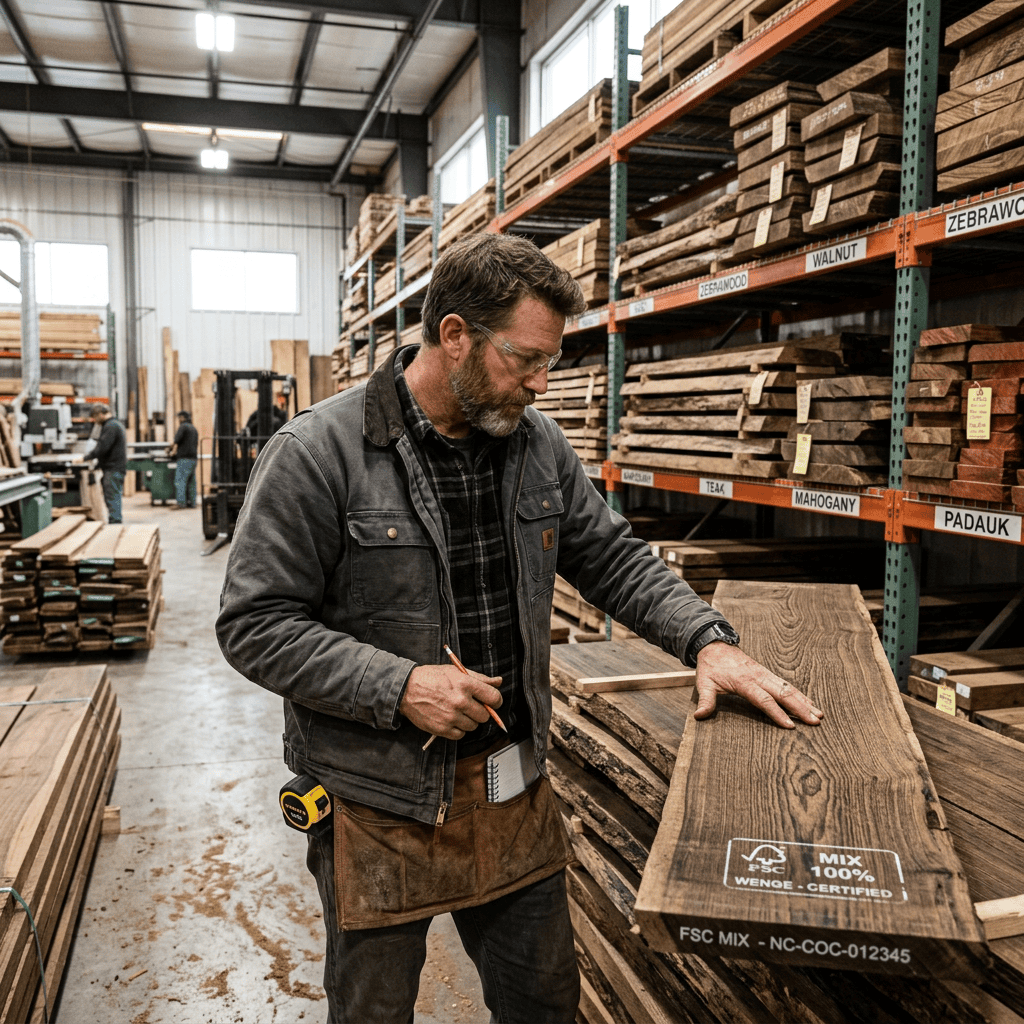
Selecting the right exotic lumber depends on several practical considerations.
1. Define the Project
Ask yourself:
- Indoor or outdoor?
- Structural or decorative?
- Heavy-use or display piece?
2. Consider Durability
Projects exposed to moisture benefit from woods such as:
- Teak
- Cocobolo
- Wenge
3. Evaluate Workability
Some species are easier to machine than others.
More beginner-friendly:
- Padauk
- Bubinga
More challenging:
- Ebony
- Wenge
4. Match Appearance
Consider:
- Grain pattern
- Natural color
- Figure
- Finish compatibility
5. Verify Sustainability
Choose suppliers offering:
- FSC certification
- Legal documentation
- Transparent sourcing practices
Takeaway: The best exotic wood depends on the project’s functional requirements, aesthetics, and sustainability goals.
What Are the Advantages of Using Exotic Wood?
Using exotic woods offers several benefits beyond appearance.
Performance Benefits
- Exceptional durability
- High strength
- Long lifespan
- Moisture resistance
- Natural insect resistance
Design Benefits
- Unique colors
- Dramatic grain
- Luxury appearance
- High resale value
Craftsmanship Benefits
- Excellent finishing qualities
- Distinctive visual identity
- Premium project appeal
Common Mistakes When Working with Exotic Lumber
Avoid these frequent errors:
- Ignoring wood movement and acclimation.
- Using incorrect adhesives on oily species.
- Failing to pre-drill dense hardwoods.
- Skipping dust protection—some exotic woods can cause allergic reactions.
- Purchasing wood from unknown or illegal sources.
- Applying incompatible finishes without testing first.
Takeaway: Proper preparation and safe woodworking practices improve results and protect both the project and the craftsman.
Best Practices for Sourcing Exotic Wood
Responsible sourcing protects forests while ensuring product quality.
Look for suppliers who:
- Offer FSC-certified products
- Provide species identification
- Comply with CITES regulations
- Maintain transparent supply chains
- Support sustainable forestry
Avoid illegally harvested lumber, as it contributes to deforestation and may violate import regulations.
Takeaway: Ethical sourcing supports conservation while providing confidence in the authenticity and legality of your materials.
Common Questions About Exotic Woods
Which exotic wood is the hardest?
Ebony, Wenge, and Purpleheart rank among the hardest commonly available exotic hardwoods.
Which exotic wood is best for furniture?
Teak, Bubinga, Rosewood, and Cocobolo are excellent choices because they combine beauty with durability.
Are exotic woods sustainable?
Some are sustainably harvested, while others face conservation concerns. Always verify certifications and legal sourcing.
Which exotic woods work best for musical instruments?
Ebony, Rosewood, Bubinga, and Cocobolo are widely used because of their acoustic performance and stability.
Can beginners work with exotic woods?
Yes, but species such as Padauk and Bubinga are generally easier to machine than dense woods like Ebony or Wenge.
Why are exotic woods expensive?
Limited availability, slow growth, transportation costs, and high demand contribute to their premium pricing.
Do exotic woods require special finishes?
Many species finish beautifully, though oily woods may require specialized surface preparation and compatible finishes.
Why This Matters
Understanding exotic woods helps woodworkers, designers, and builders make informed decisions that balance beauty, performance, cost, and environmental responsibility.
Selecting the right species improves project longevity, enhances craftsmanship, and reduces costly mistakes.
As regulations surrounding endangered timber become stricter, knowledge of sustainable exotic woods and responsible sourcing has become just as valuable as understanding grain patterns or hardness ratings.
Investing in legally sourced, high-quality exotic lumber not only elevates finished projects but also supports responsible forest management and the long-term availability of these remarkable materials.
FAQ
What are exotic woods?
Exotic woods are hardwood species that originate outside a local region, often from tropical forests. They are valued for distinctive colors, unique grain patterns, exceptional durability, and specialized applications in premium woodworking, furniture, flooring, and musical instruments.
Which exotic wood is best for furniture?
Teak, Bubinga, Rosewood, and Cocobolo are among the best exotic woods for furniture because they combine durability, dimensional stability, attractive grain, and long-term performance for both indoor and outdoor pieces.
Are exotic woods environmentally sustainable?
Many exotic woods are sustainably harvested through certified forestry programs, while others are protected due to overharvesting. Purchasing FSC-certified products and verifying legal sourcing helps support responsible forest management.
Why are exotic woods popular for musical instruments?
Exotic woods such as Ebony, Rosewood, Bubinga, and Cocobolo provide excellent tonal characteristics, stability, density, and durability, making them ideal for guitars, pianos, violins, drums, and other high-quality instruments.
What should I consider before buying exotic lumber?
Evaluate the wood’s durability, hardness, workability, intended application, appearance, moisture resistance, finishing requirements, and sustainability certifications. Buying from reputable suppliers helps ensure quality, legality, and long-term value.
Final Summary
The top 10 exotic woods each offer distinctive colors, grain patterns, durability, and performance characteristics that make them ideal for specialized woodworking projects.
Whether you’re crafting fine furniture, building musical instruments, or designing luxury interiors, understanding the unique characteristics and applications of exotic woods helps you choose the right material with confidence.
Prioritize responsible sourcing, match the species to your project’s needs, and you’ll enjoy the lasting beauty and performance that premium exotic lumber can provide.
For additional information on responsible forestry, sustainable sourcing, and wood identification, consult these trusted resources.
For additional information on responsible forestry, sustainable sourcing, and wood identification, consult these trusted resources:
Learn more about sustainable forestry from the Forest Stewardship Council (FSC), international trade regulations from CITES (Convention on International Trade in Endangered Species), and comprehensive wood species information from The Wood Database.
Ready to build smarter and create professional-quality woodworking projects?
👉 Discover step-by-step plans, expert tips, and time-saving woodworking resources at: https://besthomeshed.com/WoodworkingShortcut/