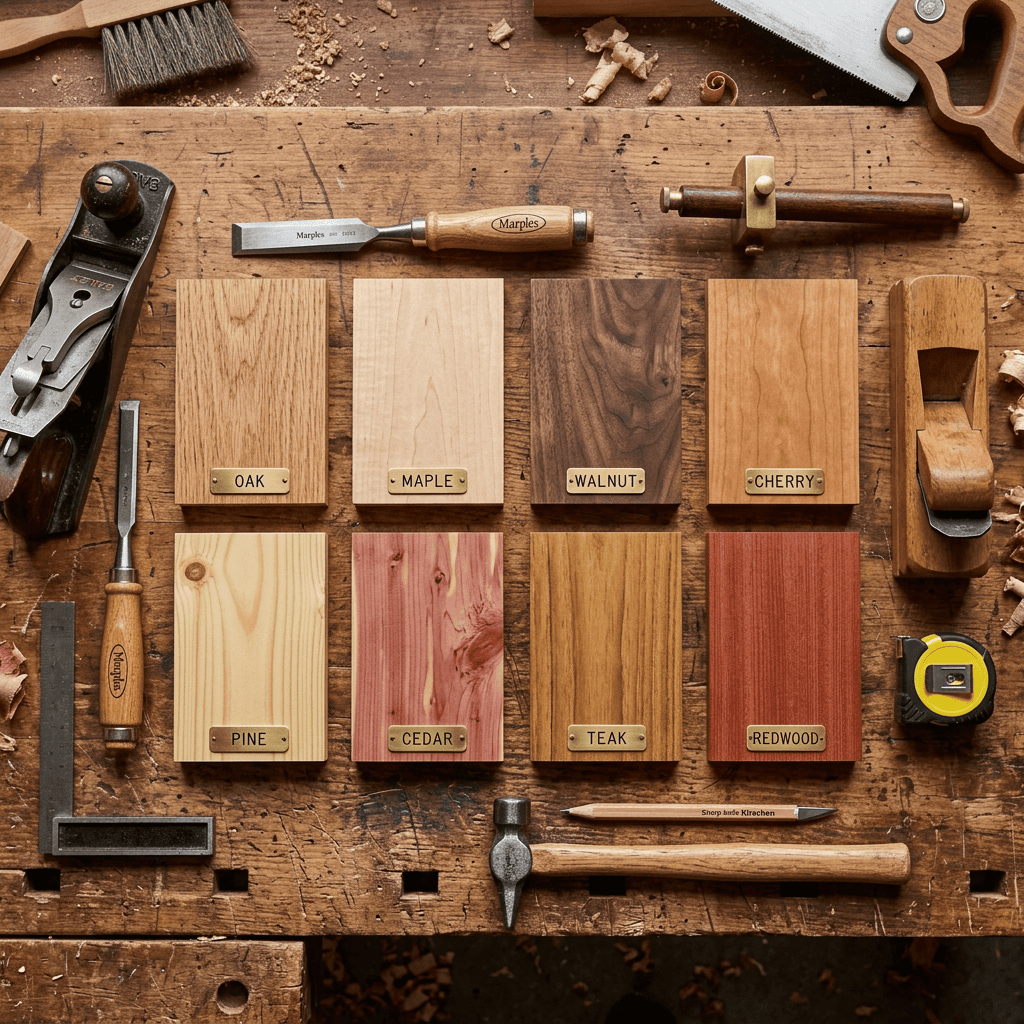
Quick Answer
Wood types differ in density, grain pattern, durability, appearance, workability, and resistance to moisture, insects, and decay. Choosing the right wood depends on your project’s purpose, environment, budget, and desired finish.
Understanding hardwoods, softwoods, common wood species, and proper wood selection ensures stronger, longer-lasting, and better-looking woodworking projects.
Key Takeaways
- Wood types are generally classified into hardwoods and softwoods, each suited for different applications.
- Wood characteristics such as grain, density, durability, and stability directly affect performance.
- Common wood species have unique strengths that make them ideal for furniture, flooring, cabinetry, construction, or outdoor projects.
- Selecting the right wood requires balancing appearance, strength, workability, environmental conditions, and cost.
- Sustainable wood choices help reduce environmental impact while maintaining quality.
- Proper finishing and maintenance significantly extend the lifespan of wood products.
The Complete Guide to Wood Types
Choosing the right wood is one of the most important decisions in woodworking, carpentry, furniture making, and interior design. Every species has unique physical and aesthetic characteristics that influence its strength, appearance, durability, and ease of use.
Whether you’re building a dining table, installing hardwood flooring, crafting decorative pieces, or framing a house, understanding different wood types allows you to make informed decisions that improve both the quality and longevity of your projects.
This guide explains the characteristics of wood, compares hardwood vs. softwood, explores wood grain types, and provides practical advice for selecting the best wood for any application.
What Are Wood Types?
Wood types refer to the various species of trees whose lumber is harvested for construction, manufacturing, furniture, and decorative purposes. Each species has distinct structural and visual properties.
Wood is commonly grouped into two major categories:
- Hardwood
- Softwood
These categories describe the botanical classification of trees rather than the actual hardness of the wood.
For example:
- Balsa is technically a hardwood despite being very soft.
- Yew is classified as a softwood but is considerably harder than many hardwood species.
Understanding this distinction prevents one of the most common misconceptions among beginners.
Takeaway: Hardwood and softwood classifications are based on tree biology, not simply how hard the wood feels.
Hardwood vs. Softwood: What’s the Difference?
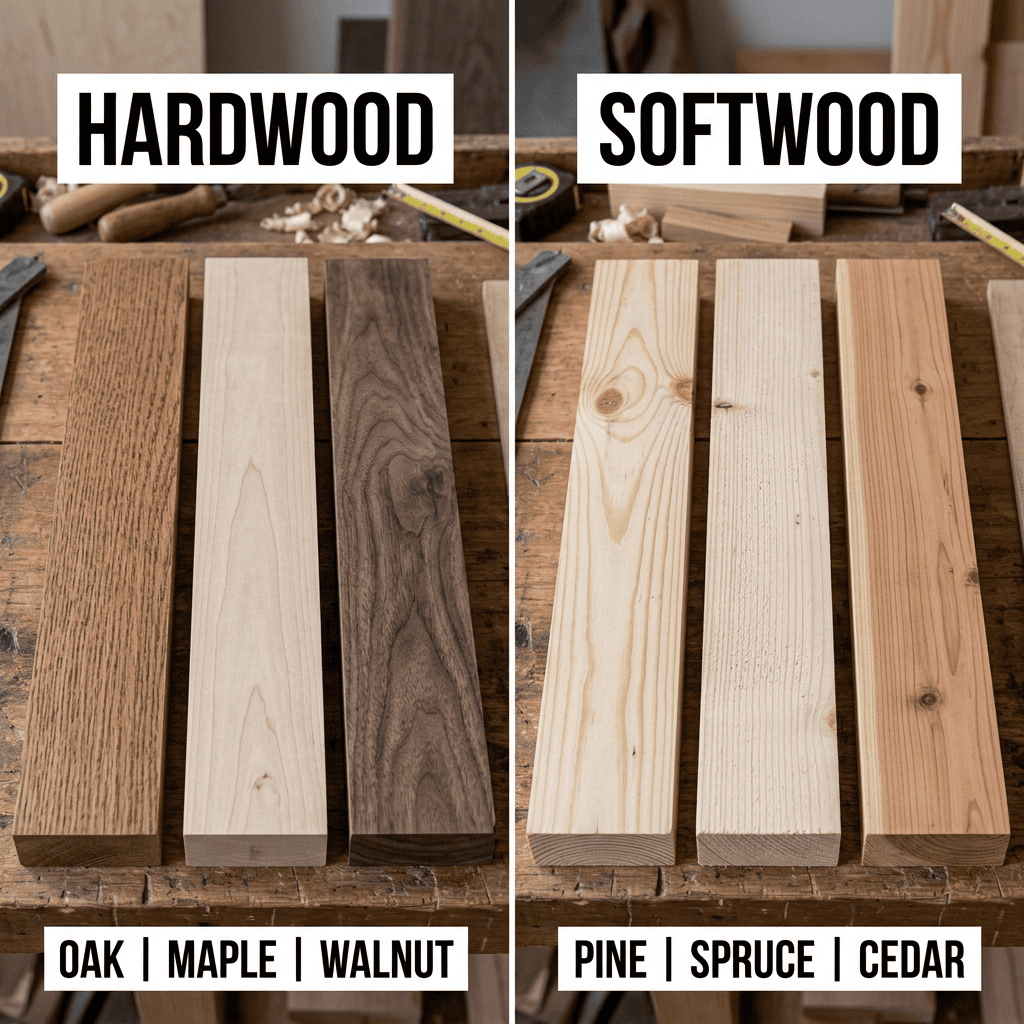
One of the first questions beginners ask is whether hardwood or softwood is the better choice. The answer depends entirely on the intended use.
Hardwood
Hardwoods come from deciduous trees that lose their leaves annually.
Examples include:
- Oak
- Maple
- Walnut
- Cherry
- Mahogany
- Ash
- Birch
Characteristics
- Higher density
- Greater strength
- Longer lifespan
- Attractive grain patterns
- Better resistance to dents and wear
- Often slower growing
Common Uses
- Fine furniture
- Cabinets
- Flooring
- Cutting boards
- Interior trim
- Decorative woodworking
Softwood
Softwoods come from coniferous trees that typically remain evergreen.
Examples include:
- Pine
- Cedar
- Spruce
- Fir
- Redwood
- Hemlock
Characteristics
- Lower density
- Lightweight
- Easier to machine
- Faster-growing
- More affordable
- Excellent for structural work
Common Uses
- House framing
- Roofing
- Decking
- Outdoor structures
- DIY projects
- Shelving
Hardwood vs. Softwood Comparison
| Feature | Hardwood | Softwood |
|---|---|---|
| Tree Type | Deciduous | Coniferous |
| Growth Rate | Slow | Fast |
| Density | Higher | Lower |
| Durability | Excellent | Moderate to High |
| Cost | Higher | Lower |
| Workability | Moderate | Easy |
| Furniture | Excellent | Good |
| Structural Construction | Good | Excellent |
| Outdoor Projects | Species dependent | Species dependent |
Neither category is universally better. The best choice depends on your project’s performance requirements, budget, and appearance goals.
Takeaway: Choose hardwood for durability and premium finishes, while softwood offers affordability and ease of construction.
What Characteristics of Wood Matter Most?
Every wood species can be evaluated using several important characteristics. Understanding these properties helps predict how the material will perform over time.
1. Density
Density affects:
- Strength
- Weight
- Durability
- Fastener holding ability
- Resistance to wear
High-density woods include:
- White Oak
- Hard Maple
- Hickory
Lower-density woods include:
- Pine
- Cedar
- Spruce
Higher-density woods typically last longer but require more effort to cut and shape.
2. Hardness
Hardness is commonly measured using the Janka Hardness Scale, which indicates how resistant a wood is to denting and wear.
Examples include:
| Wood Species | Approximate Janka Rating |
|---|---|
| Balsa | 100 |
| Eastern White Pine | 380 |
| Cherry | 950 |
| Walnut | 1,010 |
| Red Oak | 1,290 |
| Hard Maple | 1,450 |
| Hickory | 1,820 |
Higher ratings generally indicate better performance for flooring and high-traffic surfaces.
3. Stability
Wood expands and contracts as humidity changes.
Highly stable woods include:
- Mahogany
- Teak
- Cedar
Less stable woods may warp if not properly dried or sealed.
For cabinetry and furniture, dimensional stability is often as important as strength.
4. Durability
Durability measures resistance to:
- Rot
- Moisture
- Insects
- Weather
- Fungi
Highly durable woods include:
- Teak
- White Oak
- Cedar
- Redwood
These species are popular for outdoor furniture, decking, and marine applications.
5. Workability
Some woods are easier to cut, plane, sand, and finish than others.
Excellent woodworking woods include:
- Cherry
- Walnut
- Pine
- Poplar
- Maple
Difficult species may dull tools quickly or have interlocking grain that complicates machining.
6. Appearance
Visual appeal depends on:
- Color
- Grain pattern
- Figure
- Natural texture
- Luster
Popular decorative woods include:
- Walnut
- Cherry
- Curly Maple
- Birdseye Maple
- White Oak
Many furniture makers prioritize appearance alongside structural performance.
Takeaway: Density, hardness, stability, durability, workability, and appearance are the six most important characteristics to evaluate before selecting wood.
What Are the Different Wood Grain Types?
Wood grain refers to the direction, texture, and visual pattern created by wood fibers. Grain affects both appearance and machining.
Straight Grain
Fibers run in a consistent direction.
Benefits include:
- Easy to cut
- Predictable machining
- Smooth finishing
- Strong structural performance
Common species:
- Pine
- Cherry
- Maple
Spiral Grain
Fibers twist around the tree trunk.
Characteristics:
- More difficult machining
- Attractive visual texture
- May increase tear-out during planing
Interlocked Grain
Grain changes direction repeatedly.
Common in:
- Mahogany
- Sapele
Benefits:
- Highly decorative
- Excellent figure
Challenges:
- Harder to plane cleanly
- Requires sharp tools
Wavy Grain
Creates dramatic visual effects.
Examples include:
- Curly Maple
- Fiddleback Maple
Often used in:
- Musical instruments
- Luxury furniture
- Decorative veneers
Burl Grain
Produced by abnormal tree growth.
Characteristics:
- Highly figured
- Unique swirling patterns
- Rare and valuable
Frequently used for:
- Decorative panels
- Knife handles
- Luxury cabinetry
- Turned bowls
Takeaway: Grain type affects not only a wood’s appearance but also how easily it can be worked and finished.
How Does Wood Durability Compare Between Species?
Not all woods withstand wear, moisture, or insects equally. Selecting durable species reduces maintenance and extends the lifespan of finished projects.
Wood Durability Comparison
| Wood Species | Indoor Use | Outdoor Use | Rot Resistance | Ease of Finishing |
|---|---|---|---|---|
| White Oak | Excellent | Excellent | High | Excellent |
| Red Oak | Excellent | Fair | Moderate | Excellent |
| Maple | Excellent | Poor | Low | Very Good |
| Walnut | Excellent | Fair | Moderate | Excellent |
| Cherry | Excellent | Fair | Moderate | Excellent |
| Cedar | Good | Excellent | Excellent | Good |
| Teak | Excellent | Outstanding | Outstanding | Excellent |
| Pine | Good | Fair | Low | Good |
| Redwood | Very Good | Excellent | Excellent | Very Good |
| Poplar | Good | Poor | Low | Excellent |
When choosing wood for outdoor projects, prioritize natural resistance to moisture, insects, and decay over appearance alone. For indoor furniture, durability should be balanced with workability and finish quality.
Takeaway: Matching a wood species’ durability to its intended environment helps prevent premature wear, warping, and decay while maximizing the lifespan of your project.
What Are the Most Common Wood Species and Their Uses?
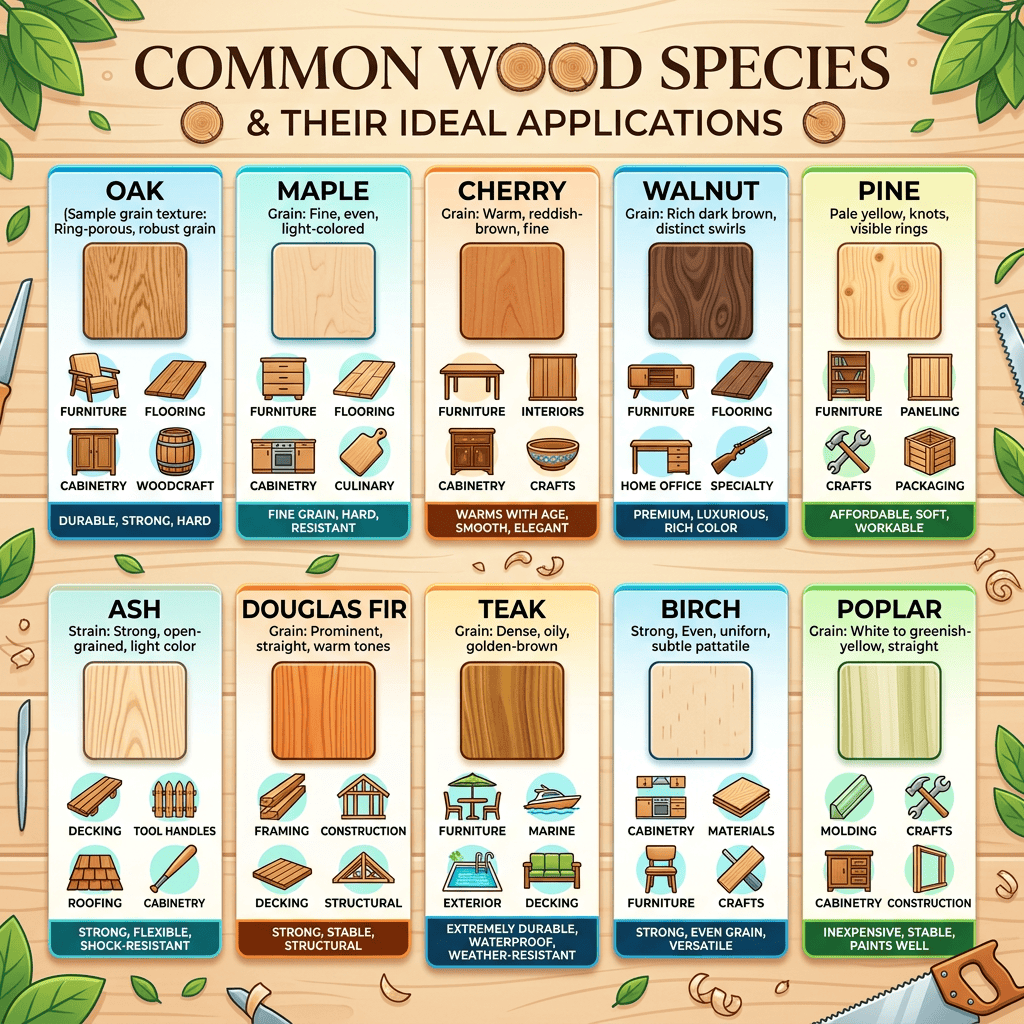
Understanding the strengths of individual wood species makes it easier to match the right material to your project. While hundreds of commercial species exist, a handful are widely used because they offer an excellent balance of strength, appearance, availability, and cost.
Common Wood Species at a Glance
| Wood Species | Type | Key Characteristics | Best Uses |
|---|---|---|---|
| Oak | Hardwood | Strong, durable, prominent grain | Furniture, flooring, cabinetry |
| Maple | Hardwood | Hard, smooth grain, wear-resistant | Cutting boards, flooring, workbenches |
| Walnut | Hardwood | Rich dark color, stable, premium appearance | Fine furniture, gunstocks, cabinetry |
| Cherry | Hardwood | Warm reddish tone, ages beautifully | Furniture, millwork, decorative pieces |
| Birch | Hardwood | Fine grain, affordable, strong | Plywood, cabinets, furniture |
| Ash | Hardwood | Flexible, shock-resistant | Tool handles, sports equipment, furniture |
| Pine | Softwood | Lightweight, inexpensive, easy to work | Shelving, furniture, framing, DIY projects |
| Cedar | Softwood | Naturally rot and insect resistant | Outdoor furniture, fences, closets |
| Fir | Softwood | Strong, straight grain | Structural framing, beams, doors |
| Redwood | Softwood | Weather resistant, attractive color | Decks, pergolas, outdoor construction |
| Teak | Hardwood | Exceptional moisture resistance | Boats, outdoor furniture, luxury applications |
| Poplar | Hardwood | Easy to machine, paint-grade | Interior trim, painted furniture, prototypes |
Oak
Oak remains one of the most versatile wood types due to its strength, durability, and attractive grain. White oak offers superior moisture resistance, making it ideal for flooring, cabinetry, and outdoor applications.
Maple
Maple is valued for its hardness and smooth, consistent grain. It performs exceptionally well in high-wear environments, including butcher blocks, flooring, and workbenches.
Walnut
Walnut is prized for its rich brown color, stability, and premium appearance. Although more expensive, it is a favorite among furniture makers and interior designers.
Pine
Pine is often the first choice for beginners because it is affordable, lightweight, and easy to machine. It works well for DIY furniture, shelving, and interior projects.
Cedar
Cedar contains natural oils that resist insects and decay, making it one of the best choices for outdoor woodworking projects.
Takeaway: Selecting the right wood species begins with understanding each species’ natural strengths, limitations, and intended application.
How Do You Choose the Best Wood for Your Project?
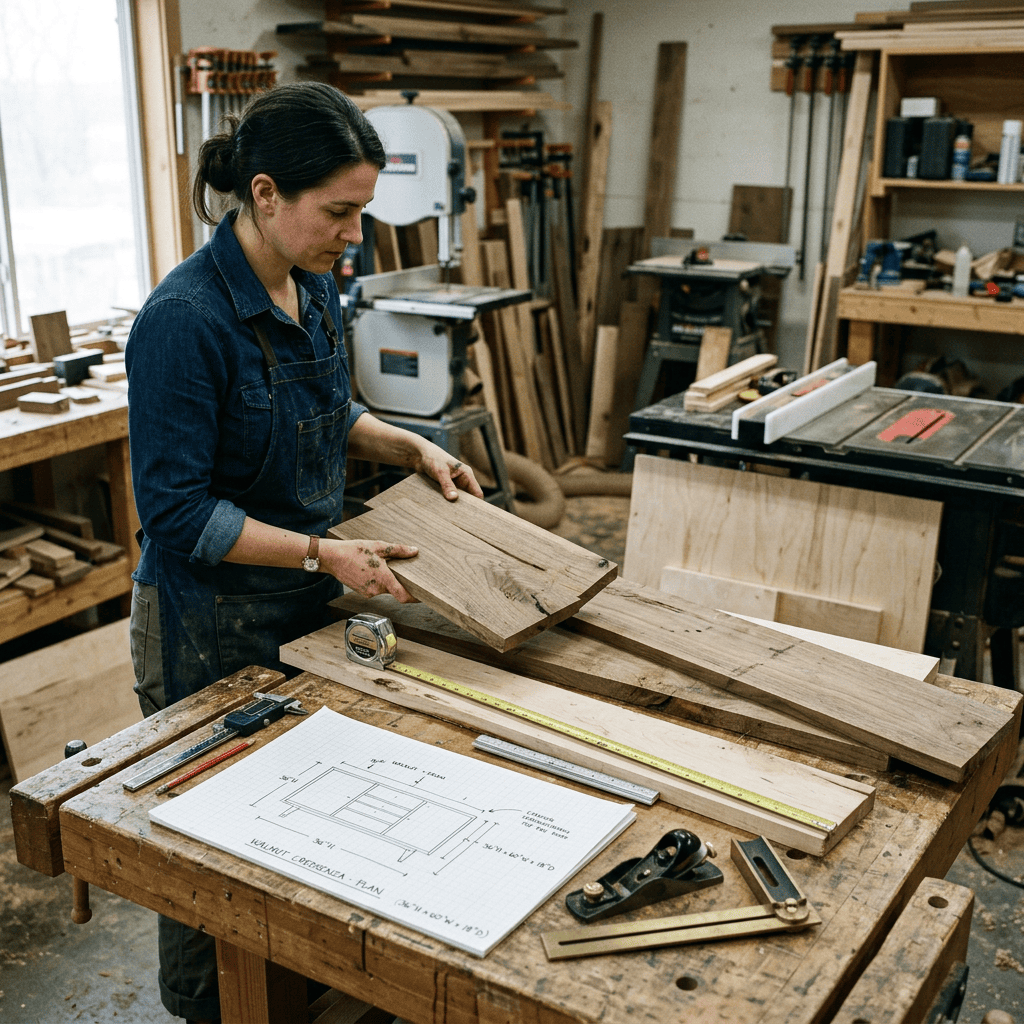
The best practices for wood selection involve evaluating several factors rather than choosing solely based on appearance.
Step 1: Define the Project’s Purpose
Ask yourself:
- Will the project be indoors or outdoors?
- Will it support heavy loads?
- Will it experience moisture?
- Is appearance the highest priority?
A dining table, for example, requires different properties than a garden bench.
Step 2: Consider Durability
Projects exposed to weather should use naturally durable species such as:
- Teak
- Cedar
- Redwood
- White Oak
Indoor furniture offers greater flexibility in wood choice because environmental exposure is limited.
Step 3: Evaluate Workability
Beginners often benefit from woods that machine easily, such as:
- Pine
- Poplar
- Cherry
Experienced woodworkers may prefer hardwoods like maple or oak for their superior wear resistance.
Step 4: Match the Grain to the Design
The grain pattern significantly influences the final appearance.
For example:
- Straight grain creates a clean, modern look.
- Cathedral grain suits traditional furniture.
- Curly or figured grain adds visual interest to statement pieces.
Step 5: Set a Realistic Budget
Premium hardwoods can cost several times more than construction-grade softwoods.
A practical approach is to reserve premium species for visible surfaces while using less expensive materials for hidden structural components.
Step 6: Think About Finishing
Some woods accept stain evenly, while others benefit from clear finishes that highlight their natural beauty.
For example:
- Walnut often looks best with a clear protective finish.
- Poplar is commonly painted because of its green and brown color variations.
- Cherry naturally darkens over time, making clear finishes a popular choice.
Takeaway: The best wood selection balances function, durability, appearance, workability, and cost rather than focusing on a single characteristic.
What Are Sustainable Wood Choices?
Sustainability has become an increasingly important consideration in woodworking and construction. Choosing responsibly sourced wood helps protect forests while supporting ethical forestry practices.
Look for Certified Wood
Common certifications include:
- FSC (Forest Stewardship Council)
- PEFC (Programme for the Endorsement of Forest Certification)
These certifications indicate that the wood comes from responsibly managed forests.
Consider Fast-Growing Species
Fast-growing woods reduce pressure on slower-growing forests.
Examples include:
- Pine
- Poplar
- Bamboo (technically a grass but commonly used as a wood alternative)
Use Reclaimed Wood
Reclaimed lumber offers several benefits:
- Reduces waste
- Preserves old-growth timber
- Adds unique character
- Lowers environmental impact
Buy Local When Possible
Locally sourced wood reduces transportation emissions while supporting regional forestry industries.
Takeaway: Sustainable wood choices benefit both your projects and the environment without sacrificing quality.
What Are the Best Wood Finishing Techniques?
Proper finishing protects wood from moisture, scratches, UV damage, and everyday wear while enhancing its natural beauty.
Oil Finishes
Examples:
- Tung oil
- Danish oil
- Linseed oil
Benefits:
- Penetrate deeply
- Highlight grain
- Easy to repair
Best for:
- Furniture
- Cutting boards (food-safe oils only)
- Decorative projects
Polyurethane
Available in:
- Water-based
- Oil-based
Benefits:
- Excellent durability
- Moisture resistance
- Ideal for high-traffic surfaces
Best for:
- Floors
- Tabletops
- Cabinets
Lacquer
Benefits:
- Fast drying
- Smooth finish
- Professional appearance
Commonly used for:
- Factory-finished furniture
- Cabinets
- Musical instruments
Paint
Paint provides complete color coverage while protecting the wood beneath.
Ideal for:
- Poplar
- MDF
- Utility furniture
- Children’s furniture
Wax
Wax adds a soft sheen and smooth feel but offers limited protection. It is often used over other finishes rather than as a standalone coating.
Takeaway: The right wood finishing technique depends on the project’s exposure, desired appearance, and maintenance requirements.
Common Mistakes When Selecting Wood
Avoiding these common errors can save time, money, and frustration.
- Choosing wood based only on appearance.
- Ignoring moisture and humidity conditions.
- Using indoor wood species outdoors.
- Overlooking wood movement caused by seasonal humidity.
- Applying the wrong finish for the intended use.
- Buying low-quality lumber with excessive knots, twists, or warping.
- Forgetting to acclimate wood before installation or construction.
Takeaway: Careful planning and proper material selection prevent costly mistakes and improve the longevity of your projects.
Common Questions About Wood Types
Which wood is best for beginners?
Pine and poplar are excellent choices because they are affordable, widely available, and easy to cut, sand, and finish.
What is the strongest common wood?
Hickory is one of the strongest commercially available North American hardwoods and is widely used for tool handles and heavy-duty applications.
Which wood lasts longest outdoors?
Teak, cedar, white oak, and redwood naturally resist moisture, insects, and decay, making them ideal for outdoor use.
Is hardwood always better than softwood?
No. Hardwood and softwood serve different purposes. Softwoods are often preferred for construction because they are lightweight, readily available, and cost-effective.
Which wood is easiest to stain?
Oak readily accepts stain due to its open grain, while maple may require a wood conditioner to achieve even color.
Can different wood species be combined?
Yes. Many furniture makers combine species for structural strength, cost savings, and visual contrast, provided they account for differences in wood movement.
Why This Matters
Understanding wood types is more than learning species names—it is about making informed decisions that improve safety, durability, aesthetics, and long-term value.
A well-chosen wood species can reduce maintenance, enhance structural performance, and create projects that remain beautiful for decades.
Professionals rarely choose lumber based on appearance alone. They evaluate moisture resistance, dimensional stability, workability, grain orientation, finishing compatibility, and sustainability before making a selection.
Adopting the same approach helps hobbyists and professionals alike achieve more consistent, high-quality results while reducing waste and unnecessary expense.
FAQ
Which wood type is best for furniture?
Hardwoods such as oak, walnut, cherry, and maple are generally the best choices for furniture because they offer excellent durability, attractive grain patterns, and long-term stability.
The ideal species depends on your budget, desired appearance, and intended use.
What is the difference between hardwood and softwood?
Hardwoods come from deciduous trees, while softwoods come from coniferous trees. The classification is botanical rather than a measure of hardness.
Both categories include species suitable for construction, furniture, and decorative woodworking.
Which wood is most durable for outdoor projects?
Teak, cedar, redwood, and white oak are among the most durable outdoor wood species due to their natural resistance to moisture, insects, and fungal decay. Proper finishing and regular maintenance further extend their lifespan.
How do I choose the right wood for a woodworking project?
Evaluate the project’s environment, structural requirements, appearance, workability, budget, and finishing needs. Matching these factors to the wood’s natural properties leads to better performance and longer-lasting results.
Are sustainable wood choices as good as traditional lumber?
Yes. Responsibly sourced certified wood and reclaimed lumber often provide the same structural performance and visual appeal as conventionally harvested wood while reducing environmental impact and supporting sustainable forest management.
Final Summary
Choosing the right wood types starts with understanding the characteristics of wood, including density, grain, durability, stability, and workability.
Whether you’re comparing hardwood vs. softwood, exploring common wood species, selecting materials for woodworking projects by wood type, or evaluating sustainable wood choices, informed decisions lead to stronger, more attractive, and longer-lasting results.
By matching each wood species to its intended application, applying appropriate wood finishing techniques, and following best practices for wood selection, you can confidently create projects that balance beauty, performance, and value.
The more you understand your materials, the better equipped you’ll be to choose the right wood for every project, from simple DIY builds to professional furniture and architectural work.
For additional information about wood identification, sustainable forestry, and wood properties, consult authoritative resources from the USDA Forest Products Laboratory, the U.S. Forest Service, and the Forest Stewardship Council (FSC).
These organizations provide research-based guidance on wood species, durability, responsible sourcing, and sustainable forest management.
Ready to build smarter woodworking projects? Discover expert plans, time-saving techniques, and step-by-step guidance at 👉 https://besthomeshed.com/WoodworkingShortcut/