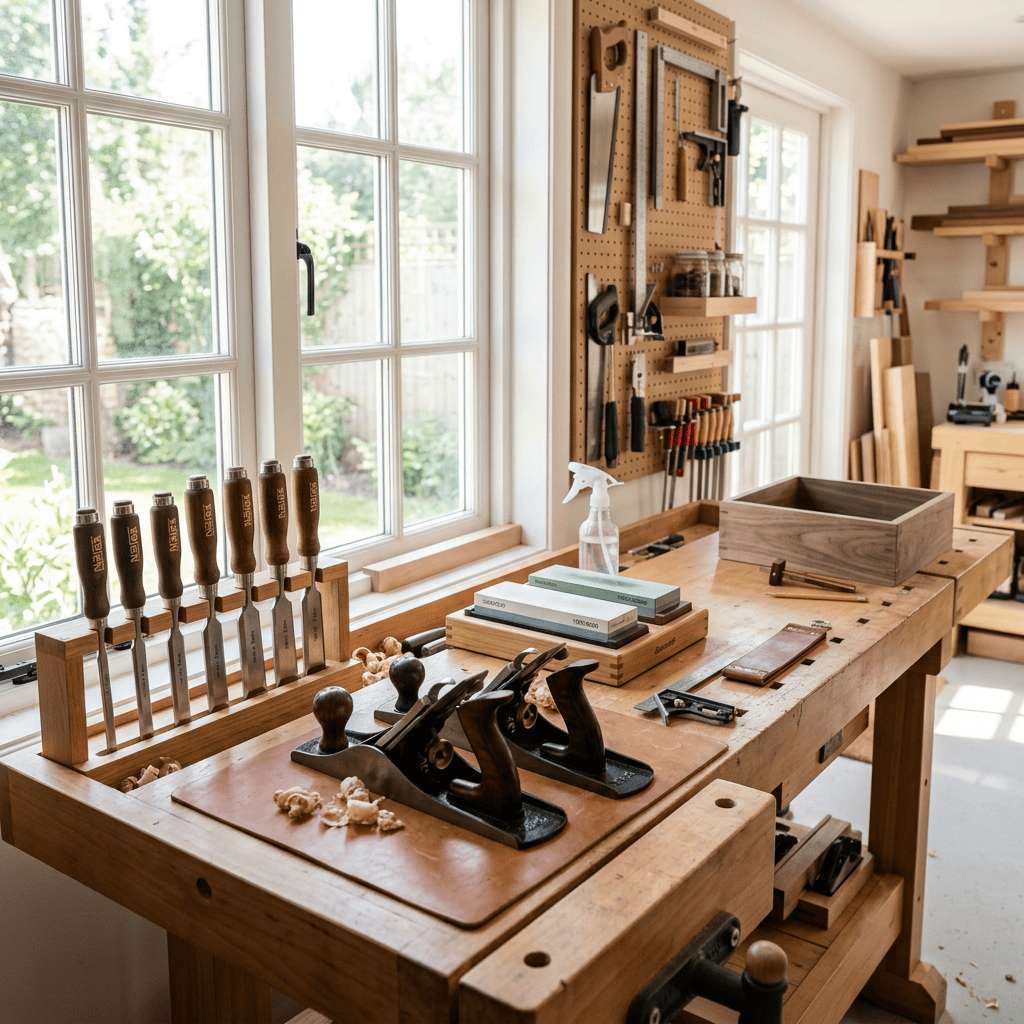
Quick Answer
Proper woodworking tool maintenance involves cleaning tools after every use, preventing rust with protective coatings, storing them in a dry environment, sharpening cutting edges using the appropriate method, and routinely inspecting tools for wear or damage.
Consistent maintenance improves cutting performance, extends tool life, enhances safety, and reduces replacement costs.
Key Takeaways
- Clean woodworking tools immediately after use to remove resin, sawdust, moisture, and debris.
- Sharpen cutting edges regularly instead of waiting until tools become dull.
- Protect steel surfaces from rust using light oil, paste wax, or rust inhibitors.
- Store tools in a dry, organized environment with proper humidity control.
- Use the correct sharpening method for each type of woodworking tool.
- Inspect tools frequently for loose handles, chips, cracks, and excessive wear.
- Consistent maintenance improves precision, safety, and woodworking tool longevity.
Why Woodworking Tool Maintenance Matters
Whether you’re a professional carpenter, hobbyist, or DIY enthusiast, your tools determine the quality of every project. Sharp, clean, and well-maintained tools produce cleaner cuts, require less effort, improve accuracy, and significantly reduce the risk of accidents.
In contrast, neglected tools become dull, rusted, and difficult to control. They often damage wood fibers instead of cutting cleanly, forcing you to work harder while increasing fatigue and safety risks.
Simply put, investing a few minutes in regular woodworking tool maintenance can add years to your tools’ lifespan while improving every woodworking project.
Takeaway: Proper maintenance saves money, improves craftsmanship, and makes woodworking safer.
What Does Woodworking Tool Maintenance Include?
Woodworking tool maintenance refers to the routine care that keeps both hand tools and power tools performing efficiently.
It typically includes:
- Cleaning woodworking tools
- Sharpening woodworking tools
- Rust prevention
- Lubrication
- Proper storage
- Regular inspections
- Handle and hardware maintenance
Common tools requiring maintenance include:
| Tool | Maintenance Needed |
|---|---|
| Chisels | Sharpening, honing, rust prevention |
| Hand planes | Blade sharpening, sole cleaning, adjustment |
| Handsaws | Cleaning, occasional sharpening, rust protection |
| Carving tools | Frequent honing and polishing |
| Router bits | Resin removal and inspection |
| Drill bits | Cleaning and sharpening when appropriate |
| Plane irons | Flattening, honing, polishing |
Takeaway: Every woodworking tool benefits from routine care, regardless of how often it is used.
How Often Should You Maintain Woodworking Tools?
Maintenance depends on usage frequency.
After Every Use
- Brush away sawdust
- Remove resin and pitch
- Wipe away moisture
- Dry tools completely
- Return tools to proper storage
Weekly
- Inspect cutting edges
- Check moving parts
- Lubricate metal surfaces
- Tighten loose hardware
Monthly
- Deep clean tools
- Remove light rust
- Reapply protective wax or oil
- Inspect wooden handles
As Needed
- Sharpen dull blades
- Replace damaged parts
- Repair loose handles
Takeaway: Small, consistent maintenance sessions prevent major repairs later.
How Can You Clean Woodworking Tools Properly?

Cleaning is the foundation of effective tool care.
Step 1: Remove Dust and Debris
Use:
- Soft brush
- Compressed air
- Shop vacuum
- Microfiber cloth
Removing debris prevents abrasive particles from damaging moving parts.
Step 2: Remove Resin and Pitch
Sticky buildup affects cutting performance.
Use:
- Mineral spirits
- Commercial blade cleaner
- Citrus-based cleaners
Avoid soaking wooden handles.
Step 3: Dry Thoroughly
Moisture causes corrosion quickly.
Always:
- Wipe with a clean cloth
- Air dry completely
- Avoid storing damp tools
Step 4: Apply Protection
After cleaning:
- Paste wax
- Camellia oil
- Light machine oil
- Silicone-free rust protectant
These products create a barrier against moisture.
Takeaway: Clean tools immediately after use to prevent buildup and corrosion.
What Are the Best Sharpening Methods for Woodworking Tools?
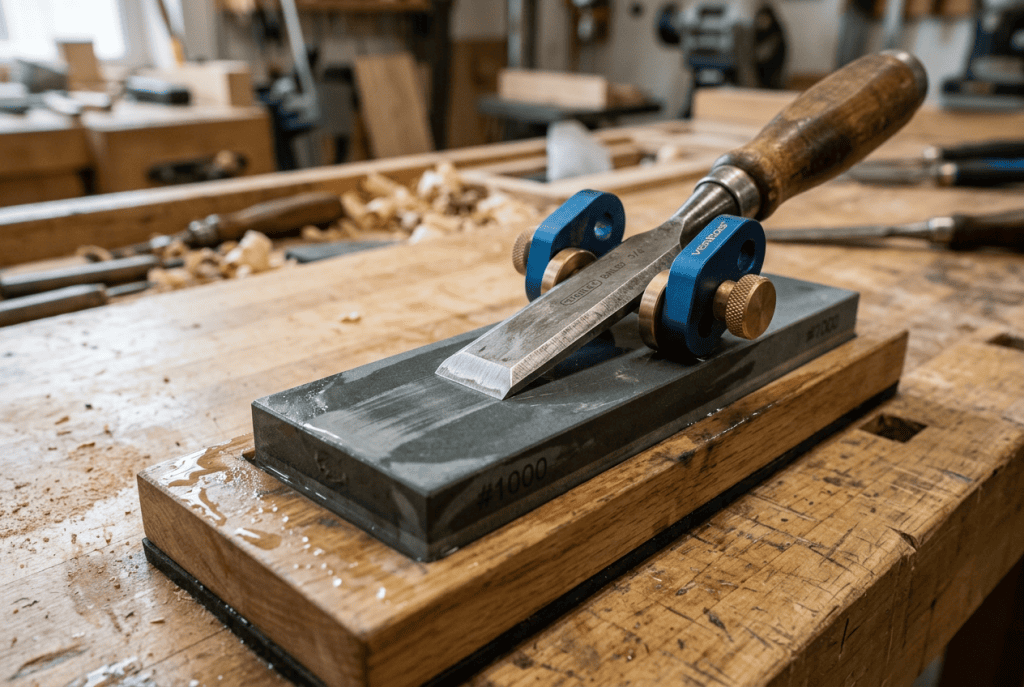
Sharp tools require less force and produce cleaner results.
Different tools require different sharpening methods.
| Sharpening Method | Best For | Advantages |
|---|---|---|
| Water stones | Chisels, plane irons | Fast cutting, excellent finish |
| Oil stones | General hand tools | Durable and affordable |
| Diamond stones | Hard steels | Long-lasting and low maintenance |
| Sandpaper system | Beginners | Inexpensive and accessible |
| Honing guides | Chisels and planes | Maintains consistent bevel angles |
Sharpening Woodworking Tools Step by Step
1. Inspect the Edge
Look for:
- Chips
- Rounded edges
- Uneven bevels
- Light reflecting from the cutting edge
If light reflects, the edge is dull.
2. Establish the Bevel
Use the manufacturer’s recommended bevel angle.
Common examples:
- Chisels: 25°–30°
- Plane irons: 25°–30°
- Carving tools: varies by profile
3. Sharpen
Move the blade evenly across the stone.
Maintain:
- Consistent pressure
- Stable angle
- Full contact
4. Hone
Use a finer grit to refine the edge.
This removes scratches and increases sharpness.
5. Remove the Burr
Finish by lightly polishing the back of the blade until the burr disappears.
Takeaway: Frequent light sharpening is easier and more effective than restoring severely dull tools.
How Can You Protect Tools from Rust?
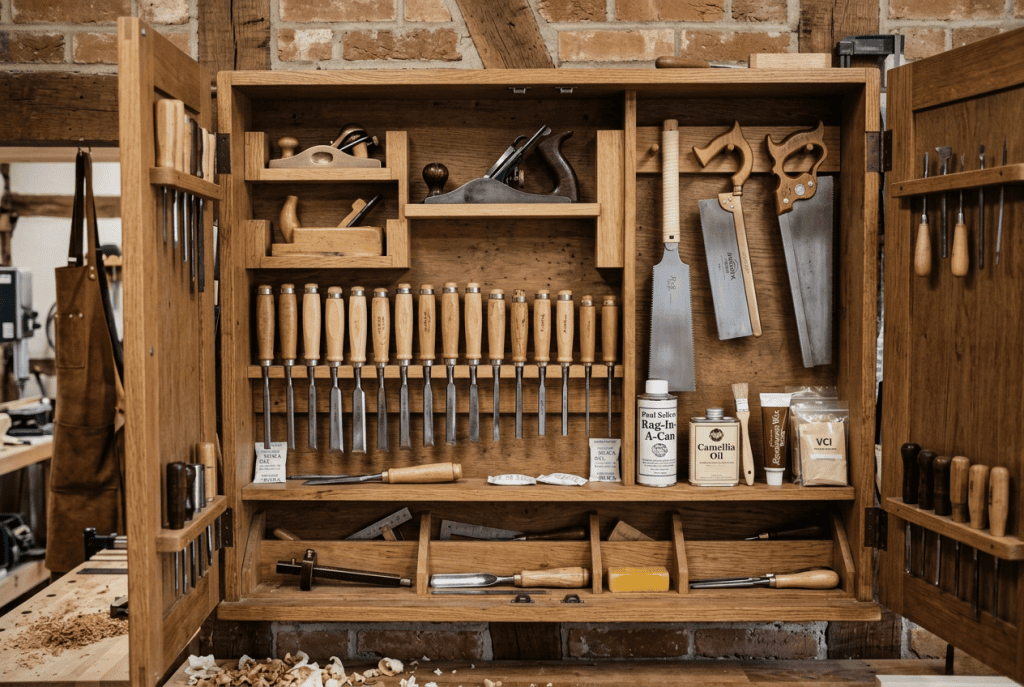
Rust is one of the biggest threats to woodworking tool longevity.
Fortunately, prevention is simple.
Keep Tools Dry
Humidity accelerates corrosion.
Store tools in:
- Climate-controlled workshops
- Dry cabinets
- Tool chests with desiccant packs
Apply Protective Coatings
Effective options include:
- Paste wax
- Camellia oil
- Boeshield T-9
- Light mineral oil
These coatings repel moisture while reducing friction.
Control Humidity
Ideal workshop humidity:
40%–55%
Consider using:
- Dehumidifiers
- Silica gel packs
- Vapor corrosion inhibitors
Takeaway: Rust prevention is much easier than rust removal.
What Are the Best Tool Storage Solutions?
Proper storage protects tools from physical damage and environmental exposure.
Good storage options include:
- Wall-mounted tool racks
- Wooden tool cabinets
- Tool chests
- Drawer organizers
- Protective blade guards
- Magnetic holders (for appropriate tools)
Avoid:
- Damp basements
- Concrete floors
- Unheated sheds
- Stacking sharp tools together
Labeling storage areas also helps prevent accidental edge damage.
Takeaway: Organized storage preserves both sharpness and safety.
How Can You Maintain Tool Performance Over Time?
Maintaining tool performance involves more than sharpening.
Regularly inspect:
- Blade alignment
- Fasteners
- Handles
- Adjustment mechanisms
- Bearings (power tools)
- Electrical cords
Lubricate moving parts according to manufacturer recommendations.
For wooden handles:
- Sand rough spots
- Apply boiled linseed oil occasionally
- Replace cracked handles immediately
Keeping tools properly adjusted ensures consistent, accurate results.
Takeaway: Performance depends on the entire tool—not just the cutting edge.
Common Mistakes That Shorten Tool Life
Many woodworkers unintentionally damage their tools through poor maintenance habits.
Avoid these mistakes:
- Waiting too long before sharpening.
- Storing tools while damp.
- Using excessive grinding pressure.
- Ignoring small rust spots.
- Using the wrong sharpening angle.
- Neglecting lubrication.
- Tossing tools loosely into drawers.
- Using woodworking tools for unintended purposes.
Correcting these habits significantly improves woodworking tool longevity.
Takeaway: Preventive care always costs less than replacing damaged tools.
Safety Tips for Tool Maintenance
Tool maintenance should always be performed safely.
Follow these recommendations:
- Wear eye protection when sharpening.
- Use cut-resistant gloves when appropriate.
- Secure tools firmly before sharpening.
- Disconnect power tools before cleaning.
- Work in a well-lit area.
- Keep sharpening stones stable.
- Follow manufacturer maintenance instructions.
- Dispose of oily rags safely to reduce fire risk.
A sharp tool is generally safer than a dull one because it requires less force and offers greater control.
Takeaway: Safe maintenance practices protect both you and your tools.
Common Questions About Woodworking Tool Maintenance
How do I know when a woodworking tool needs sharpening?
If the tool requires more force, leaves rough cuts, tears wood fibers, or reflects light along the cutting edge, it’s time to sharpen it.
Can I remove rust from woodworking tools?
Yes. Light rust can usually be removed using fine steel wool, rust erasers, abrasive pads, or specialized rust removers before applying a protective coating.
Should I oil woodworking tools?
Yes. Applying a thin coat of oil or paste wax helps prevent rust and reduces friction without affecting cutting performance.
Are expensive sharpening stones necessary?
Not necessarily. Quality water stones, oil stones, diamond plates, and even sandpaper sharpening systems can all produce excellent results when used correctly.
How should I store chisels?
Store chisels with blade guards or in a rack where the cutting edges cannot contact other tools or hard surfaces.
Can dull tools damage wood?
Yes. Dull edges crush and tear wood fibers instead of slicing cleanly, resulting in rough surfaces and reduced accuracy.
How often should I clean woodworking tools?
A quick cleaning after every use and a deeper cleaning every few weeks keeps tools in excellent condition.
Why This Matters
Well-maintained woodworking tools do more than last longer—they improve every aspect of your work. Sharp edges produce smoother cuts, cleaner joints, and more accurate dimensions, reducing the need for sanding or rework. Consistent maintenance also lowers operating costs by delaying replacements and minimizing repairs.
From a safety perspective, properly maintained tools are easier to control because they require less force and respond more predictably.
Whether you’re crafting furniture, carving intricate details, or completing home improvement projects, developing a routine for cleaning, sharpening, rust prevention, and storage ensures dependable performance for years.
Treat maintenance as part of the woodworking process, not an afterthought, and you’ll enjoy better results with every project.
FAQ
How can you maintain woodworking tools to ensure they remain functional?
Maintain woodworking tools by cleaning them after every use, sharpening cutting edges regularly, preventing rust with protective coatings, storing them in a dry environment, lubricating moving parts, and inspecting them for wear or damage. Routine care keeps tools accurate, safe, and reliable.
What is the best sharpening method for woodworking tools?
The best sharpening method depends on the tool and steel type. Water stones provide excellent edge quality, diamond stones are durable and low maintenance, oil stones offer long-term value, and honing guides help maintain consistent bevel angles for accurate sharpening.
How do you prevent rust on woodworking tools?
Prevent rust by keeping tools clean and dry, applying a protective coating such as paste wax or light oil, controlling workshop humidity, and storing tools in moisture-free cabinets or chests with desiccants when necessary.
Why is regular woodworking tool maintenance important?
Regular maintenance improves cutting performance, extends tool life, enhances safety, reduces repair costs, and delivers cleaner, more precise woodworking results. It also helps prevent corrosion, mechanical wear, and unnecessary tool replacement.
How often should woodworking tools be sharpened?
Sharpen tools whenever they show signs of reduced performance rather than following a fixed schedule. Frequent users may hone edges weekly, while occasional hobbyists can sharpen less often. Light, regular sharpening is faster and preserves more of the tool than waiting until it becomes very dull.
Final Summary
The answer to maintaining and sharpening woodworking tools is straightforward: clean them after every use, sharpen edges before they become excessively dull, protect metal surfaces from rust, store tools in a dry and organized space, and inspect them regularly for wear.
By making woodworking tool maintenance a consistent habit, you’ll improve cutting precision, extend the life of your tools, work more safely, and achieve higher-quality results on every project.
Whether you’re a beginner or an experienced craftsperson, a proactive maintenance routine is one of the best investments you can make in your woodworking success.
For additional expert guidance on woodworking tool care and safety, consult authoritative resources such as WOOD Magazine, the Fine Woodworking knowledge center, and the Occupational Safety and Health Administration (OSHA) for workshop safety best practices.
Ready to improve your woodworking skills even further? Discover time-saving techniques, expert plans, and practical tips with the Woodworking Shortcut program. 👉 Learn more here: https://besthomeshed.com/WoodworkingShortcut/