Essential Insights for Choosing Your Wood
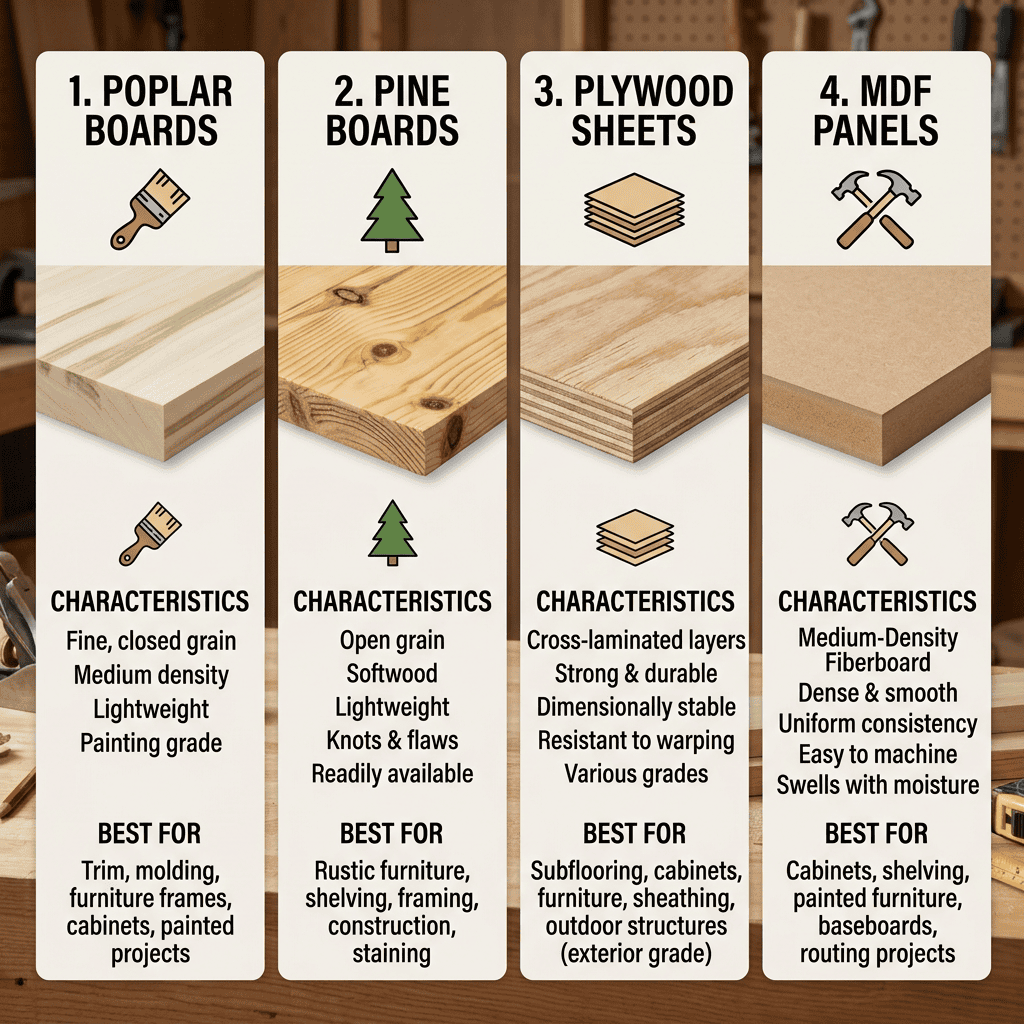
When choosing between poplar, pine, plywood, or MDF, it's essential to align your decision with the specific needs and priorities of your project. Each wood type brings unique characteristics that can significantly influence the outcome of your work.
Poplar is renowned for its exceptional balance of strength and ease of painting, making it an ideal choice for furniture projects. On the other hand, pine is a budget-friendly option for those just starting out in woodworking. If you need materials with superior structural integrity and moisture resistance, plywood stands out. For projects focused on achieving a flawless finish indoors, MDF offers the smoothest surface available.
A Deep Dive into Poplar, Pine, Plywood, and MDF
- Poplar is an excellent paint-grade hardwood that’s stronger than pine and ideal for furniture and cabinetry.
- Pine is an inexpensive softwood that’s easy to work with, making it one of the best wood choices for beginners.
- Plywood is the strongest sheet material for shelving, cabinets, and structural projects thanks to its layered construction.
- MDF provides an ultra-smooth surface for painting but is heavy, weak around fasteners, and highly susceptible to moisture.
- Indoor furniture can use any of these materials depending on the application, while outdoor projects generally require exterior-grade plywood or treated lumber instead.
- Matching the material to your project’s strength, finish, budget, and environment will produce better long-term results.
Side-by-Side Comparison of Popular Wood Choices
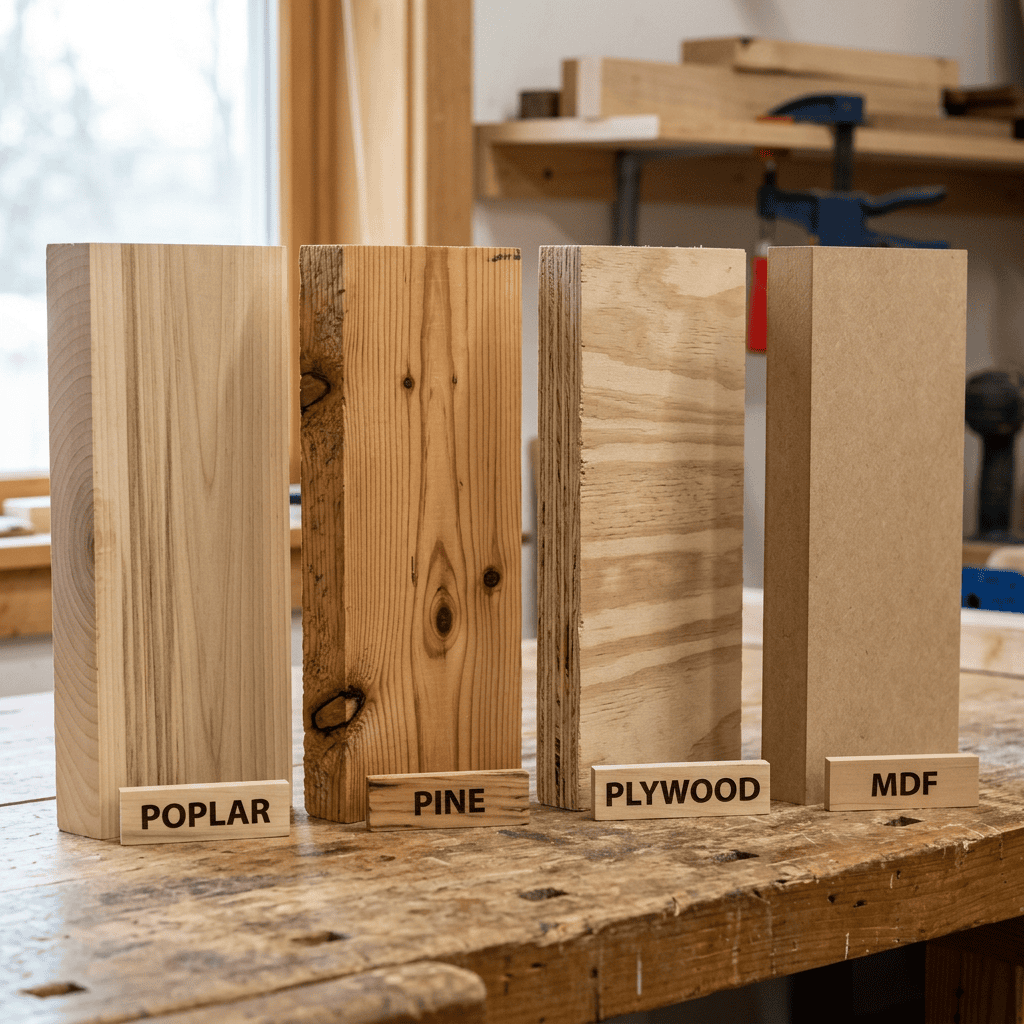
Selecting the appropriate material is crucial as it can have a dramatic impact on your project's overall appearance, durability, and cost-effectiveness. While these materials are often categorized under budget wood for projects, they each possess distinct properties that cater to different needs.
Here's a brief summary of what to expect from each type of wood.
Quick Overview for Quick Decisions
Poplar is classified as a hardwood, recognized for its straight grain and consistent texture. It stands out due to its excellent paintability. Although it falls under hardwoods, poplar is softer than oak or maple, which makes it easier to work with and especially suitable for painted furniture.
Common poplar wood uses include: painted cabinets, furniture frames, shelving units, trim work, and drawer boxes.
- Painted cabinets
- Furniture frames
- Shelving
- Trim and molding
- Drawer boxes
Best for: Creating high-quality painted furniture and cabinetry.
Takeaway: Poplar strikes an excellent balance between affordability and strength, establishing itself as one of the best values in solid woods.
What Is Pine?
Pine, on the other hand, is a widely available softwood, known for being economical. Its attractive grain patterns make it particularly favored in rustic and farmhouse-style furniture designs.
It's one of the most preferred choices among novice woodworkers due to its ease of cutting, drilling, and shaping.
Typical applications include:
- DIY furniture
- Shelving
- Bed frames
- Decorative projects
- Framing lumber
Best for: DIY enthusiasts who are conscious about their budget but can tolerate occasional imperfections like dents or knots.
Takeaway: Pine is both affordable and beginner-friendly; however, it's more prone to dents compared to poplar.
What Is Plywood?
Plywood, meanwhile, is an engineered wood product created by layering thin sheets of wood veneer in alternating grain directions.
This cross-laminated design grants plywood remarkable strength along with excellent dimensional stability.
Common uses encompass cabinets, shelving solutions, workbenches, flooring underlayment options, and furniture frameworks.
- Cabinets
- Shelving
- Workbenches
- Flooring underlayment
- Furniture carcasses
Best for: Structural projects and sheet goods requiring strength.
Takeaway: Plywood offers the best combination of strength, stability, and versatility among sheet goods.
What Is MDF?
Medium-Density Fiberboard (MDF) is manufactured by compressing wood fibers with resin under high pressure.
Unlike plywood, MDF has no grain, producing an exceptionally smooth surface that’s ideal for paint.
Common applications include:
- Painted furniture
- Interior trim
- Cabinet doors
- Decorative panels
- Built-ins
Best for: Indoor painted projects where moisture exposure is minimal.
Takeaway: MDF creates the smoothest painted finish but sacrifices moisture resistance and screw-holding strength.
Identifying the Most Cost-Effective Material
| Feature | Poplar | Pine | Plywood | MDF |
|---|---|---|---|---|
| Material Type | Hardwood | Softwood | Engineered wood | Engineered fiberboard |
| Average Cost | $$ | $ | $$ | $ |
| Strength | High | Moderate | Very High | Moderate |
| Paintability | Excellent | Good | Good | Excellent |
| Natural Appearance | Fair | Excellent | Good | Poor |
| Screw Holding | Excellent | Good | Excellent | Fair |
| Moisture Resistance | Moderate | Moderate | Good (Exterior Grades Excellent) | Poor |
| Weight | Medium | Light | Medium | Heavy |
| Beginner Friendly | Yes | Excellent | Yes | Yes |
| Outdoor Use | No | No (unless treated) | Exterior-grade only | No |
Which Material Offers Maximum Strength?
For many DIYers, cost is the deciding factor.
Although prices fluctuate by region and lumber market conditions, the general ranking is consistent.
| Material | Relative Cost |
|---|---|
| Pine | Lowest |
| MDF | Low |
| Poplar | Moderate |
| Plywood | Moderate to High |
Pine
Pine remains one of the cheapest wood species available. Construction-grade pine is especially economical for furniture and workshop projects.
Pros:
- Lowest cost
- Widely available
- Easy to replace
Cons:
- Knots
- Variable quality
- Dents easily
MDF
MDF sheets are inexpensive and provide exceptional value for painted built-ins and cabinetry.
However, edge finishing and moisture protection add labor.
Pros:
- Affordable sheet material
- Minimal waste
- Uniform density
Cons:
- Heavy
- Generates fine dust when cut
Poplar
Poplar costs more than pine but considerably less than premium hardwoods such as maple, cherry, or walnut.
Its excellent machining qualities often justify the additional expense.
Exploring Poplar: Your Best Paint-Grade Wood Option
Quality plywood generally has the highest upfront cost among these options.
However, its strength, stability, and longevity often make it the better long-term investment.
Takeaway: Pine wins on initial price, while plywood frequently offers the best value over the life of the project.
Evaluating Paintability: Which Material Performs Best?
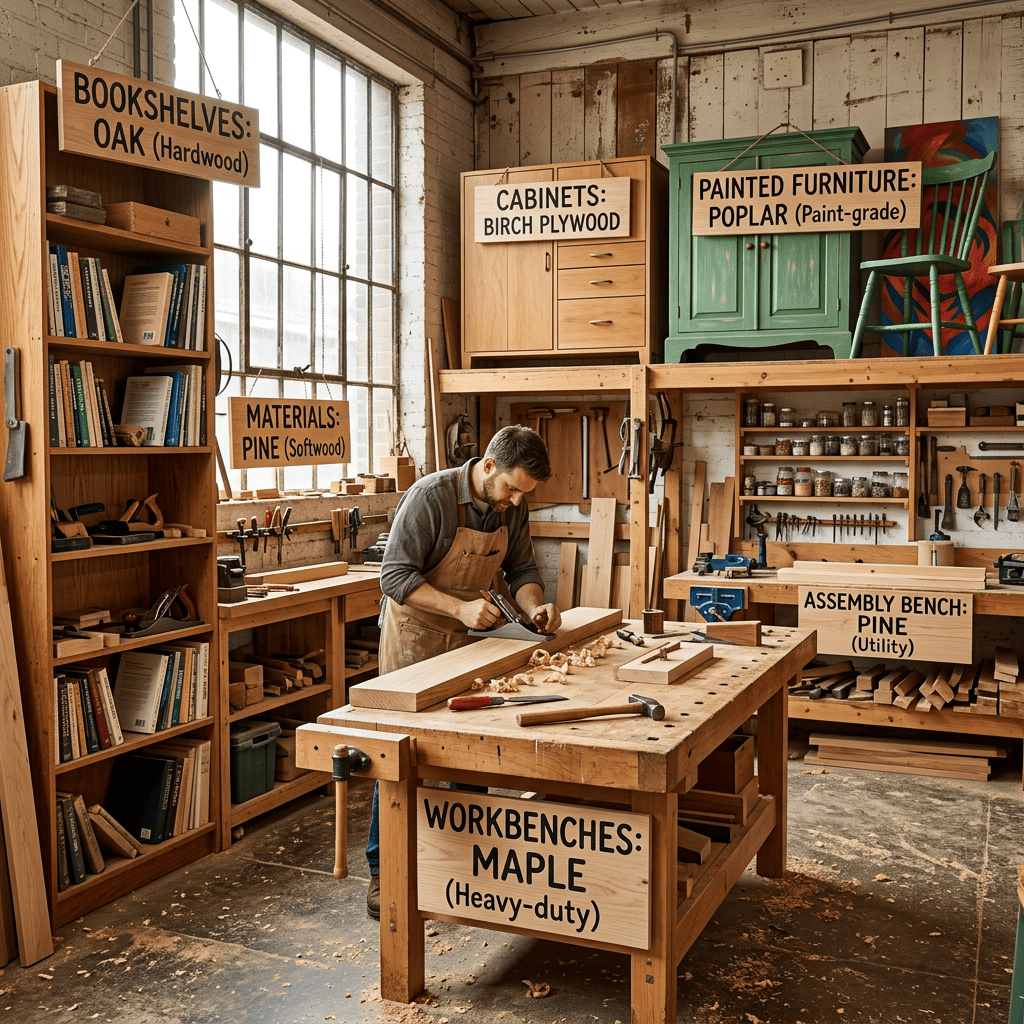
Strength matters for shelving, furniture, cabinets, and structural applications.
Here’s how these materials compare.
Plywood: A Versatile Choice for Various Projects
Thanks to its cross-laminated construction, plywood distributes loads exceptionally well.
Advantages include:
- High bending strength
- Excellent dimensional stability
- Minimal warping
- Superior screw retention
This is why plywood is commonly recommended for:
- Bookshelves
- Cabinet boxes
- Workbenches
- Shop storage
- Utility furniture
Plywood: The Ultimate Structural Champion
Poplar offers noticeably greater strength than pine while remaining easy to machine.
Its stiffness makes it ideal for:
- Table legs
- Chairs
- Cabinet frames
- Furniture rails
Poplar: The Strongest and Most Attractive Solid Wood
Although softer, pine still performs well in many furniture applications.
Its primary limitation is dent resistance rather than overall structural integrity.
Proper design can compensate for its lower hardness.
Pine: Affordable and Reliable for DIY Enthusiasts
MDF performs well under compression but poorly under bending.
Long unsupported shelves often sag over time.
Screws installed near edges can also loosen more easily than in plywood or solid wood.
Takeaway: For strength, plywood ranks first, followed by poplar, pine, and finally MDF.
Ease of Use: Which Wood Is Simplest to Work With?
If your goal is a flawless painted finish, surface quality becomes a major consideration.
MDF: An Adequate Option with Certain Limitations
Because MDF contains no visible grain, it creates an exceptionally smooth painted surface.
Benefits include:
- No wood grain telegraphing
- Minimal sanding
- Uniform appearance
- Excellent for modern furniture
The main drawback is that cut edges require sealing before painting.
MDF: Achieve the Smoothest Finish for Indoor Projects
Professional cabinetmakers frequently choose poplar because it paints beautifully while retaining the strength of solid wood.
Advantages:
- Smooth grain
- Few knots
- Minimal resin bleed
- Stable surface
Many consider poplar one of the best paint-grade wood options available.
Poplar: The Top Choice for Paint-Grade Hardwood Needs
Pine accepts paint well but often requires:
- Knot sealing
- Additional primer
- More sanding
Without proper preparation, knots may bleed through paint over time.
Pine: A Budget-Friendly Solid Wood Option
Paint quality depends heavily on the veneer species.
Higher-grade plywood produces attractive painted finishes, while lower grades may require filling and additional sanding.
Takeaway: MDF delivers the smoothest painted finish, while poplar provides the best combination of appearance and durability.
Choosing the Right Material for Indoor vs Outdoor Projects
Ease of machining is especially important for beginner woodworkers.
Plywood: A Durable Material for Diverse Uses
Pine is forgiving and easy to process using basic tools.
Advantages include:
- Easy cutting
- Easy drilling
- Minimal tool wear
- Lightweight
These qualities make pine one of the most recommended options for first-time furniture builders.
Pine: Perfect for Beginners in Woodworking
Poplar machines cleanly with both hand and power tools.
It rarely splinters and produces crisp edges.
Because it’s harder than pine, it better withstands everyday use while remaining easy to shape.
Discover Poplar's Benefits for Your Next Project
Plywood cuts accurately but can experience veneer tear-out.
Utilizing sharp blades and providing proper support can significantly enhance your results when working with various materials. This practice is especially important in woodworking, where precision is key to achieving a professional finish. Whether you're cutting plywood or shaping poplar, taking these steps can prevent mishaps and ensure clean cuts.
Plywood Options to Consider for Your Builds
MDF cuts consistently due to its uniform composition, which lacks any grain. This characteristic makes it an ideal choice for projects requiring a smooth finish. However, it's essential to approach MDF with care as it can generate fine dust during cutting that may require effective dust collection measures.
However, while MDF offers a smooth surface for painting and finishing, it produces a significant amount of very fine dust when cut. It's crucial to use appropriate tools and wear protective gear such as masks to avoid respiratory issues. Additionally, ensuring good ventilation in your workspace will help mitigate the effects of dust exposure.
The weight of MDF can also pose challenges when handling full sheets, making transportation and maneuvering more difficult compared to lighter options like pine. If you're planning a large project that involves extensive MDF usage, consider having assistance on hand to manage these heavy sheets safely.
Takeaway:Pine is recognized as the easiest material for beginners due to its forgiving nature, while poplar provides an exceptional balance of workability and durability for various applications. When selecting between poplar vs pine vs plywood vs mdf, consider the specific needs of your project.
Ideal Applications for Poplar, Pine, Plywood, and MDF
Environmental exposure is a critical factor in selecting the right material for your project. Different wood types respond uniquely to changes in moisture and temperature, affecting their longevity and performance. Understanding how each material behaves in varying conditions can guide you toward better decision-making.
MDF: Weighing Pros and Cons of This Material
All four materials-poplar, pine, plywood, and MDF-are suitable for indoor use when applied correctly according to their strengths. For instance, while MDF excels in creating smooth finishes for cabinets and furniture, plywood's structural integrity makes it ideal for shelves and frames.
- Poplar: Furniture, trim, painted cabinets
- Pine: Rustic furniture, shelving, decorative projects
- Plywood: Cabinet boxes, shelving, workbenches, storage
- MDF: Built-ins, painted trim, cabinet doors, decorative panels
The Best Indoor Wood Options for Your Projects
None of these standard materials are recommended for outdoor exposure without adequate protection from the elements. If you're looking at outdoor furniture or garden structures, materials like treated lumber or naturally weather-resistant woods are better suited to withstand harsh conditions.
- Poplar absorbs moisture quickly and is not naturally decay-resistant.
- Pine should only be used outdoors if pressure-treated or specially protected.
- Standard MDF swells rapidly when exposed to water and should never be used outside.
- Exterior-grade plywood is the preferred option for outdoor projects because it uses waterproof adhesives and is designed to withstand moisture better than interior plywood.
For long-lasting outdoor projects such as furniture or decks, opting for durable species like cedar or redwood will provide better resistance against decay. These woods are specifically chosen for their ability to endure moisture and pests over time.
Takeaway:Select any of these materials for indoor applications based on your project's requirements; however, prioritize exterior-grade plywood or weather-resistant lumber when considering outdoor uses to ensure durability against the elements.
Selecting the Perfect Material for Your Unique Project Needs
Choosing the right material becomes significantly easier once you align it with the type of project you're undertaking. Each option is considered a budget wood for projects, yet they have unique advantages that shine through in specific applications.
Key Considerations When Choosing Outdoor Materials
Poplar stands out as one of the most versatile paint-grade hardwoods available on the market today. It strikes an exceptional balance between affordability and strength while being easy to machine into desired shapes or sizes, making it perfect for both novice and experienced woodworkers alike.
Choose poplar for projects requiring high-quality finishes since its smooth grain allows primer and paint to adhere exceptionally well. This quality not only enhances aesthetic appeal but also contributes to a longer-lasting painted surface that resists chipping over time.
- Painted furniture
- Cabinet face frames
- Interior trim and molding
- Drawer boxes
- Tables and desks
- Children’s furniture
- Built-in shelving
Poplar's smooth grain makes it particularly favorable among professional cabinetmakers who seek quality results without excessive preparation work. The wood's natural characteristics lend themselves well to detailed craftsmanship that showcases artistry in furniture design.
Best choice if: You want solid wood that paints beautifully and lasts for years.
Takeaway: Poplar is the best all-around option for painted furniture and cabinetry.
When to Opt for Poplar in Your Designs?
Pine remains one of the most popular choices for DIY woodworking because it’s inexpensive, widely available, and forgiving to work with.
Choose pine for:
- Farmhouse furniture
- Coffee tables
- Bookshelves
- Decorative wall shelves
- Rustic home décor
- Beginner woodworking projects
- Shop furniture
Because pine dents relatively easily, it performs best where minor wear adds character rather than detracts from appearance.
Best choice if: You’re learning woodworking or working with a limited budget.
Takeaway: Pine is one of the best wood options for beginners and anyone building inexpensive furniture.
Selecting Pine: When Is It the Right Choice?
Plywood excels whenever structural strength and dimensional stability matter.
Common uses include:
- Cabinet boxes
- Closet systems
- Workbenches
- Garage storage
- Built-in furniture
- Shelving
- Desk tops
- Subfloors
Quality hardwood plywood also provides attractive exposed edges when paired with edge banding.
If you’re comparing MDF vs plywood strength, plywood is the clear winner for load-bearing applications.
Best choice if: Your project requires durability, stability, and excellent screw-holding power.
Takeaway: Plywood is the best sheet material for furniture that needs to support significant weight.
Plywood Selection Guide: When to Use It?
MDF shines in projects that prioritize smooth painted surfaces over structural strength.
Ideal applications include:
- Cabinet doors
- Painted built-ins
- Entertainment centers
- Decorative wall panels
- Interior trim
- Speaker boxes
- Furniture with routed profiles
Avoid MDF for heavy-duty shelving or areas exposed to moisture.
Best choice if: You want an exceptionally smooth painted finish for indoor use.
Takeaway: MDF is ideal for decorative interior projects where appearance is more important than strength.
Avoid These Common Pitfalls in Wood Selection
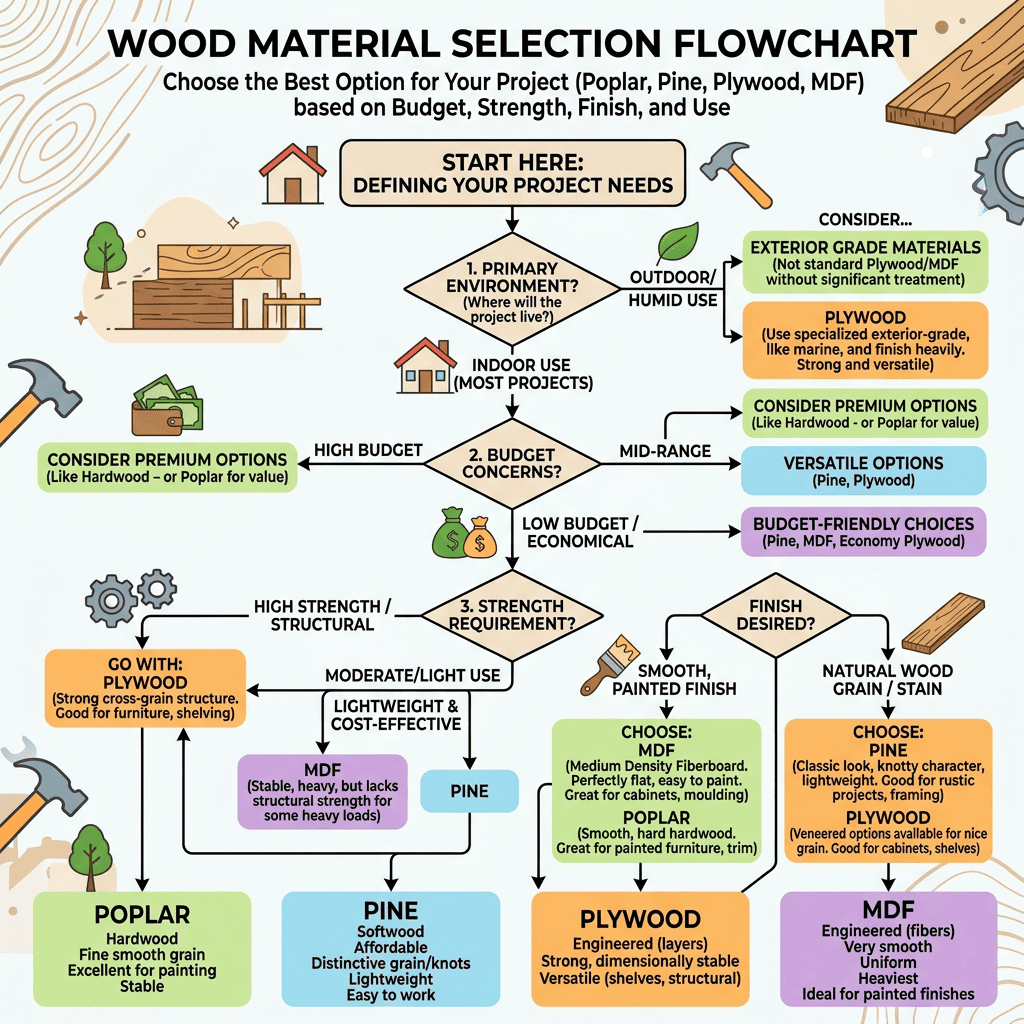
If you’re still unsure which material to buy, use this simple decision-making process.
Step 1: Determine Your Budget
Ask yourself:
- Is minimizing cost the top priority?
- Are you willing to spend slightly more for better durability?
If budget is your biggest concern:
- Choose pine for solid wood.
- Choose MDF for painted sheet goods.
If long-term durability matters more:
- Choose poplar or plywood.
Step 2: Decide Whether You’ll Paint or Stain
For painted projects:
- MDF
- Poplar
- Paint-grade plywood
For stained or clear-coated projects:
- Pine
- Hardwood plywood with attractive veneer
Remember that MDF has no visible grain, while pine showcases a warm, natural appearance.
Step 3: Consider Strength Requirements
Ask:
- Will this piece support heavy weight?
- Will people sit or stand on it?
- Will shelves hold books or tools?
For high-strength projects:
- Plywood
- Poplar
For decorative or light-duty projects:
- Pine
- MDF
Step 4: Evaluate Moisture Exposure
Water is often the deciding factor.
Use:
- Exterior-grade plywood for damp environments.
- Pressure-treated lumber for outdoor construction.
Avoid standard MDF anywhere humidity or standing water is common.
When comparing moisture resistance MDF vs plywood, plywood clearly performs better because its layered veneers and waterproof adhesive (in exterior grades) resist swelling and delamination far more effectively.
Step 5: Match the Material to Your Skill Level
If you’re new to woodworking:
- Pine
- Poplar
- MDF
- Plywood
Beginners often find pine the easiest material to cut, drill, and assemble with basic tools.
Takeaway: The best material depends on balancing budget, finish, strength, and environment—not choosing the “strongest” or “cheapest” option every time.
Common Mistakes to Avoid
Many woodworking frustrations stem from choosing the wrong material rather than poor craftsmanship.
Avoid these common mistakes:
Utilizing MDF in Humid Conditions: What You Need to Know
MDF absorbs moisture rapidly, causing swelling, edge damage, and permanent deformation.
Creating Sturdy Long Shelves with Just MDF
Without adequate support, MDF shelves can sag under heavy loads.
Choose plywood for bookshelves or garage storage.
Understanding Pine's Vulnerability to Dents
Pine is soft by nature.
If your project will receive heavy daily use, poplar or plywood may provide better long-term durability.
Avoiding Low-Grade Plywood for Quality Furniture Projects
Construction plywood often contains voids and rough veneers.
Furniture projects benefit from cabinet-grade or hardwood plywood.
The Importance of Proper Surface Preparation for Wood Projects
Even the best paint-grade materials require:
- Sanding
- Priming
- Filling imperfections
- Sealing exposed edges (especially MDF)
Takeaway: Selecting the correct material from the start prevents costly repairs and disappointing results later.
Is Poplar the Superior Choice Over Pine for Your Furniture?
The following recommendations can help simplify your buying decision.
| Project | Best Material | Why |
|---|---|---|
| Painted cabinets | Poplar + plywood | Durable face frames with strong cabinet boxes |
| Painted furniture | Poplar | Excellent strength and paint finish |
| Rustic furniture | Pine | Affordable with attractive natural grain |
| Bookshelves | Plywood | Superior strength and reduced sagging |
| Built-in cabinets | Plywood + MDF doors | Durable structure with smooth painted doors |
| Workbench | Plywood | Strong, stable, and impact-resistant |
| Decorative trim | MDF or poplar | Smooth painted finish |
| Garage shelving | Plywood | High load capacity |
| Student projects | Pine | Affordable and beginner-friendly |
| Budget cabinet boxes | Plywood | Stronger and longer-lasting than MDF |
Takeaway: Many professional woodworkers combine materials—for example, using plywood for cabinet boxes and poplar or MDF for painted face frames and doors—to maximize both performance and value.
Comparing Strength: Is Plywood More Durable Than MDF?
Can You Safely Use MDF for Kitchen Cabinets?
Yes. Poplar is generally stronger, more stable, and more resistant to dents than pine. It also provides a smoother painted finish, making it a popular choice for furniture and cabinetry.
What is the Most Affordable Wood Option for Furniture?
Yes. Plywood has significantly better bending strength, screw-holding ability, and resistance to sagging, making it the preferred choice for structural furniture and shelving.
Which Material is Best Suited for Beginners' Projects?
Yes, but primarily for painted cabinet doors and decorative panels. Cabinet boxes are typically better constructed from plywood because of its superior strength and moisture resistance.
Longevity of Materials: Which Lasts the Longest?
Pine is usually the least expensive solid wood, while MDF is one of the lowest-cost engineered wood products for painted indoor projects.
Is Painting Plywood a Viable Option?
Pine is widely regarded as the best wood for beginners due to its affordability, availability, and ease of cutting, drilling, and assembling.
Does MDF Have Waterproof Properties?
When properly finished and used in the appropriate environment, plywood and poplar generally outlast pine and MDF because of their greater strength and stability.
Evaluating Options: Poplar, Pine, Plywood, or MDF?
Yes. High-quality plywood paints well after sanding, filling any surface imperfections, and applying a suitable primer.
Is It Worth Paying Extra for Plywood?
No, standard MDF is not waterproof and should not be used in wet or humid conditions unless it is specifically labeled as moisture-resistant MDF. This distinction is crucial because using the wrong type of MDF in a damp environment can lead to swelling and structural failure, undermining your project.
Your Guide to the Best Paint-Grade Wood Option for Projects
Choosing the right wood extends beyond merely saving money; it significantly influences the strength, aesthetics, durability, and upkeep of your final product. For instance, selecting a material that aligns with the intended use of your project ensures that you won't face unexpected issues down the road.
Many DIY enthusiasts mistakenly believe that opting for the cheapest material will always yield the best value. However, costs associated with replacing sagging shelves, repairing swollen panels, or reconstructing damaged furniture can far exceed the initial savings from choosing an inferior material. A well-considered investment in quality materials pays off in longevity and performance.
Gaining insight into the differences between poplar vs pine vs plywood vs MDF enables you to make informed decisions based on performance rather than solely on cost. This understanding not only helps minimize waste but also enhances project quality while boosting your confidence as you develop your woodworking skills.
Whether you're crafting your first bookshelf, revamping kitchen cabinets, or furnishing a workshop, aligning your choice of material with your project's goals stands out as one of the most intelligent investments you can make. This approach ensures that the finished product meets both functional and aesthetic expectations.
Identifying the Best Material for Budget-Friendly Cabinets
Can Newbies Successfully Work with Poplar, Pine, Plywood, or MDF?
There isn't a universally 'best' choice among these materials. Poplar excels for painted furniture due to its smooth surface; pine is budget-friendly for beginners; plywood boasts exceptional structural strength; and MDF delivers an ultra-smooth finish ideal for indoor decorative projects. Your selection should align with your specific requirements.
Ready to Elevate Your DIY Projects? Let's Get Started!
Yes, even though plywood typically has a higher upfront cost compared to MDF or pine, its enhanced strength, dimensional stability, and moisture resistance often render it a superior long-term investment for cabinets, shelving units, and various furniture applications. This consideration can save you from frequent replacements or repairs in the future.
What is the best paint-grade wood option?
Poplar is widely regarded as the best paint-grade wood option due to its smooth grain texture combined with strength and stability. Additionally, MDF serves as an excellent alternative when achieving a perfectly smooth painted surface is paramount for your projects.
Which material is best for inexpensive cabinets?
Combining plywood cabinet boxes with poplar face frames or MDF doors presents an outstanding balance of durability, visual appeal, and affordability for most painted cabinet projects. This combination allows you to leverage the strengths of each material effectively.
Can beginners successfully work with all four materials?
Indeed. Pine stands out as the easiest material for beginners to work with, followed closely by poplar. While plywood requires careful cutting techniques to avoid veneer tear-out during handling, MDF is straightforward to machine yet demands good dust collection measures due to fine particles generated during processing.
Final Summary
Deciding between poplar vs pine vs plywood vs MDF ultimately hinges on your project's objectives. If you're looking for an affordable solid wood that's user-friendly,pine serves as an excellent starting point for various applications.
Poplar stands out when it comes to painted furniture and cabinets since it strikes an optimal balance between strength and finish quality. Conversely, if structural integrity and durability are paramount concerns,plywood emerges as the superior option in those scenarios.
MDF remains a cost-effective solution if achieving a flawlessly smooth painted surface is your top priority for indoor projects where moisture exposure is minimal.
Instead of searching for a single 'best' material overall, it's advisable to assess your budget alongside desired finishes, strength requirements, and moisture exposure factors before making a decision about which wood suits your needs best.
Selecting the appropriate material for each application will enable you to create projects that not only look aesthetically pleasing but also endure over time while providing greater overall value.
Making informed decisions about wood materials becomes simpler when you reference reputable industry resources. Organizations dedicated to providing reliable information on wood properties, engineered wood products, and best practices in woodworking can be invaluable guides.
Ready to Build Better Projects?
No matter if you're crafting your first bookshelf, enhancing cabinets or building furniture within a budgetary framework-selecting the right material represents a critical first step toward achieving superior results.